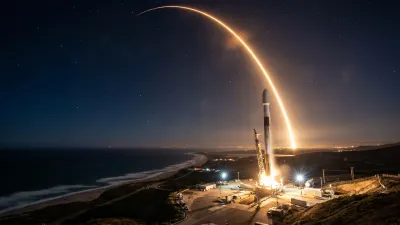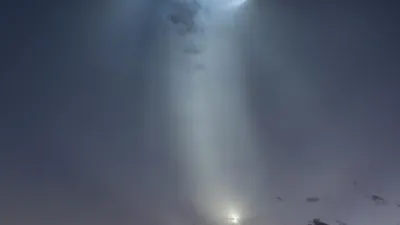
SpaceX Falcon 9 Launch Creates Glowing Jellyfish Plume on 35th NASA Cargo Mission
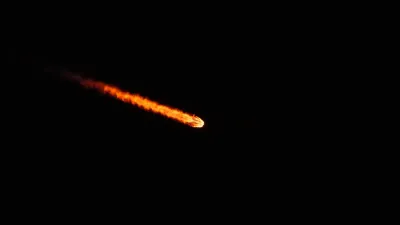
The Dragon spacecraft lifted off at 6:33 a.m. EDT from Florida on October 13, 2026. It carries the final Roll-Out Solar Arrays and artificial retina experiments....
Astrophysics and planetary cosmology investigating celestial dynamics and galactic evolution, alongside terrestrial geology and atmospheric sciences. We analyze observational data from space telescopes, deep-space probes, and climate models to decipher our planetary mechanisms and the cosmic order.
The Dragon spacecraft lifted off at 6:33 a.m. EDT from Florida on October 13, 2026. It carries the final Roll-Out Solar Arrays and artificial retina experiments....
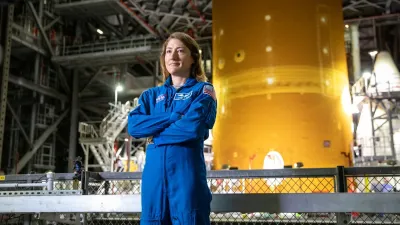
Christina Koch will assume her new role on November 1, succeeding Katherine Van Hooser. The appointment transitions Koch to management astronaut status, ending her eligibility for future spaceflights....
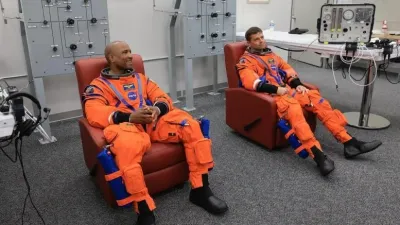
After traveling farther into space than any humans in history, Artemis II veterans Victor Glover and Reid Wiseman are stepping back from active flight duty. The transition allows NASA to retain their critical deep-space experience to train upcoming crews without keeping them on full-time rosters....
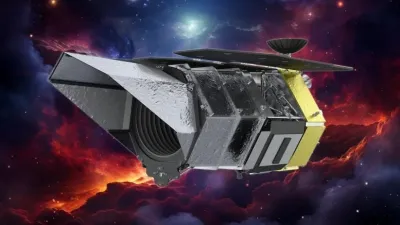
The observatory weighed nearly 4,000 pounds less than its maximum design limit at launch, allowing engineers to completely fill its propellant tanks. A highly accurate mid-course correction burned just 40 pounds of fuel instead of the allocated 441, fundamentally rewriting the mission's scientific timeline....
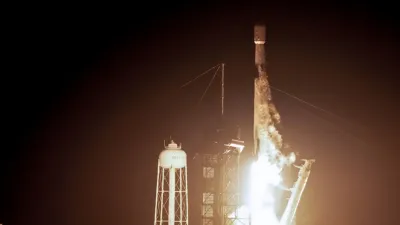
SpaceX's latest Falcon 9 mission pushes booster B1093 to its 17th flight, deploying 27 V2 Mini Optimized satellites. The launch marks the company's 662nd booster recovery and solidifies an unmatched cadence of 81 Starlink missions this year alone....
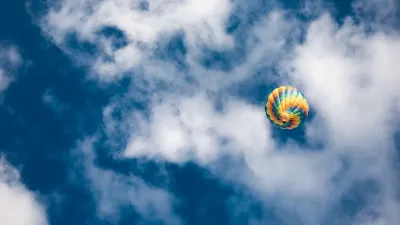
Balloons carrying chemical sensors climb 35 kilometers into the stratosphere before bursting, providing physical data that satellites cannot gather alone. The network now spans 16 active sites, proving that multi-billion dollar orbital missions still rely on rubber weather balloons for accuracy....
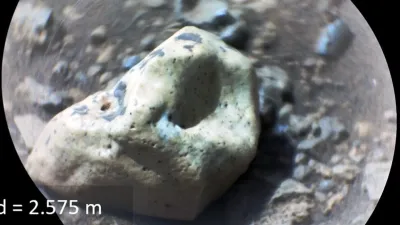
Unexplained 1-centimeter holes discovered by the Curiosity rover defy usual geological explanations due to a lack of erosion-causing pebbles. This Mount Sharp mystery points to unknown weathering processes that could explain how the red planet dried out....
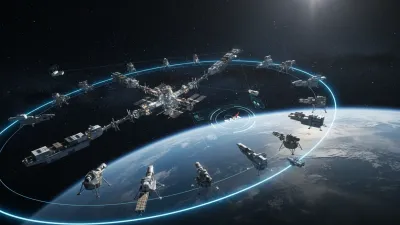
NASA's Gateway won't have runways. Instead, spacecraft will wait in a 'string of pearls' formation in a highly elongated orbit. Managing this lunar traffic requires a completely new mathematical rulebook....
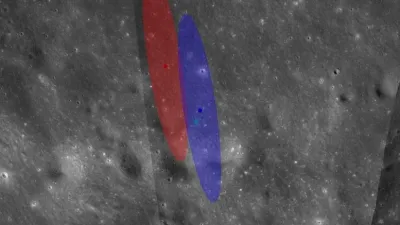
A 60-foot crater, dark weathered dust, and bright underground rock. An unplanned Falcon 9 rocket collision just gave scientists a free, real-time lunar excavation....
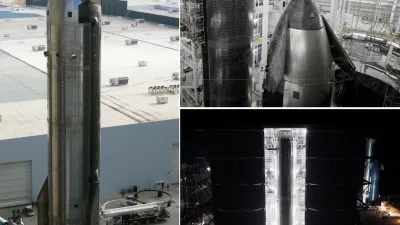
SpaceX is months away from catching its Starship booster with a launch tower, unlocking rapid reusability. A new US policy supports this by clearing airspace for 1,000 annual launches and a 2030 Moon Base....
The latest Falcon 9 launch pushes the Starlink constellation past 11,000 spacecraft. With one company now controlling 66% of all active satellites, the sheer scale of low Earth orbit traffic has fundamentally changed....
Perseverance detected chromium-bearing corundum in three plagioclase rocks, emitting a 3-millisecond glow that matches Earth rubies. The unexpected discovery points to violent ancient impacts rather than standard volcanic activity....
Danuri photographed the exact August 6 impact site, and the Falcon 9 stage was originally used for Firefly and ispace missions - the Moon is rapidly becoming a commercial graveyard....
SpaceX's Starfall mission isn't just about ultrafast Earth-to-Earth delivery - it's laying the groundwork for in-space manufacturing. But the real bottleneck isn't the rocket, it's the ground logistics....
NASA's next flagship telescope will use an 8-meter mirror to block starlight with atomic precision. But while the UK is funding the hardware, domestic research cuts threaten the scientists who will actually analyze the data....
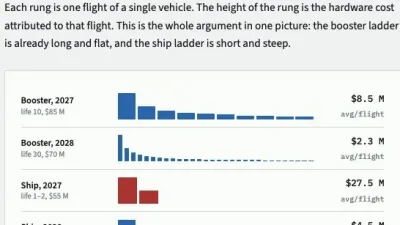
Rebuilding a damaged heat shield costs just $4 million, and SpaceX plans to build up to 100 new ships in 2027. The math shows why expendable final flights are the secret to orbital economics....
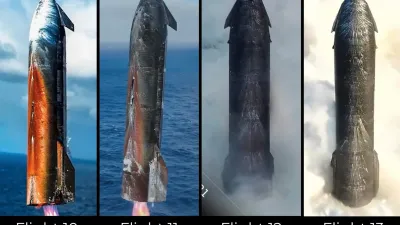
SpaceX deliberately subjected Flight 13 to a brutal reentry to test its heat shield. While the ~18,000 tiles survived, a partial landing burn failure on Booster 20 is forcing critical software upgrades for Flight 14....
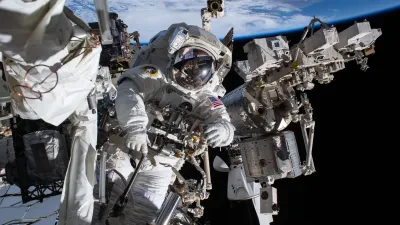
After eight months aboard the ISS, NASA's Chris Williams is returning to Earth. His mission wasn't just about exploration - space-grown semiconductors and microgravity cancer research are paving the way for commercial orbital manufacturing....
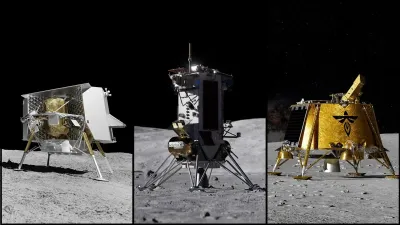
NASA is treating the Moon like a construction site. By equipping four new commercial landers with identical dust-tracking cameras and laser beacons, the agency is building a permanent lunar GPS and weather network....
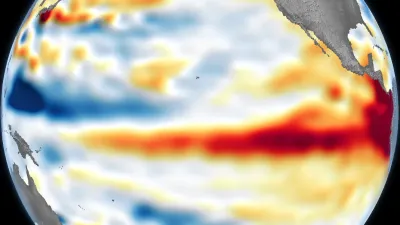
Sentinel-6 detects massive Kelvin waves moving east, while deep ocean heat physically expands sea surface height. The 2026 El Niño is building a resilient thermal blanket that could rival 1997....
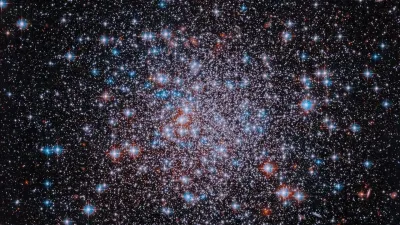
13 billion years old, two distinct star generations, and low metallicity. The new NGC 6426 Hubble image proves early cosmic environments were highly dynamic....