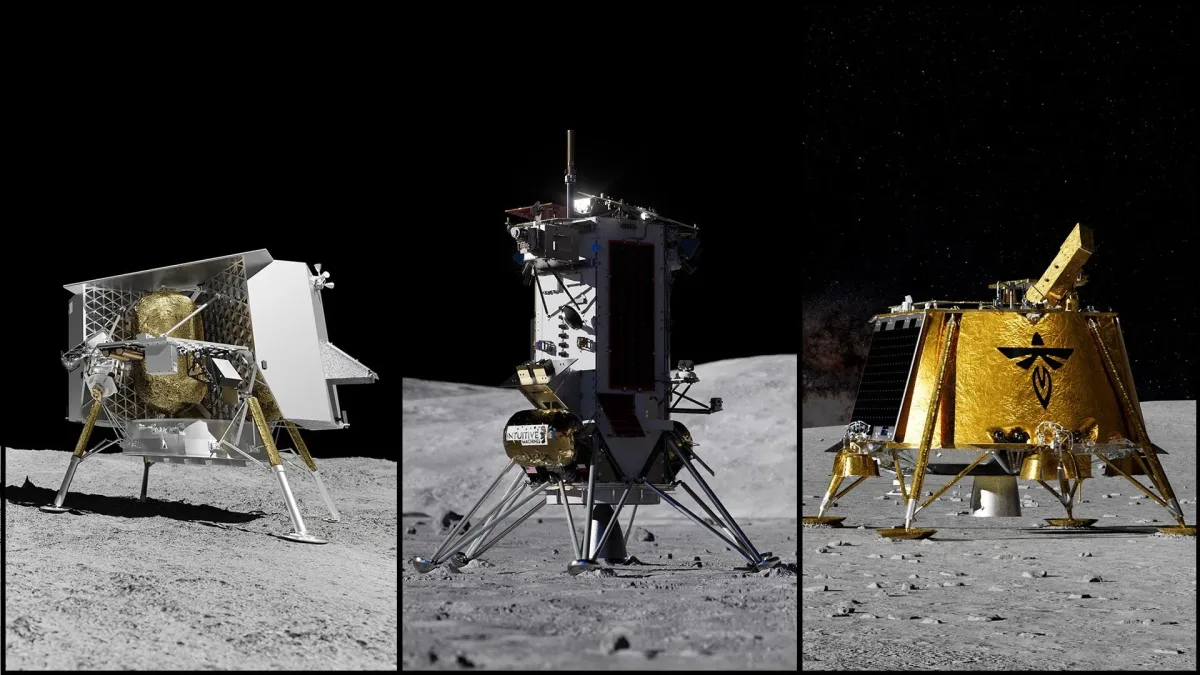
NASA is aggressively accelerating its timeline for a permanent lunar presence, awarding nearly $600 million to three commercial space companies to execute four new Moon landings by late 2028. This massive investment under the Commercial Lunar Payload Services (CLPS) initiative shifts the agency's focus from isolated scientific exploration to building the foundational infrastructure required for a sustained human outpost.
The selected companies will transport critical science instruments and technology demonstrations to the lunar surface. By utilizing upgraded versions of previously flown lander designs, NASA aims to increase the frequency and reliability of its lunar missions, paving the way for future crewed operations.
The $600 Million Commercial Fleet
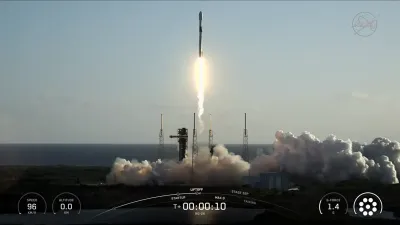
The new funding is split among three key players in the commercial space sector. Astrobotic will receive the largest share, securing $297.9 million to execute two separate lunar deliveries. Firefly Aerospace was awarded $144.2 million for a single delivery, while Intuitive Machines will receive $148.3 million for another.
These four flights are part of a broader strategy that now includes 17 planned lunar surface deliveries spread across multiple commercial providers. The goal is to create a rapid, iterative launch cadence that allows engineers to learn from each mission and continuously improve hardware reliability.
Standardized Payloads for Lunar Infrastructure
Rather than sending unique experiments on every flight, NASA is standardizing its approach. Each of the four new deliveries will carry the exact same trio of instruments to the Moon, establishing a baseline of environmental data across different landing sites.
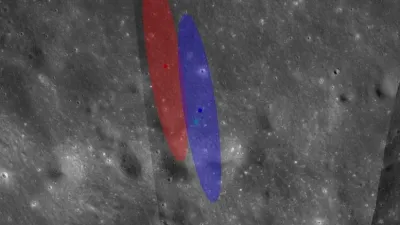
- Stereo Camera for Lunar Plume Surface Studies (SCALPSS): This system uses four cameras and stereo photogrammetry to create 3D models of how a lander’s engine exhaust displaces lunar dust. Understanding this erosion is critical for future missions where heavy spacecraft will land near established infrastructure.
- Laser Retroreflector Array (LRA): These passive, cookie-sized devices contain eight quartz prisms that reflect laser beams from orbiting spacecraft. They require no power and serve as permanent location markers to support precise lunar navigation.
- Linear Energy Transfer Spectrometer (LETS): Utilizing advanced silicon detectors, this instrument measures the strength and type of incoming space radiation. The data is essential for designing safer habitats and protecting astronauts during long-duration stays.
By flying the same science instruments on multiple landers, we will better understand potential hazards during landing and build out a global network of environmental data and location markers on the Moon. It’s akin to having weather stations in different locations on Earth.
- Joel Kearns, Deputy Associate Administrator for Exploration, NASA
The PROMISE Rover and Future Tech
Beyond the immediate lander contracts, NASA is actively evaluating new concepts to expand its Moon Base capabilities. One major proposal is the Polar Rover for Observation, Mapping, and In-Situ Exploration (PROMISE). Designed as a hybrid engineering evolution of the Mars Perseverance and Curiosity rovers, PROMISE would scout the lunar surface and subsurface for usable resources.
In the coming months, the agency also plans to request proposals for landers capable of delivering heavy power and avionics demonstrations. Additionally, NASA is seeking concepts for a lunar communications and navigation relay constellation, which would drastically improve data transmission between Moon Base systems and Earth.
The Blueprint for a Lunar Economy
The decision to fly the exact same three instruments on four different commercial landers reveals NASA's true strategy: standardization. By deploying identical radiation sensors and navigation beacons across multiple sites, NASA is essentially building the lunar equivalent of GPS and a global weather network. This is a stark departure from the Apollo era's single-shot science experiments.
Furthermore, the intense focus on the SCALPSS payload to study dust displacement highlights a highly practical engineering hurdle. When you build a permanent base, you cannot have landing rockets blasting abrasive lunar regolith into nearby habitats, rovers, or solar panels at high velocities. This $600 million investment isn't just for scientific discovery; it is the critical site survey and hazard mapping required for humanity's first off-world construction project.
This article was written by AI from reporting by scitechdaily.com.