Graphene Dirac Fluid Discovery Shatters a Fundamental Law of Physics
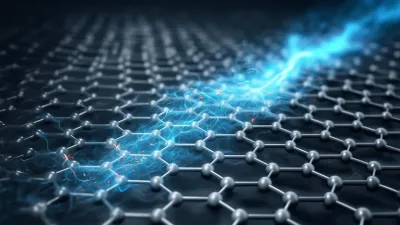
The discovery of a graphene Dirac fluid has officially shattered a fundamental law of physics, revealing that electrons can flow like a nearly frictionless liquid....
64 articles
Unravel the mysteries of the universe. Articles on physics theories, chemical breakthroughs, and the building blocks of reality.
The discovery of a graphene Dirac fluid has officially shattered a fundamental law of physics, revealing that electrons can flow like a nearly frictionless liquid....
Giant superatoms in quantum computing offer a groundbreaking solution to the decoherence issues that destroy fragile qubits, paving the way for stable systems....
Physicists have developed a groundbreaking dual-frequency Paul trap capable of confining particles with drastically different behavioral needs, solving a decades-old bottleneck in antimatter research....
A new measurement technique tracks quantum data loss 100 times faster, offering a real-time solution to qubit instability....
Researchers at the University of Warsaw have used the 1836 Talbot effect to transmit multidimensional quantum keys over existing city fiber networks using a single photon detector....
Australian researchers have successfully tested the world's first proof-of-concept quantum battery, unlocking ultrafast charging through quantum mechanics....
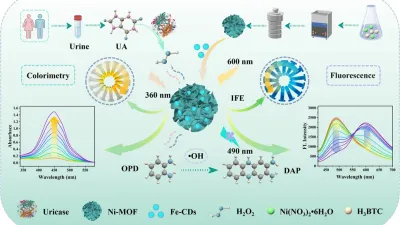
Researchers have developed Ni-MOF@Fe-CDs, a dual-signal nanozyme probe that detects uric acid with exceptional sensitivity down to 0.072 μM via colorimetric and ratiometric fluorescence modes. This breakthrough addresses nanozyme limitations in catalytic activity and multitarget detection, offering reliable analysis in real urine samples....
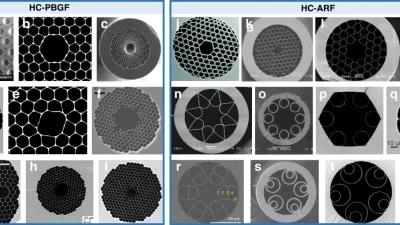
Researchers at the University of Wollongong have successfully demonstrated a new photonics-based solid-state gravimeter utilizing the gravito-optic effect to measure Earth's gravity. This optical fibre sensing system eliminates the need for traditional test masses, paving the way for highly accurate gravity mapping on moving platforms....
Quantum computing in chemistry has long been hailed as the technology's killer app, but new research suggests its practical use for molecular calculations may be severely limited....
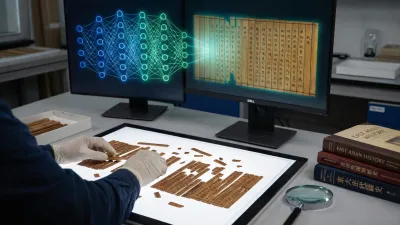
The WisePanda deep learning framework is revolutionizing archaeology by using physics-driven AI to reconstruct fragmented ancient bamboo slips....
For the first time, scientists have forced light to mimic the Nobel Prize-winning quantum Hall effect, opening new doors for quantum computing and metrology....
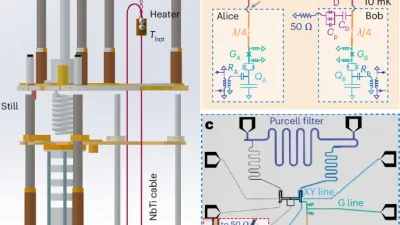
Microwave quantum network results up to 4 K show a practical path to linking superconducting qubits outside ultra-cold, fully isolated setups. The team reports radiative cooling that suppresses thermal photons, enabling state transfer and remote entanglement above classical limits....
A new comparative study evaluates Variational Quantum Linear Solvers (VQLS), HHL, and Quantum Annealing for solving complex time-fractional diffusion equations in scientific computing....
Researchers have developed a method to track qubit performance fluctuations in milliseconds, solving a critical 'blind spot' in quantum computing stability....
Precise control over the geometry and symmetry surrounding trivalent lanthanide centers unlocks unprecedented tailoring of luminescence and magnetic properties, propelling applications in quantum technologies and advanced materials. This breakthrough addresses longstanding challenges in harnessing Ln3+ ions for emerging tech....
Imagine decoding a quantum algorithm's black box with everyday AI tricks—researchers just did it for Grover's search, turning circuit chaos into crystal-clear concepts....
Researchers have developed a machine learning interatomic potential that accurately models the structural properties of iron oxides, a vital class of materials with complex behaviors....
Researchers explore time-space fractional Boussinesq equation, uncovering soliton structures and nonlinear wave behaviors vital for fluid dynamics....
The February 2026 issue of Chemistry Today explores nanoparticle tech for tough diseases, flow chemistry, and biotech shifts, offering key insights for students and researchers....
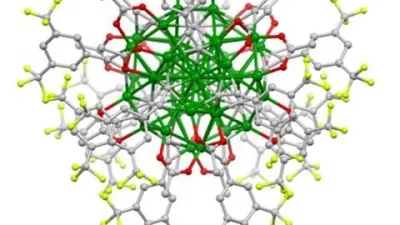
Tsinghua University scientists create stable Cu45 copper superatom, achieving over 80% efficiency in converting CO2 to ethylene, surpassing all known copper catalysts for carbon recycling....
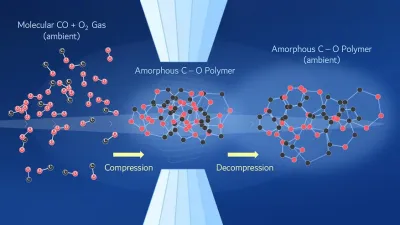
Lawrence Livermore National Laboratory researchers have identified a first-of-its-kind carbon dioxide-equivalent polymer recoverable from high-pressure conditions, promising new energetic materials for propellants and explosives. Published in Communications Chemistry, the discovery uses simulations to reveal a pathway via carbon monoxide and oxygen mixtures. This could unlock high-energy-density materials stable at ambient conditions....