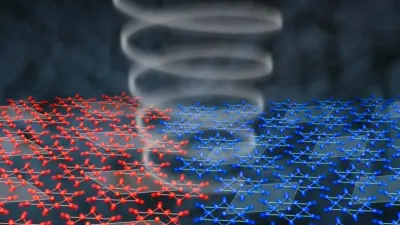
The quantum nature of time may soon be observable, challenging our fundamental understanding of reality as a rigid, unidirectional arrow. In a groundbreaking new paper published in Physical Review Letters, physicists have proposed that ultra-precise optical atomic clocks could detect time passing at multiple rates simultaneously. This discovery could bridge the long-standing gap between classical relativity and quantum mechanics, fundamentally altering how we perceive the universe.
For centuries, time was considered an absolute universal constant, a concept defined by Sir Isaac Newton. Albert Einstein later disrupted this framework with his theory of relativity, proving that time is relative and fluctuates based on motion and gravity. Physicist Igor Pikovski of the Stevens Institute of Technology notes that while relativistic time dilation is well understood, time's behavior on a quantum scale remains a profound mystery. Even within quantum theory, time is typically treated as a classical, straight-line phenomenon operating in the background.
According to Pikovski, finding a quantum theory of gravity is one of modern physics' greatest challenges. In such a theoretical framework, classical concepts like time and gravity must be described by something fundamentally quantum. The research team suggests that time itself could exhibit quantum hallmarks, meaning a single clock could theoretically record several different times simultaneously in a state of temporal superposition.
Probing Temporal Superposition with Optical Clocks
To observe these elusive phenomena, researchers propose utilizing optical clocks, which are highly precise atomic clocks that use optical light frequencies instead of traditional microwave signals. These devices tick to the oscillating beat of atoms excited by lasers, offering unprecedented accuracy. The team believes these clocks are sensitive enough to detect overlapping times separated by unimaginably small fractions, specifically on the order of tens-of-attoseconds intervals.
Atomic clocks are already capable of measuring the tiny effects of relativity, such as the minute time dilation caused by lifting a clock just a few inches further from Earth's gravitational pull. To push this precision into the quantum realm, the researchers propose using a quantum technique known as "squeezing." This method amplifies tiny fluctuations within a system, enhancing the quantum behavior of the atoms inside the clock and making strange temporal effects more visible to observers.
The research also explores how entanglement could apply to time, suggesting that time and motion could become linked to influence each other's behavior. While some of these quantum effects remain too fragile for current technology, the team asserts that others are within reach and could yield the first experimental evidence of time behaving quantum mechanically.
The Path to a Quantum Theory of Gravity
This theoretical framework provides a critical stepping stone toward resolving the ultimate physics puzzle: unifying Einstein's relativity with quantum mechanics. By demonstrating that time can exist in a superposition when unobserved, physicists gain a powerful new tool to probe the strange inner workings of nature. It shifts the conversation from purely theoretical mathematics to actionable, experimental physics using existing optical clock technology.
The implications extend far beyond laboratory measurements, directly challenging our everyday experience of reality. As Pikovski highlighted, Einstein famously questioned whether the Moon exists when nobody is looking to illustrate the bizarre predictions of quantum mechanics. If time itself inherits these quantum features, it proves that the fundamental structure of the universe is far more complex and fluid than human perception allows.