The race to power artificial intelligence has pushed Earth's infrastructure to its limits, prompting companies like SpaceX to look upward. Building orbital data centers could solve the severe land, water, and energy constraints plaguing terrestrial computing, but the unforgiving environment of space presents massive engineering hurdles.
Earth-based facilities require massive amounts of electricity and water for cooling, and power demand is growing rapidly with AI. Moving these operations to orbit offers seductive advantages. The Sun provides uninterrupted solar energy, while the cold background of space - hovering near minus 270 degrees Celsius - offers a natural heat sink. This theoretical setup bypasses local zoning battles and the heavy environmental footprint of traditional server farms.
However, operating industrial-scale computing in a vacuum is vastly different from launching standard communications satellites. According to experts in data center design and space systems engineering, dissipating heat without air is surprisingly difficult. Waste heat must be expelled as infrared radiation.
To remove just 10 megawatts of heat, an orbital facility would need thermal radiators roughly the size of two football fields. Furthermore, these massive structures cannot be launched intact; they require advanced in-space servicing, assembly and manufacturing.
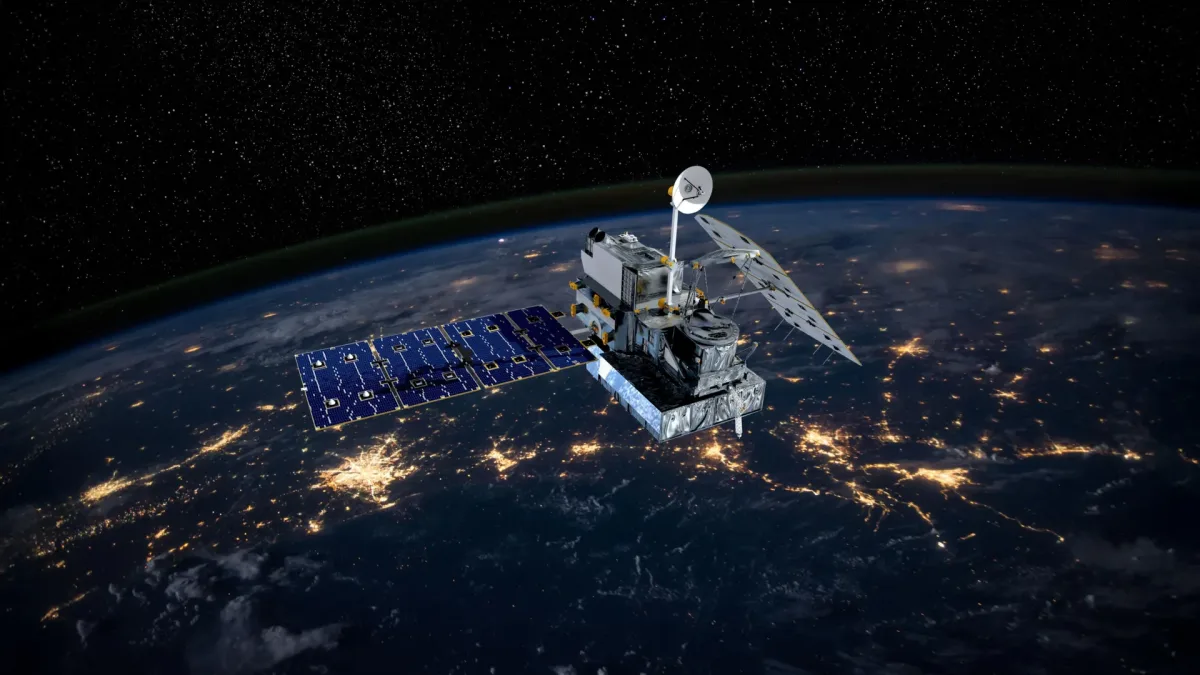
The rapid obsolescence of AI hardware adds another layer of complexity. Terrestrial servers are typically replaced every three to five years, a refresh cycle that becomes astronomically expensive in orbit. Despite these barriers, SpaceX recently unveiled the design for its AI1 Compute Satellite. While this initial spacecraft is estimated to be 100 to 1,000 times less capable than current ground-based data centers, it represents a foundational step toward an orbital computing ecosystem.
The True Market for Orbital Computing
While the idea of streaming Netflix or running ChatGPT from a space-based server sounds futuristic, the physics of latency make it impractical for mainstream consumer applications. Financial transactions and interactive AI require millisecond response times that orbital distances simply cannot support.
The real breakthrough here isn't replacing Earth's cloud infrastructure - it's creating a localized edge computing network for space itself. As satellite constellations multiply and military space operations expand, the demand for in-orbit data processing will skyrocket.
By processing Earth observation data or intelligence feeds directly in space before beaming the refined results down, SpaceX's AI1 Compute Satellite could drastically reduce bandwidth bottlenecks. The ultimate winner in this race won't be the company that builds the biggest space server, but the one that successfully monetizes the orbital edge.