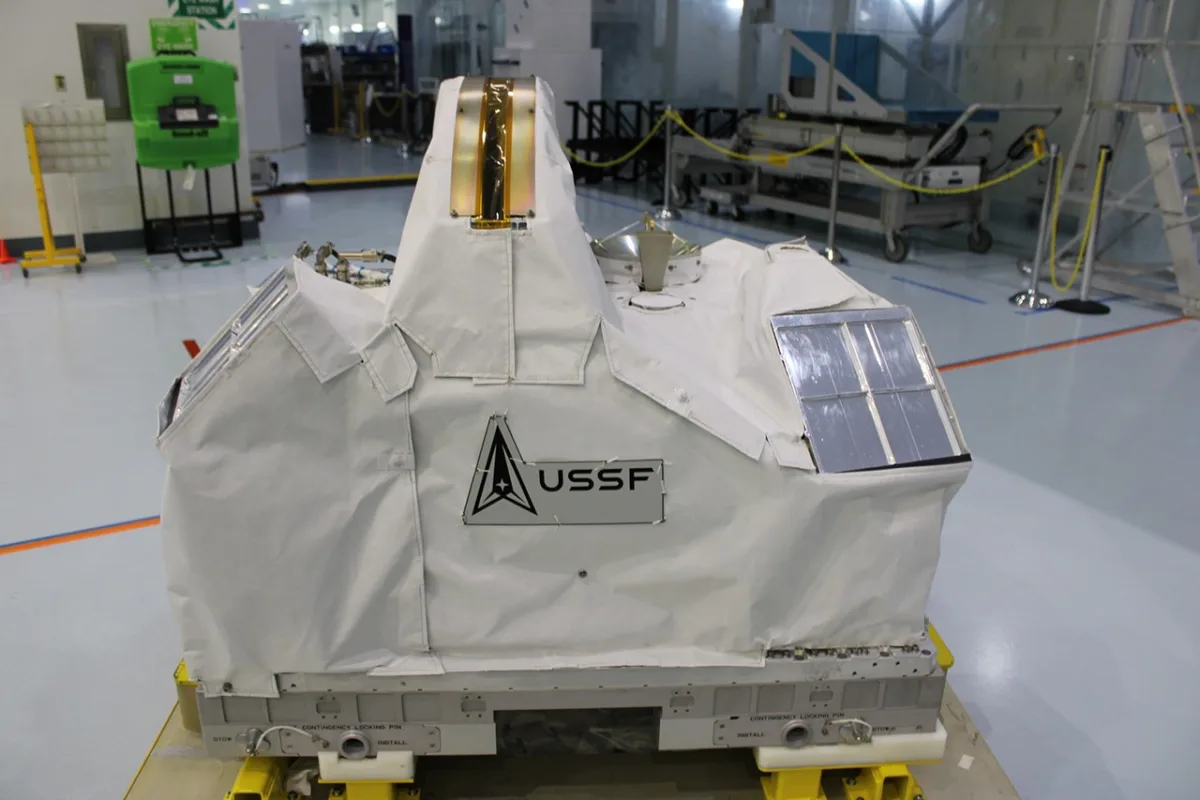
The upcoming NASA STORIE mission is set to tackle one of the most unpredictable threats to modern technology: destructive space weather. By studying the invisible, doughnut-shaped trap of charged particles surrounding our planet, scientists hope to understand the magnetic fluctuations that routinely damage satellites and disrupt terrestrial power grids. This new orbital instrument promises to deliver an unprecedented inside-out view of Earth's volatile ring current.
Scheduled to launch this May aboard the 34th SpaceX commercial resupply services flight, the instrument will head to the International Space Station. The project is flying as part of the Space Test Program - Houston 11 (STP-H11) payload, which represents a strategic partnership between the U.S. Space Force and NASA. Once robotically installed on the exterior of the station's Columbus module, the device will begin its six-month observation period.
Earth’s magnetic field acts as a powerful trap, snaring electrically charged particles in a region known as the ring current. During intense solar storms, this captive swarm fluctuates dramatically in size and intensity, creating electrical currents as positively and negatively charged particles flow in opposite directions. These sudden changes can induce dangerous currents on ground-based pipelines and cause severe charge buildup on orbiting spacecraft. Furthermore, when energy ramps up, the upper atmosphere heats and expands, creating unexpected drag that can force satellites to deorbit prematurely.
How the NASA STORIE Mission Tracks Energetic Neutral Atoms
Because the particles within the ring current are invisible, traditional cameras cannot capture them directly. Instead, the NASA STORIE mission will scan for the faint glow of energetic neutral atoms (ENAs). These atoms form when trapped charged particles steal an electron from Earth’s outer atmosphere, known as the exosphere, neutralizing their charge and allowing them to escape the magnetic field.
"Once those charged particles become neutral, they no longer feel the effects of Earth’s magnetic field, and they are no longer trapped," explained Alex Glocer, the principal investigator at the Goddard Space Flight Center. By measuring the speed and trajectory of these escaping atoms, researchers can trace the origins of the ring current's population. The team is specifically looking for positively charged oxygen atoms (O+), which would indicate that the particles are bleeding out from Earth's atmosphere rather than arriving via the solar wind.
Overcoming the Limitations of Past Observations
Previous scientific endeavors, such as the IMAGE and TWINS missions, attempted to study these energetic neutral atoms using a top-down perspective. While this allowed them to view the entire ring current simultaneously, the ultraviolet light reflecting off Earth severely interfered with their observations. Additionally, that specific viewing geometry made it incredibly difficult to spot trapped particles near the planet's equator.
By operating from the space station, this new instrument benefits from a unique inside-out vantage point with Earth positioned safely behind it. While it can only view one slice of the particle band at a time, the station's rapid orbit allows the system to build a complete, 360-degree picture roughly every 90 minutes. This continuous mapping will reveal whether the particle population builds up in sudden, violent bursts or through a slow, steady accumulation.
The Growing Need for Space Weather Forecasting
As low-Earth orbit becomes increasingly crowded with commercial satellite constellations, understanding the mechanics of the ring current is no longer just an academic pursuit. The data gathered over this six-month operational window will be critical for predicting atmospheric drag and mitigating the electrical hazards that threaten modern orbital infrastructure.
By comparing the ring current's behavior during quiet solar periods against its violent fluctuations during solar storms, researchers can refine their predictive models. Ultimately, this inside-out mapping strategy will transition space weather forecasting from reactive observation to proactive defense, ensuring that the technology humanity relies on remains shielded from the Sun's most damaging outbursts.