The unprecedented NASA Swift Observatory rescue is officially underway as a commercial spacecraft prepares to catch the falling 21-year-old satellite before it burns up in Earth's atmosphere. Driven by a recent surge in solar activity that thickened the upper atmosphere, the $30 million mission marks the first time a commercial servicer will attempt to grapple and boost a legacy science platform never designed to be touched.
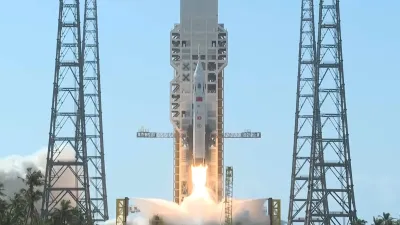
Built by Katalyst Space Technologies, the robotic servicer known as LINK has successfully cleared environmental testing at NASA’s Goddard Space Flight Center. The spacecraft, originally intended for a demonstration mission, was rapidly refitted with a custom grappling system and three ion thrusters. Following successful thermal vacuum and vibration tests, LINK is scheduled to ship to NASA’s Wallops Flight Facility in early June for integration with a Northrop Grumman Pegasus XL rocket.
The Physics of a Falling Satellite
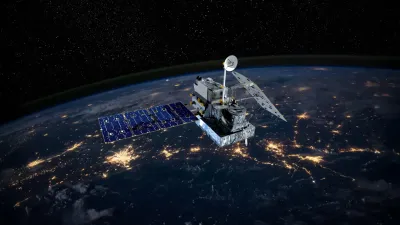
Launched in 2004 to detect gamma-ray bursts, Swift has operated for over two decades without refueling ports or grappling fixtures. However, increased solar output has magnified atmospheric drag, pulling the observatory down from its original 600-kilometer altitude to roughly 400 kilometers. If the satellite drops below 300 kilometers, a boost becomes physically infeasible.
Initial models projected this critical threshold would be reached between late 2026 and early 2027, but revised data accelerated the timeline to as early as late May 2026. This rapidly shrinking window forced NASA and Katalyst to push LINK to flight-ready status in just eight months, allowing orbital mechanics to dictate the mission's risk tolerance rather than standard program planning.
How NASA is Buying Time
To prevent Swift from crossing the point of no return before LINK can launch, controllers have executed a painful but necessary trade-off. On February 11, NASA suspended most science operations, halting the spacecraft's ability to slew and follow up on gamma-ray bursts.
By April 7, operators took the drastic step of powering down the Burst Alert Telescope entirely. This shutdown allowed controllers to reposition the solar arrays, creating a minimum aerodynamic cross-section to reduce drag. Every fractional reduction in atmospheric resistance translates to crucial days of extended orbital life, keeping the target viable for capture.
The Dawn of Commercial Satellite Servicing
If Katalyst successfully executes this high-risk capture, it will fundamentally rewrite the lifecycle of low Earth orbit infrastructure. NASA currently operates a fleet of aging observatories - most notably Hubble - that face the binary fate of abandonment or controlled deorbit. Proving that a $30 million commercial servicer can safely grapple an uncooperative, legacy target provides a highly cost-effective alternative to replacing billion-dollar science platforms.
Beyond the immediate survival of Swift, this mission highlights a critical vulnerability in modern space operations: legacy satellites were not built for the atmospheric realities of today's hyperactive solar cycle. As drag climbs and orbital margins shrink, the ability to rapidly deploy commercial servicers will transition from an experimental luxury to an absolute necessity for space agencies worldwide.
This article was written by AI from reporting by spacedaily.com.