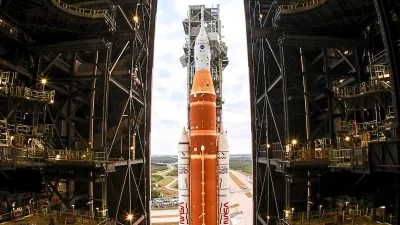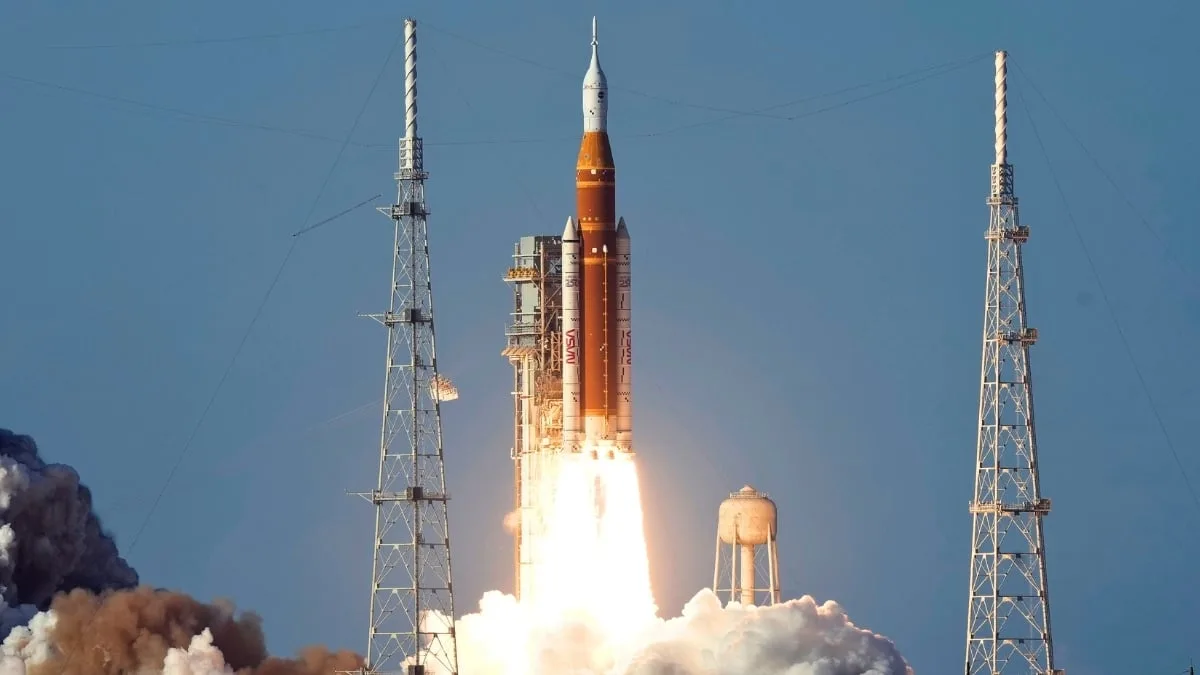
The NASA Artemis II launch has officially shattered a 53-year hiatus in deep space human exploration, successfully lifting off from the Kennedy Space Center. On April 1, 2026, at 22:35 UTC, the Space Launch System (SLS) rocket propelled a four-person crew into orbit, marking the first time humanity has headed toward the Moon since the Apollo era. For space enthusiasts and the global scientific community, this mission serves as the ultimate stress test for deep space navigation, paving the critical path for returning humans to the lunar surface later this decade.
The historic flight carries mission commander Reid Wiseman, pilot Victor Glover, and mission specialists Christina Koch and Jeremy Hansen. As the spacecraft entered Earth orbit, the crew reported a beautiful moonrise, setting the tone for their approximately 10-day journey. During a pre-launch press conference, NASA associate administrator Amit Kshatriya emphasized that returning to the Moon is a buildable, optimistic vision achieved through international and industrial collaboration.
Mission Parameters and Historic Milestones
The primary objective of this test flight is to assess how the Orion module operates under real deep-space conditions. This includes rigorously testing life support, navigation, and communication systems far beyond the low Earth orbit occupied by the International Space Station. The mission follows the uncrewed Artemis I practice run and overcomes recent delays caused by a liquid hydrogen leak and a helium flow problem.
To ensure a safe and successful dress rehearsal for future lunar landings, the Artemis II flight plan includes several critical phases:
- Earth Orbit System Checks: The crew will spend approximately 23.5 hours in Earth orbit to perform comprehensive system diagnostics before pushing toward the Moon.
- Deep Space Navigation: The mission will test how astronauts manage extended operations and communication delays in deep space.
- Shattering Apollo Records: When Orion loops behind the Moon on April 6, the crew is expected to travel farther from Earth than any humans in history, surpassing the 400,171-kilometer (248,655-mile) record set by Apollo 13.
The Roadmap to the Lunar South Pole
The success of the Artemis II mission is the linchpin for NASA's broader lunar ambitions. The next stage, Artemis III, is currently scheduled for 2027 and will focus on testing rendezvous and docking procedures with commercial spacecraft in low Earth orbit. Following that, the Artemis IV mission is targeted for early 2028, aiming for a crewed landing near the Moon's south pole to conduct science observations and collect samples.
The Strategic Takeaway: A New Era of Lunar Presence
The successful liftoff of the SLS rocket is not just a nostalgic nod to the Apollo program; it is the foundational proof-of-concept for a sustained human presence in space. By pushing the Orion spacecraft to its limits, NASA is actively validating the hardware and operational protocols required for the complex Artemis IV south pole landing. This mission transitions lunar exploration from theoretical planning to actionable execution.
Furthermore, breaking the Apollo 13 distance record demonstrates the immense capability of modern aerospace engineering. If the Orion module performs flawlessly over these 10 days, it will solidify confidence in NASA's commercial partnerships and accelerate the timeline for establishing a permanent lunar base. The data gathered regarding deep-space communication delays will also be instrumental in preparing for eventual crewed missions to Mars.
This article was written by AI from reporting by sciencealert.com.