SpaceX Falcon 9 Delivers Ninth GPS III Satellite Following Launch Provider Switch
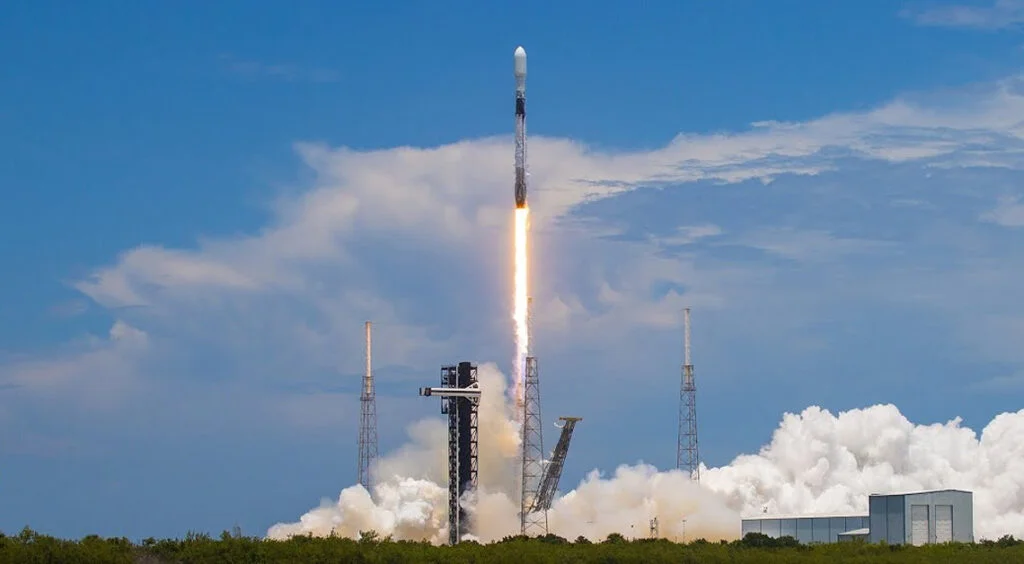
On January 27, 2026, at 11:53 p.m. EST, a SpaceX Falcon 9 rocket roared to life from Space Launch Complex 40 at Cape Canaveral Space Force Station, deploying the U.S. Space Force's ninth GPS III satellite, known as GPS 3-9 or SV09, into medium Earth orbit. This mission marked the third instance where the government reassigned a GPS satellite from United Launch Alliance's (ULA) Vulcan Centaur to SpaceX's proven Falcon 9, highlighting shifts in national security launch dynamics.
Rapid Deployment Amid Contract Shifts
The GPS 3-9 satellite arrived at Florida in July 2025 and launched within six months, a feat U.S. Space Force Col. Stephen Hobbs, MD 31 commander, called an "outstanding collaboration" that delivers "immediate value to the Joint Force" through its M-Code capabilities. M-Code, or Military Code, provides jam-resistant, secure GPS signals for precision navigation in contested environments, enhancing warfighter effectiveness.
Originally awarded under the National Security Space Launch (NSSL) Phase 2 contracts$4.5 billion to ULA and $4 billion to SpaceXthe GPS missions faced delays due to Vulcan's certification hurdles. ULA's Vulcan flew first in January 2024, but a solid rocket booster issue on its second flight postponed certification to March 2025. Despite ULA securing its first national security Vulcan launch in August 2025 and planning USSF-87 for February 12, 2026, SpaceX has taken over multiple GPS tasks, especially in NSSL Phase 3's Lane 1 for emerging providers.
Technical Breakdown of GPS III and Falcon 9
GPS III satellites, built by Lockheed Martin, represent the most advanced in the constellation, offering three times the accuracy, eight times the anti-jamming power, and 30% better performance than prior GPS models. Each carries regional Military Protection Signals (MPS) using M-Code for secure operations. Orbiting at about 20,200 km, GPS 3-9 joins eight predecessors, including SV07 (December 2024) and SV08 (May 2025), expanding the 31-satellite constellation for global coverage.
The Falcon 9 Block 5 first stage, on its booster reuse, separated at T+2:28, executed a drone ship landing on "A Shortfall of Gravitas." SpaceX confirmed satellite deployment roughly 38 minutes post-liftoff on January 28 UTC. Weather delays pushed the launch from January 25, with a 40% favorable forecast on January 26.
Broader Implications for U.S. Space Launch Landscape
NSSL Phase 3 splits missions into Lane 1 (SpaceX dominant) and Lane 2 (SpaceX, ULA, Blue Origin). Blue Origin's New Glenn requires four flights for certification, delaying its entry. SpaceX's rapid turnaroundevident in prior switchesunderscores its reliability, with the Space Force praising adaptability to "complex and dynamic factors." This launch reinforces Falcon 9's monopoly on reshuffled national security payloads amid Vulcan's growing pains.
Looking ahead, ULA eyes more Vulcan missions, but SpaceX's cadence pressures competitors. The GPS constellation modernization, now at nine GPS III satellites, bolsters U.S. position dominance against rivals like China's BeiDou and Europe's Galileo. Enhanced M-Code rollout across the fleet promises resilient PNT (Positioning, Navigation, Timing) for military and civilian users.
Context of Recent Space Force Missions
- GPS 3-7: Launched June 2023 on Falcon 9.
- GPS 3-8: October 2024 on Falcon 9 after Vulcan delay.
- ULA Vulcan Cert-1: August 2025 national security debut.
This success arrives as NASA preps its SLS wet dress rehearsal on January 31, 2026, for Artemis II, but GPS 3-9 stands out for immediate operational impact. SpaceX's role expansion signals a maturing market where reliability trumps original plans, ensuring swift delivery of high-value assets.
Impacts extend to joint forces relying on GPS for guided munitions, reconnaissance, and logistics. With beamforming antennas on GPS III, signals can be steered away from jammers, a critical edge in modern warfare. Economically, Lockheed's $7.2 billion GPS III program sustains U.S. leadership in space-based navigation.