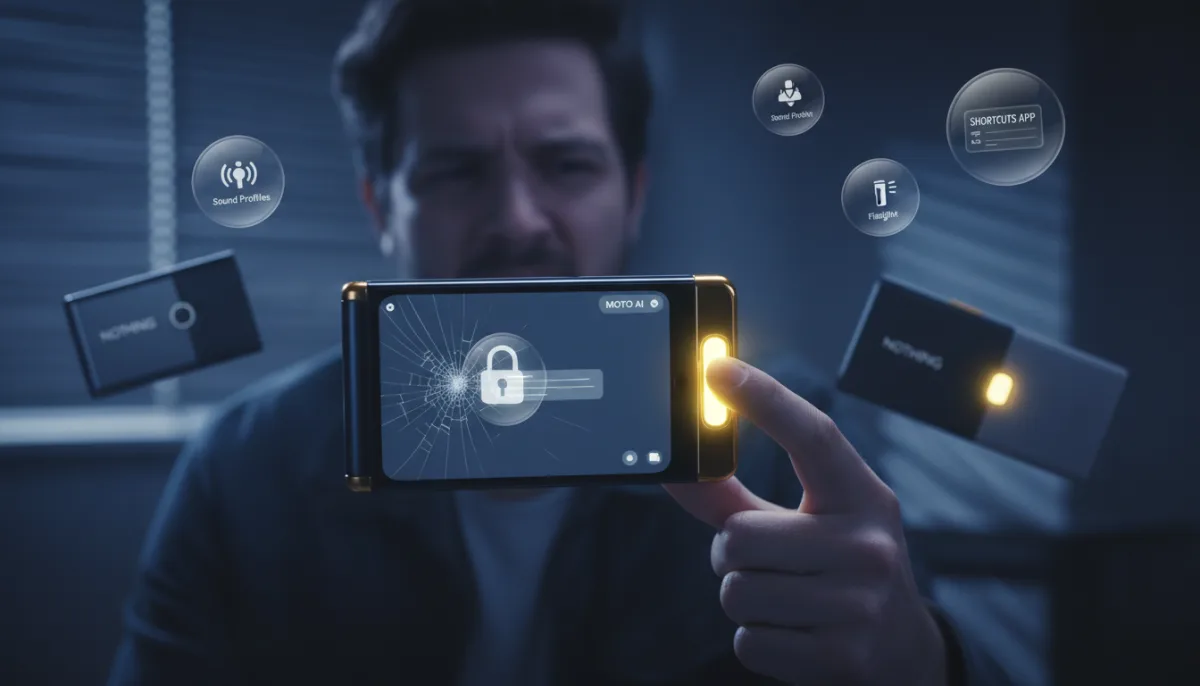
Smartphone manufacturers are increasingly adding extra hardware buttons to their devices, but the execution is often deeply flawed. The rise of dedicated AI buttons, particularly the Motorola AI Key found on devices like the Razr Fold, has become one of the most frustrating hardware trends of 2026. Instead of offering genuine utility, these locked-down keys are forcing users into half-baked AI ecosystems they never asked for.
Adding extra physical controls is not inherently bad when companies prioritize user choice. The Plus Key on recent OnePlus devices offers a solid range of quick tools, such as toggling sound profiles or the flashlight. However, the gold standard remains the iPhone 15 Pro. By replacing the traditional alert slider with the Action Button, Apple gave users deep customization through the Shortcuts app. This flexibility allows for highly specific actions, like toggling between active noise cancellation and transparency modes on Beats earbuds with a single long-press.
In stark contrast, the Motorola AI Key offers almost zero redeeming qualities due to its severe software restrictions. Users can only assign a double-press or long-press to a very limited set of proprietary features, such as summarizing recent notifications or summoning Moto AI. These tools pale in comparison to more robust assistants like Gemini, and basic notification summaries are already handled natively by the notification shades on modern Pixel and Galaxy phones. The only marginally useful option is a voice memo shortcut, which hardly justifies dedicating an entire physical button to it.
The physical placement of the button exacerbates the software limitations. On the Motorola Razr Fold, the AI Key sits opposite the volume rockers when the device is open. However, when the phone is folded shut, the key aligns directly next to the volume buttons. This design flaw leads to constant accidental presses, forcing many users to disable the button entirely just to avoid the frustration. Other Android manufacturers, including Nothing, are adopting similar locked-down AI buttons, threatening to make this a widespread industry annoyance.
The Customization Illusion and the Ghost of Bixby
It is ironic that the industry is repeating the exact same mistakes Samsung made years ago with the heavily criticized Bixby Key. Even at its worst, Samsung eventually allowed users to remap one of the Bixby Key's functions to open any app they wanted. Motorola and Nothing are currently offering less customization in 2026 than Samsung did a half-decade ago.
If manufacturers simply unlocked these buttons via a software update and allowed native remapping, these useless AI keys could instantly transform into the most powerful hardware feature on the phone. Until then, they remain a frustrating monument to forced ecosystem adoption rather than user-centric design. The Android ecosystem was built on flexibility, and locking physical hardware to proprietary AI services is a direct betrayal of that philosophy.
This article was written by AI from reporting by androidauthority.com.