

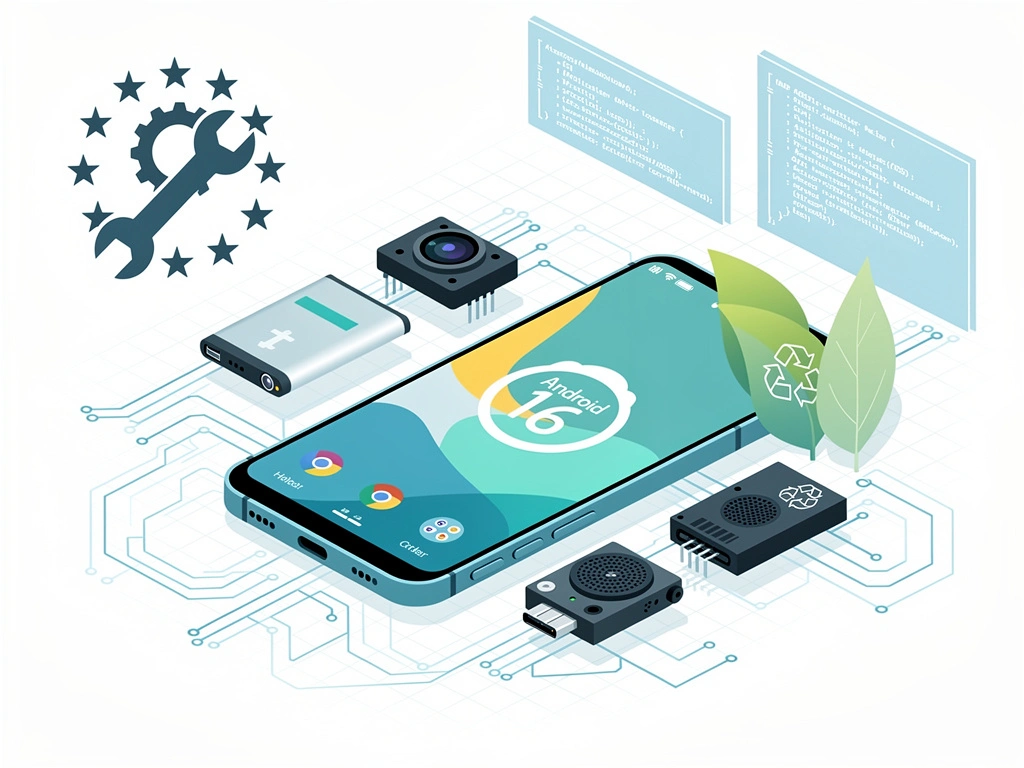
The Fairphone 6 has officially entered the conversation, marking a critical inflection point for the Dutch social enterprise as it attempts to shed its niche status and compete directly with industry titans. By combining a sleek, modernized aesthetic with its signature modular architecture, the company is betting that consumers in 2026 are finally ready to prioritize longevity and ethics without sacrificing the premium feel of their daily driver.
This sixth-generation device represents a significant departure from its predecessors, addressing the primary criticism that has historically plagued sustainable tech: the performance gap. With the Fairphone 6, the company is not just selling a conscience-clearing device; it is pitching a legitimate alternative to the mid-to-high-range offerings from Samsung and Google, promising that you no longer need to compromise on speed or camera quality to support a circular economy.
The Mainstream Gamble: Design Meets Durability
For years, owning a modular phone meant accepting a bulkier, utilitarian industrial design. The Fairphone 6 challenges this paradigm by introducing a slimmer chassis and significantly reduced bezels, bringing its visual identity closer to contemporary flagship standards. The engineering team has managed to retain the tool-free repairabilityallowing users to swap out the battery, screen, and camera modules in minuteswhile achieving an IP68 rating for water and dust resistance, a feat previously thought difficult for fully modular devices.
This design overhaul is strategic. To win over the mainstream, the device must feel at home in a carrier store next to an iPhone or a Galaxy. The gamble lies in the pricing strategy; by upgrading materials and design, the manufacturing costs rise. Fairphone is banking on the idea that the 'total cost of ownership' argumentwhere a phone lasts 7-8 years through cheap repairswill outweigh the higher upfront sticker price for skeptical consumers.
Under the Hood: Performance and Software Longevity
Internally, the Fairphone 6 makes a substantial leap in processing power, likely utilizing a high-efficiency chipset optimized for long-term stability rather than raw peak benchmarks. This choice ensures that the device remains responsive not just today, but five years down the line. The integration of a brighter, variable refresh rate OLED panel addresses the multimedia consumption needs of modern users, ensuring that streaming and gaming experiences are fluid and vibrant.
Software support remains the company's strongest moat. Building on the industry-leading commitment of its predecessor, the Fairphone 6 promises an extended window of Android updates and security patches, potentially stretching into the early 2030s. This software roadmap is critical, as hardware durability is meaningless if the operating system becomes obsolete. The company is also expanding its ecosystem, offering easier access to spare parts and guides directly through an on-device app, democratizing the repair process for non-technical users.
| Feature | Fairphone 6 (2026) | Fairphone 5 (2023) |
|---|---|---|
| Processor | Next-Gen Mid-Range (Optimized) | Qualcomm QCM6490 |
| Display | LTPO OLED (1-120Hz) | OLED (90Hz) |
| Repairability | Tool-free, IP68 Rated | Modular, IP55 Rated |
| Software Support | 8-10 Years | 8 Years |
Sustainability as a Premium Feature
The narrative around the Fairphone 6 shifts sustainability from a 'nice-to-have' to a premium feature set. The device incorporates a higher percentage of fair-trade gold, recycled aluminum, and conflict-free minerals than any other smartphone on the market. In a regulatory environment where the EU is pushing hard for the 'Right to Repair,' this device is future-proofed against upcoming legislation that may force other manufacturers to scramble.
Moreover, the modular camera system has received a massive overhaul. Recognizing that camera quality is the number one driver of smartphone upgrades, Fairphone has partnered with advanced sensor manufacturers to deliver computational photography capabilities that rival the Pixel 'a' series. If a better camera sensor becomes available in two years, users can theoretically buy just the camera module upgrade rather than a whole new phone, a value proposition that is unique in the mobile landscape.
Frequently Asked Questions
Is the Fairphone 6 waterproof despite being modular?
Yes, the Fairphone 6 has achieved an IP68 rating, meaning it can withstand submersion in water, a significant engineering breakthrough for a device that can be opened by the user.
Can I upgrade the processor in the Fairphone 6?
No, the core processor (SoC) is soldered to the mainboard and cannot be swapped. However, peripheral modules like the camera, battery, USB-C port, and display are fully upgradeable.
How does the price compare to flagship phones?
The Fairphone 6 is priced similarly to premium mid-range phones. While the upfront cost is higher than budget phones, the long-term cost is lower due to cheap repairs and extended lifespan.
My Take
The Fairphone 6 is the most mature device the company has ever produced. It successfully sheds the 'prototype' feel of early ethical tech. While it may not beat a Galaxy S26 in raw benchmark scores, it wins the marathon. For users tired of the two-year upgrade cycle and cracked screens that cost a fortune to fix, this device is not just a gambleit's a smart investment. It proves that in 2026, technology can be both cutting-edge and kind to the planet.
