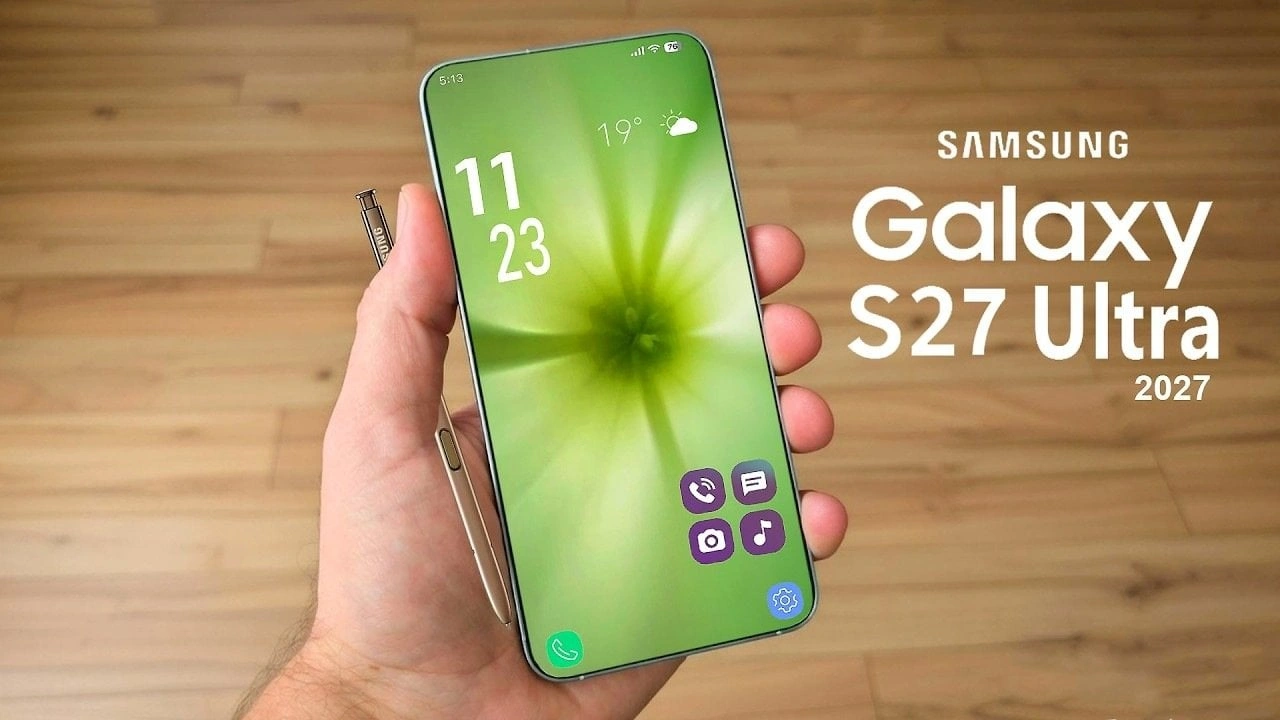
While the mobile industry is still acclimating to the recent flagship releases of early 2026, the technological horizon is already dominated by the looming arrival of the Samsung Galaxy S27 Ultra. This device is not merely an iterative update; it represents a fundamental architectural shift driven by the integration of the Snapdragon 8 Elite Gen 6 and the nascent infrastructure of 6G connectivity. However, this leap in performance comes with a significant caveat: the skyrocketing cost of advanced semiconductor manufacturing, which threatens to redefine the pricing structure of the ultra-premium smartphone market.
The Snapdragon 8 Elite Gen 6: Power at a Premium
The heart of the Galaxy S27 Ultra will undoubtedly be the Snapdragon 8 Elite Gen 6, a chipset that is expected to push the boundaries of what is physically possible on a mobile node. As foundries transition to sub-2nm processes, the density of transistors increases, allowing for exponential gains in AI processing and energy efficiency. This chip is designed to handle on-device large language models (LLMs) that are far more complex than current iterations, enabling real-time translation, generative video, and complex reasoning without pinging the cloud. However, this engineering marvel faces a manufacturing reality: yield rates for these cutting-edge nodes are lower, and the cost per wafer is significantly higher. Consequently, Samsung faces the strategic challenge of absorbing these costs or passing them on to the consumer, potentially pushing the Ultra model into a new pricing tier.
6G Connectivity: Future-Proofing the Network
The inclusion of 6G capabilities in the S27 Ultra marks a pivotal moment for mobile hardware, even if commercial networks are still in their infancy. 6G is not simply about faster download speeds; it is about ultra-low latency and the convergence of physical and digital worlds through 'Internet of Senses' technologies. For the S27 Ultra, this means the hardware must include advanced modem systems capable of handling terahertz (THz) frequencies. This inclusion serves a dual purpose: it future-proofs the device for early adopters who keep their phones for 4-5 years, and it enables local, high-speed mesh networking between devices, which is crucial for augmented reality (AR) applications and autonomous vehicle communication.
The Economic Impact on Flagship Pricing
The convergence of the Snapdragon 8 Elite Gen 6 and 6G modems creates a perfect storm for bill-of-materials (BOM) inflation. Industry analysts suggest that the cost of the processor alone could rise by 20-30% compared to the previous generation. This economic pressure forces manufacturers to innovate in other areas to justify the price tag. We can expect the S27 Ultra to leverage these high costs by marketing the device not just as a phone, but as a primary computing hub capable of replacing tablets and even laptops for specific professional workflows. The value proposition shifts from 'having the best camera' to 'possessing the most powerful pocket computer' capable of navigating the next era of digital connectivity.
Technical Comparison: The Generational Leap
| Feature | Galaxy S26 Ultra (Current) | Galaxy S27 Ultra (Projected) |
|---|---|---|
| Processor | Snapdragon 8 Elite Gen 5 | Snapdragon 8 Elite Gen 6 |
| Connectivity | 5G Advanced (5.5G) | 6G Ready / Terahertz Support |
| Process Node | 2nm (Early Yield) | Advanced 2nm / 1.8nm |
| Primary Focus | AI Photography & Efficiency | Real-time Generative AI & 6G |
Frequently Asked Questions
Will 6G work on the S27 Ultra immediately upon launch?
Likely not for public cellular networks, as commercial 6G rollout is still years away. However, the hardware may support local high-speed data transfer and future network standards.
Why is the Snapdragon 8 Elite Gen 6 so expensive?
The shift to advanced manufacturing nodes (like 1.8nm or refined 2nm) involves incredibly complex lithography equipment and lower initial yield rates, driving up the cost per unit significantly.
Is the S27 Ultra worth waiting for if I have an S25?
If you prioritize future-proofing and on-device AI power, yes. The architectural jump in the Gen 6 chip represents a significant performance tier separation compared to the Gen 4 in the S25.
My Take
The Samsung Galaxy S27 Ultra appears to be a device caught between two eras: the peak of the 5G smartphone and the dawn of the 6G computing terminal. While the potential price hike driven by the Snapdragon 8 Elite Gen 6 is concerning, it reflects the reality of Moore's Law slowing down economically while speeding up technologically. For enthusiasts, the S27 Ultra will likely be the first 'true' next-gen device, but for the average consumer, the diminishing returns on raw speed versus price might make the S26 or even S25 series the smarter financial choice for 2027.
This article was written by AI from reporting by geeky-gadgets.com.