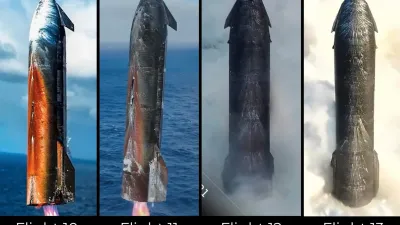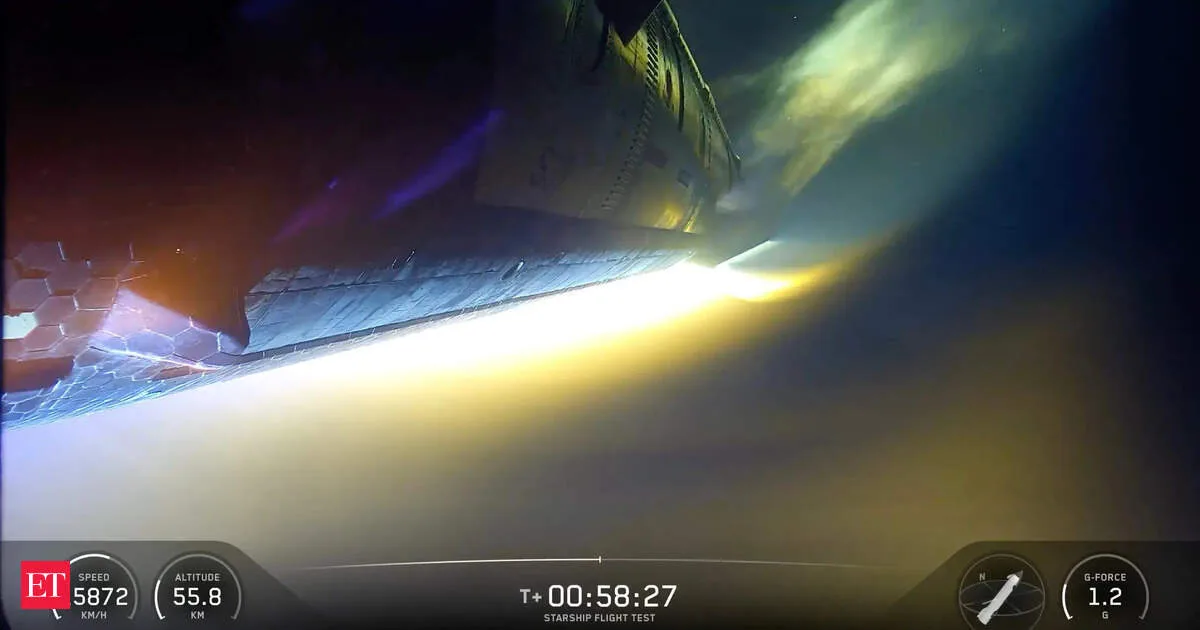
SpaceX’s third-generation Starship successfully splashed down in the Indian Ocean on Friday, completing a critical test flight that demonstrated new maneuverability despite several mid-air hardware glitches. The 407-foot (124-meter) mammoth rocket's 12th overall flight comes at a pivotal moment for the aerospace company, which is preparing for a potentially record-breaking initial public offering (IPO) in June while racing to meet NASA's Artemis lunar landing deadlines.
Blasting off at 5:30 pm local time, the uncrewed vehicle achieved most of its primary redesign objectives. The Starship upper stage successfully executed a complex flip maneuver and reignited its engines for controlled descent, even with one engine out of commission. It also deployed 22 mock satellites, including two designed to photograph the spacecraft's heat shield. However, an engine malfunction during the initial burn placed the ship in an orbit that SpaceX spokesperson Dan Huot described as "within bounds" of analyzed trajectories, though not a "nominal orbital insertion."
The Super Heavy booster separated as expected but failed to complete its boost-back burn, resulting in an uncontrolled fall into the Gulf of Mexico. While SpaceX did not intend to recover the booster, the failure missed the mark for a precision return. The launch itself followed a 24-hour delay after a hydraulic pin on the launch tower arm failed to retract during Thursday's countdown.
The upgraded version of Starship did most of what SpaceX hoped it would do during the launch, but there is a long way to go and many more test flights before Starship is ready for the next Artemis mission.
- Clayton Swope, Center for Strategic and International Studies
The stakes for Starship's rapid development extend beyond engineering. SpaceX is under contract to provide a modified Starship as the lunar landing system for NASA’s Artemis program, which aims to return humans to the Moon by 2028 - narrowly ahead of China’s 2030 target. NASA plans to test an in-orbit rendezvous between its spacecraft and a lunar lander by 2027.
Following the splashdown, NASA official Jared Isaacman praised the mission on X, calling it "one step closer to the Moon... one step closer to Mars." This echoed CEO Elon Musk's sentiment, who applauded his team by stating they had "scored a goal for humanity."
The IPO Pressure Cooker Accelerates Starship's Timeline
Friday’s flight highlights a dual-track pressure system for SpaceX: the unforgiving physics of deep space and the equally demanding expectations of Wall Street. By pushing forward with the V3 launch despite the booster's boost-back failure and orbital insertion glitches, SpaceX is signaling to potential IPO investors that its iterative "fail fast, fix faster" methodology remains intact. The timing of the public offering, expected in June, means the company cannot afford prolonged groundings like the seven-month gap preceding this launch.
Furthermore, the Artemis timeline is becoming a geopolitical ticking clock. With China aggressively targeting a 2030 crewed lunar mission, NASA's reliance on Starship for the 2028 Artemis landing leaves zero room for developmental stagnation. SpaceX's ability to deploy mock satellites and test heat shield photography during this flight proves they are shifting from basic launch mechanics to operational payload deployment, a necessary pivot to justify both their NASA contracts and their upcoming market valuation.