SpaceX is quietly developing a mass-producible reentry vehicle designed to dominate the emerging in-space manufacturing market. Newly released Federal Aviation Administration (FAA) documents have uncovered the details of the SpaceX Starfall project, detailing uncrewed capsules capable of returning up to 1,000 kilograms of cargo from orbit.
The FAA issued an environmental assessment and a record of decision on May 15, approving two test flights for the Starfall capsules. These initial missions will conclude with splashdowns in the Pacific Ocean, approximately 1,300 kilometers off the coasts of California and Mexico.
SpaceX Starfall Specifications and Mission Profile
The FAA documents describe the capsules as a "proliferated successor" to the International Space Station, aimed at supporting a self-sustaining manufacturing economy in space. The vehicles are designed to launch on either Falcon 9 or Starship rockets, entering orbit for microgravity research before executing a controlled reentry.
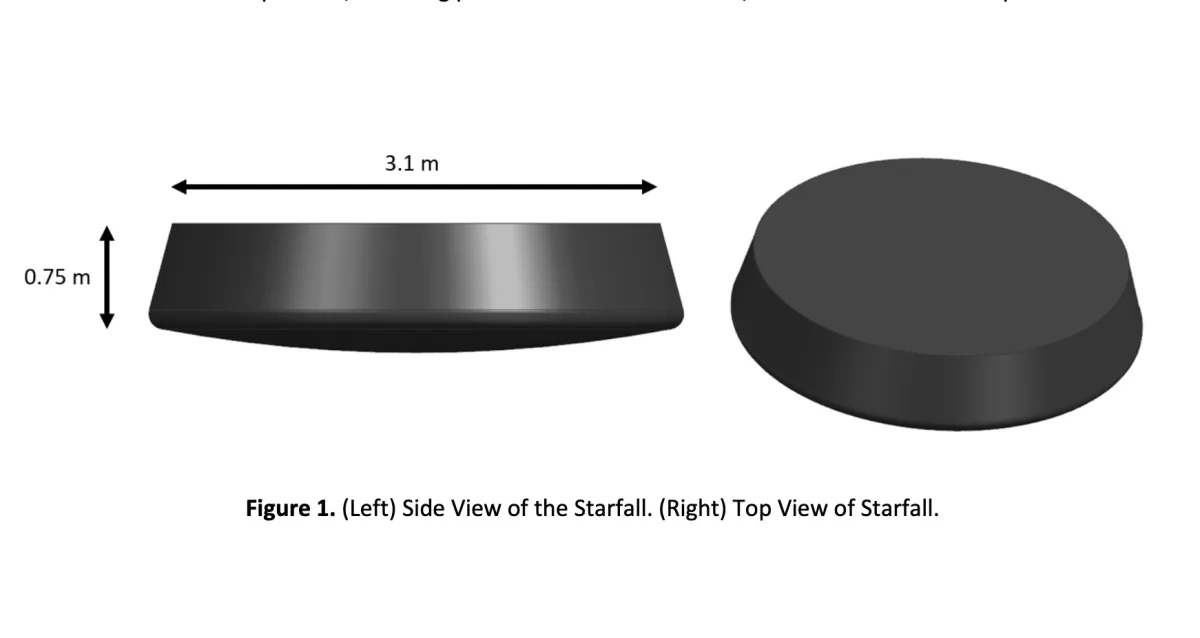
The hardware breakdown reveals a disk-shaped spacecraft measuring 0.75 meters tall and 3.1 meters in diameter at the top. Key specifications include:
- Top Plate: An aluminum structure wrapped in thermal protection material, weighing 1,400 kilograms.
- Heat Shield: A 700-kilogram carbon-fiber structure containing nitrogen gas bottles for the cold-gas attitude control thrusters.
- Payload Capacity: Up to 1,000 kilograms of cargo within a 2.5 by 1.5 by 0.5-meter internal volume.
- Recovery System: A single main parachute, supported by pilot and drogue chutes, with the heat shield jettisoned prior to a boat-assisted ocean recovery.
Notably, the capsules lack an independent propulsion system and cannot deorbit on their own. The FAA decision explicitly notes that the purpose of the proposal is to enable rapid point-to-point delivery of critical cargo and offer access to microgravity as a scalable service.
The Rideshare Dilemma
The revelation of the SpaceX Starfall program creates an immediate strategic conflict within the commercial space sector. SpaceX is now positioned to directly compete with the very startups that rely on its Falcon 9 rideshare missions to reach orbit.
Companies like Varda Space Industries, Inversion, and Atmos Space Cargo have built their business models around launching reentry vehicles on SpaceX rockets. By developing a mass-producible, in-house alternative, SpaceX is leveraging its launch monopoly to capture the high-margin in-space manufacturing market, potentially squeezing out the smaller players who currently pay them for access to space.
This article was written by AI from reporting by spacenews.com.