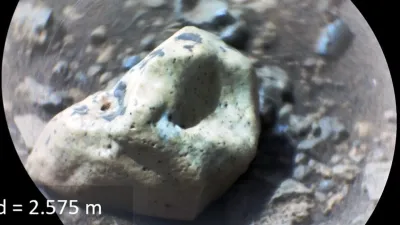
As space agencies accelerate missions to bring extraterrestrial samples back to Earth, scientists are raising the alarm about the severe risks of alien microbial contamination. A new policy paper proposes transforming a future NASA moon base into a dedicated lunar biocontainment facility, acting as a planetary firewall to screen space materials before they ever enter our atmosphere.
The push to retrieve rocks and soil from Mars and beyond has exposed a critical gap in current planetary protection strategies. According to a study published in the journal Ambio, Earth-based laboratories cannot absolutely guarantee the containment of unknown alien microorganisms in the event of a spacecraft crash or malfunction. To mitigate this, researchers argue that all incoming extraterrestrial samples must first be diverted to a secure quarantine and research station located on the lunar surface.
Inside this proposed lunar outpost, advanced robotic systems would handle all incoming materials, drastically reducing the chance of human exposure or accidental release. Frederick I. Moxley, Director of Strategic Threat Analysis and Research Laboratories, warned that current defense strategies have not kept pace with the rapid expansion of space exploration. "The proposed facility would essentially act as a firewall between Earth and any potentially hazardous live organisms that could accompany returning future space missions," Moxley explained.
Decades of research on invasive species have demonstrated how an organism introduced to the wrong place at the wrong time can spread uncontrollably with potentially devastating and irreversible long-term impacts on ecosystems.
- Anthony Ricciardi, McGill University
With private aerospace companies and government agencies competing in an increasingly crowded space environment, the stakes for biosafety have never been higher. The researchers emphasize that while the discovery of life beyond Earth would be a monumental scientific milestone, the introduction of an unfamiliar organism into Earth's biosphere could trigger unpredictable and irreversible ecological disasters.
The Hidden Cost of Mars Sample Return
While the scientific community is eager to analyze Martian soil, the logistics of a lunar biocontainment facility introduce massive financial and engineering hurdles. Building a highly secure, robotically operated Level 4 biosafety lab on the Moon would likely add billions to the budget of the Artemis program and delay sample return missions by a decade.
However, the alternative - risking an Andromeda Strain scenario due to a reentry failure over a populated area - makes this lunar firewall not just a theoretical precaution, but a necessary insurance policy for Earth's biosphere. If NASA adopts this framework, the Moon will permanently shift from a mere exploration destination to Earth's primary biological checkpoint.
This article was written by AI from reporting by scitechdaily.com.