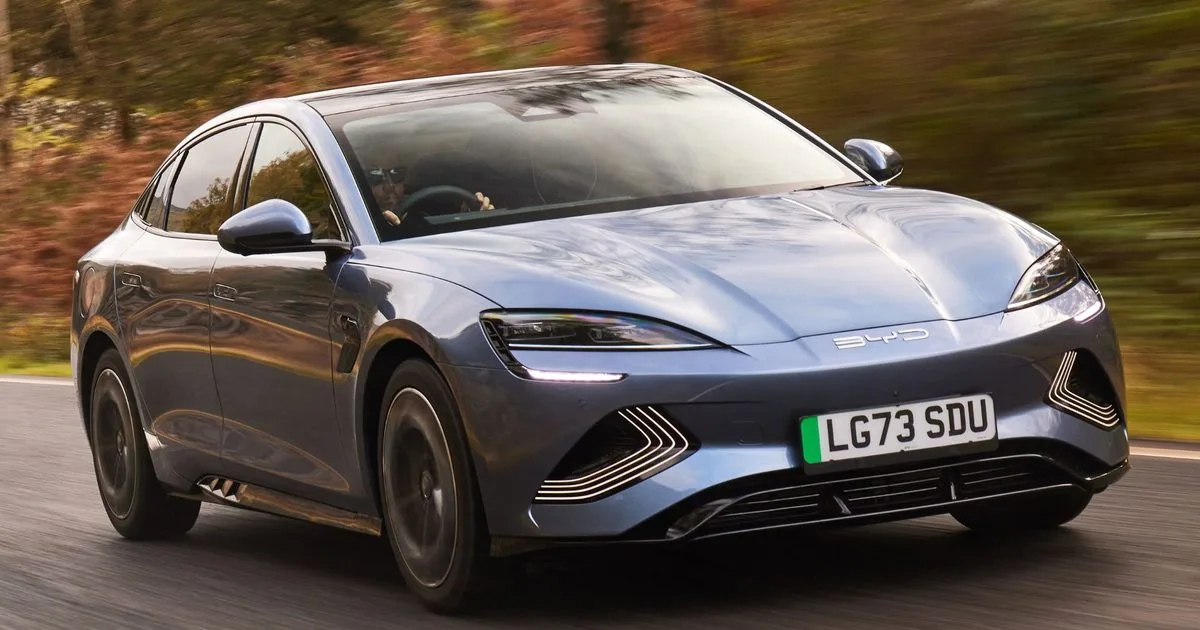
Chinese automaker BYD is taking a pragmatic detour in its self-driving tech strategy, delaying the rollout of its custom AI silicon to test Horizon Robotics' upcoming Super Drive 2.0 platform on the BYD Seal. Recent reports from China indicate that BYD Chairman Wang Chuanfu and Horizon Robotics CEO Yu Kai were seen evaluating the system together, signaling that the software is nearing maturity. Engineers are currently focused on refining how the vehicle's cameras communicate with its central computing hardware to maximize the performance of the existing architecture.
This development is crucial for EV buyers and industry watchers, as it dictates how quickly advanced driver assistance systems (ADAS) will reach mass-market vehicles. By relying on established third-party processors, BYD can cut manufacturing costs by roughly 1,500 to 4,000 yuan per vehicle. When applied to BYD's massive production scale, these savings allow the company to bring smart driving features to more affordable models rather than reserving them exclusively for flagship EVs.
The cost-saving measure means BYD's highly anticipated in-house AI processor, the 4nm Xuanji A3, will not reach production until 2027. The custom chip, which promises an impressive 700 TOPS of computing performance, will eventually debut in premium Denza models. Until then, Horizon Robotics - which has already supplied millions of processors for BYD's driver-assistance programs - will continue to power the automaker's high-volume vehicles, ensuring a stable supply chain that will not disrupt production.
Other Notable Industry Updates
- Polestar Exits the US Market: Polestar, the Swedish EV brand controlled by China's Geely, has been denied authorization under the US Connected Vehicle Rule. The company will be barred from selling vehicles in the US starting with the 2027 model year, though it will continue selling and servicing its existing inventory of the Polestar 3 and Polestar 4.
- Global Robotaxi Regulations: A UN vehicle standards forum has adopted the first international framework for fully autonomous vehicles, establishing a common safety baseline. This comes as private driverless fleets in the US and China more than doubled in 2025, reaching 8,000 vehicles across over two dozen major cities.
- Google Meet on Android Auto: Catching up to Apple CarPlay, Android Auto has officially integrated Google Meet. Android users can now join scheduled meetings and audio calls directly from their car's dashboard display instead of relying on their smartphones.
The Pragmatic Path to Autonomous Dominance
BYD's decision to delay the Xuanji A3 chip reveals a mature strategic restraint that prioritizes market penetration over immediate vertical integration. While NVIDIA continues to dominate the automotive AI market, BYD recognizes that rushing a proprietary chip could inflate vehicle prices and stall the rollout of ADAS features to budget-conscious consumers. By saving up to 4,000 yuan per vehicle today, BYD is effectively subsidizing the democratization of smart driving tech.
This approach contrasts sharply with competitors who often force expensive, unproven hardware into early models to claim technological superiority. Horizon Robotics provides BYD with a proven, scalable safety net, allowing the automaker to refine its software ecosystem on reliable hardware. When the 700 TOPS Xuanji A3 finally launches in 2027, BYD will have a massive, data-rich fleet already on the road, positioning its premium Denza line to compete directly with the industry's most advanced autonomous systems.