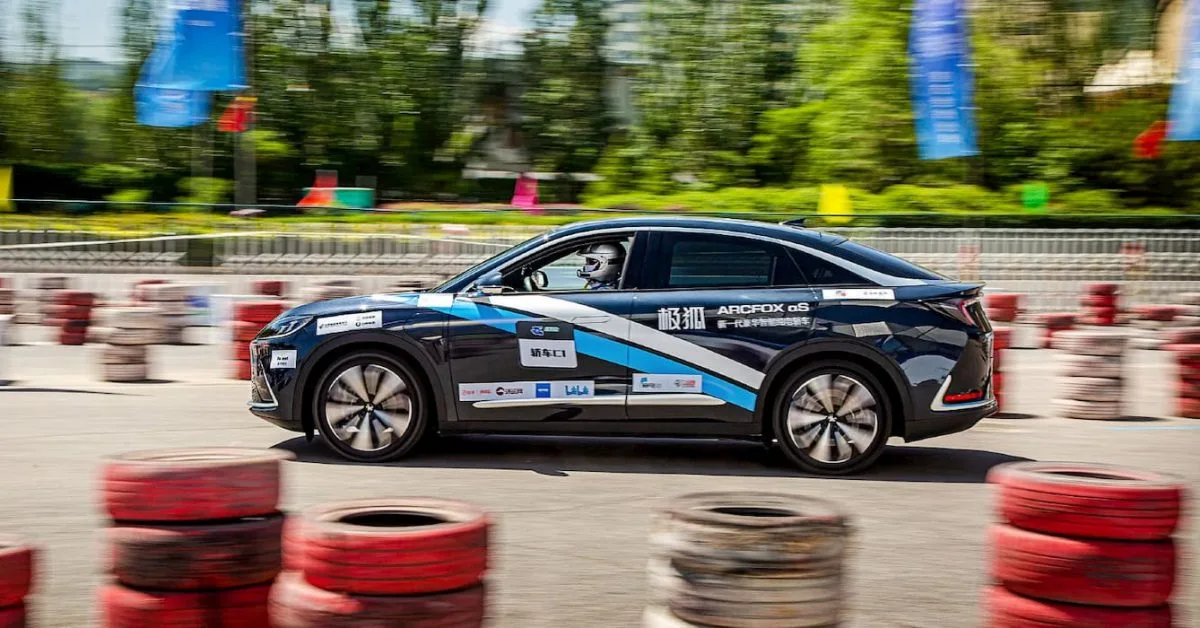
A major sodium-ion EV battery breakthrough from China's BAIC Group is accelerating the shift toward affordable, extreme-weather electric vehicles. By achieving 4C ultra-fast charging that fully replenishes a battery in just 11 minutes, the automotive giant is directly challenging traditional lithium-ion dominance. This development signals a rapid maturation of sodium-based energy storage for mass-market passenger cars.
For electric vehicle manufacturers and prospective buyers, this advancement means future EVs will be significantly cheaper to produce and far more reliable in freezing climates. Consumers who previously hesitated due to winter range anxiety or high purchase prices will soon have access to budget-friendly models that do not compromise on charging speed or durability. The global supply chain also benefits, as automakers can reduce their reliance on volatile lithium markets.
China's Beijing Automotive Group (BAIC Group) recently revealed this significant progress through its BAIC R&D unit. According to an announcement on its WeChat account, the company has successfully completed its first sodium-ion battery prototype. This new addition expands the company's Aurora battery series, which now officially spans lithium-ion, solid-state, and sodium-ion technologies.
The new sodium-ion battery pack utilizes prismatic cells and boasts an energy density exceeding 170Wh/kg, placing it among the most competitive designs in the industry. Its standout feature is the 4C ultra-fast charging capability, allowing the pack to reach a full charge in approximately 11 minutes. Furthermore, the battery demonstrates exceptional thermal stability, maintaining peak performance across a massive temperature range from -40°C to 60°C.
Cold-weather performance has historically been a weak point for electric vehicles, but BAIC Group claims its new cells maintain an energy retention rate of over 92% even at -20°C. According to a report by China's IT Home, the automaker has already developed functional samples and established a viable mass-production method for these prismatic batteries. This rapid transition from prototype to production-ready status highlights the aggressive pace of Chinese battery innovation.
The Competitive Landscape: CATL and BYD
This achievement arrives just over a month after CATL and Changan Automobile unveiled the world's first mass-produced EV equipped with a sodium-ion battery. That vehicle, the Changan Nevo A06, utilizes CATL's proprietary Naxtra sodium-ion batteries. During a recent press conference, CATL's chief tech officer, Gao Huan, emphasized that breakthroughs in sodium-ion technology bring greater resilience and a wider operating temperature range to the electrification movement.
CATL's Naxtra cells achieve an energy density of up to 175 Wh/kg, effectively putting them on par with standard lithium iron phosphate (LFP) batteries. Passenger EVs utilizing this technology will draw power from a 45-kWh sodium-ion battery pack, which currently provides up to 400 km of range under CLTC conditions. As the technology matures over the next few years, CATL expects this range to increase significantly, targeting between 500 and 600 km per charge.
Comparing Leading Sodium-Ion Architectures
| Manufacturer & Series | Energy Density | Key Performance Metric | Target Vehicle / Status |
|---|---|---|---|
| BAIC Group (Aurora) | Over 170Wh/kg | 4C charging (11 mins), 92% retention at -20°C | Mass-production method established |
| CATL (Naxtra) | Up to 175 Wh/kg | 45-kWh pack, 400 km CLTC range | Changan Nevo A06 (Mass-produced) |
Major players like CATL, BYD, and several other leading Chinese battery manufacturers are heavily betting on sodium-ion batteries to combat rising and unpredictable lithium prices. Because sodium is abundant and less price-sensitive, it offers a highly stable economic alternative for the automotive sector. The market response has been explosive, with global sodium-ion battery shipments reaching 9 GWh last year, representing a 150% increase from 2024.
My Take
The leap from 9 GWh to a projected 1,000 GWh in sodium-ion battery shipments over the next four years is not just a supply chain adjustment; it is a fundamental market restructuring. BAIC's ability to hit 170Wh/kg with 11-minute 4C charging proves that sodium is no longer just a cheap compromise for low-range city cars. By solving the extreme cold-weather degradation problem - retaining 92% capacity at -20°C - sodium-ion technology directly addresses the biggest hurdle for EV adoption in northern climates. As CATL pushes its Naxtra packs toward the 600 km range mark, we will likely see LFP batteries relegated to mid-tier vehicles, while sodium dominates the entry-level and rugged utility segments.
Frequently Asked Questions
What does 4C fast charging mean for an EV?
A 4C charging rate means the battery can theoretically be charged four times in one hour, translating to a full recharge in roughly 15 minutes or less. In the case of BAIC's new prototype, it achieves a full charge in just 11 minutes.
Why are automakers switching from lithium to sodium?
Sodium is far more abundant and significantly cheaper to mine than lithium, making the batteries less vulnerable to global price spikes. Additionally, sodium-ion cells perform exceptionally well in freezing temperatures, a major advantage over traditional lithium-ion packs.
Which cars currently use sodium-ion batteries?
The Changan Nevo A06 is the world's first mass-produced passenger EV to utilize this technology, powered by a 45-kWh pack from CATL. More vehicles from brands like BYD and BAIC Group are expected to hit the market soon.