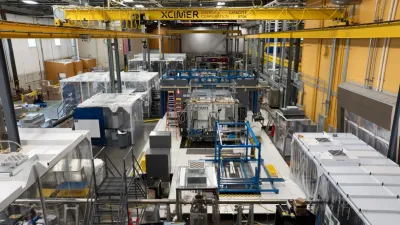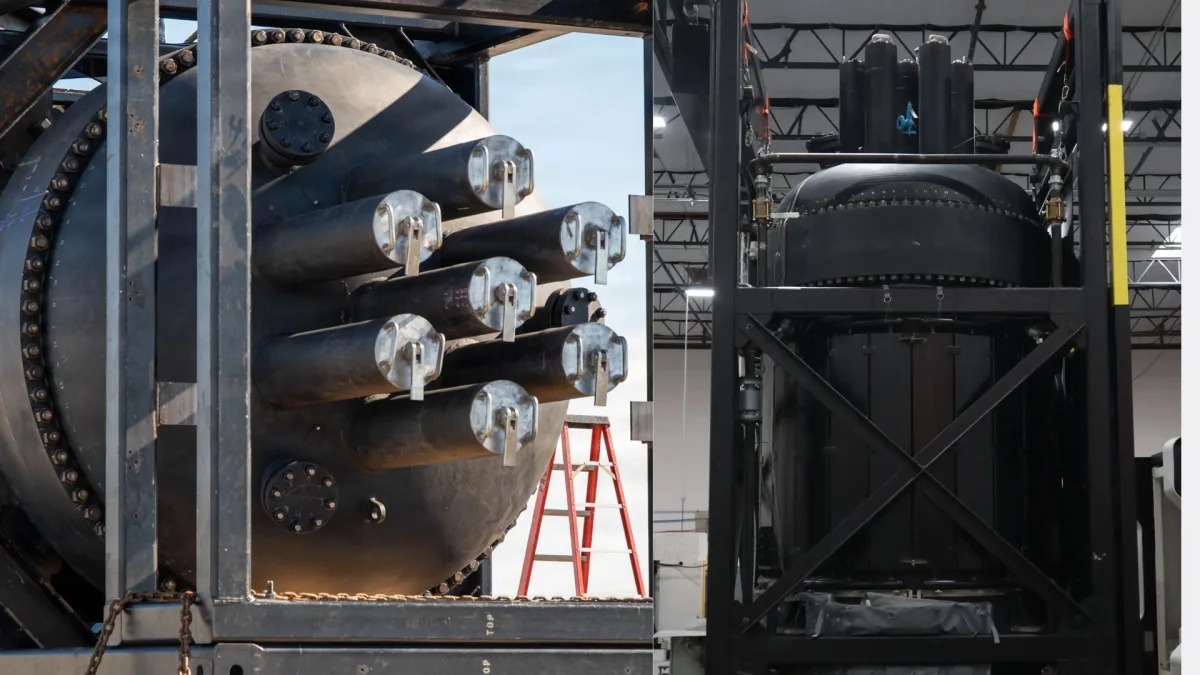
Valar Atomics has successfully achieved fueled criticality with its Ward 250 reactor at the Utah San Rafael Energy Lab, marking a pivotal moment for the U.S. Department of Energy’s Reactor Pilot Program. Reaching this milestone just nine months after construction began proves that the timeline for deploying advanced nuclear technology can be drastically compressed. For energy sector professionals and grid operators, this development signals a tangible shift from theoretical designs to operational power generation, demonstrating that regulatory hurdles can be navigated efficiently.
The achievement means the reactor can now sustain a controlled nuclear chain reaction, which is the fundamental prerequisite before any facility can begin generating electricity. Notably, the Ward 250 is the first reactor authorized under the DOE program to reach criticality outside the confines of a national laboratory. Federal officials have highlighted this as a clear indicator that advanced nuclear projects are transitioning from concept to reality at a pace unseen in previous decades.
This rapid progress aligns directly with goals established by President Donald Trump’s May 2025 executive order (EO 14301), which mandated that multiple advanced reactor demonstrations achieve criticality before July 4, 2026. The Ward 250 is the second reactor to meet this target, following Antares Nuclear, which recently reached the same milestone with its Mark-0 reactor at the Idaho National Laboratory.
This is our second criticality as a company, and an important step toward our goal of power by July 4.
- Isaiah Taylor, CEO, Valar Atomics
Energy Secretary Chris Wright emphasized the growing momentum across the domestic nuclear sector, calling the achievement another historic moment for America's nuclear renaissance. Wright also pointed to other recent logistical triumphs, such as the first airlift of a small reactor aboard a U.S. military C-17 aircraft, as evidence of how quickly these technologies are maturing under current federal initiatives.
According to Valar Atomics founder and CEO Isaiah Taylor, the Utah site was entirely empty just nine months ago. He noted that the facility was explicitly developed as a power-producing reactor rather than a mere laboratory experiment. Taylor confirmed the milestone in a post on June 18, 2026, crediting the support of the Department of Energy, state officials, and local communities.
The DOE launched the Reactor Pilot Program specifically to shorten development timelines for first-of-a-kind advanced reactors. By utilizing existing DOE authority to authorize demonstrations while developers simultaneously pursue commercial licensing, the initiative bypasses historical barriers that have stalled nuclear innovation. Building on this success, the Department recently introduced the Nuclear Energy Launch Pad to further accelerate the validation and deployment of these systems.
The Economic Blueprint for Rapid Nuclear Deployment
The true significance of the Ward 250 reactor lies not just in its underlying physics, but in its unprecedented nine-month construction timeline. Historically, nuclear power projects in the United States have been plagued by decades-long delays and crippling cost overruns, making them financially unviable compared to natural gas or renewable alternatives. By achieving criticality in under a year outside a national lab, Valar Atomics has effectively proven that the Small Modular Reactor (SMR) economic model can work in the real world.
This rapid deployment validates the DOE's strategy of parallel processing - allowing physical construction and demonstration to proceed under existing federal authority while the slower commercial licensing pathways are finalized. If this regulatory and construction blueprint can be standardized, it will fundamentally alter grid-scale storage and industrial power planning. Tech giants seeking reliable, around-the-clock power for AI data centers will likely view this nine-month turnaround as the definitive signal that advanced nuclear is finally a practical, near-term energy solution.