

The high cost of commercial flow batteries has long bottlenecked renewable energy storage research, but a new £74 3D-printed flow battery is changing the equation. Developed by researchers at Queen's University Belfast (QUB), this open-source iron-based cell replaces expensive vanadium, offering a standardized, highly accessible tool for scientists worldwide.
Aimed at materials scientists, energy researchers, and grid engineers, this breakthrough enables rapid, reproducible testing of grid-scale storage solutions without breaking research budgets. By lowering the barrier to entry, the QUB team hopes to accelerate the deployment of technologies necessary to stabilize power grids reliant on intermittent wind and solar energy.
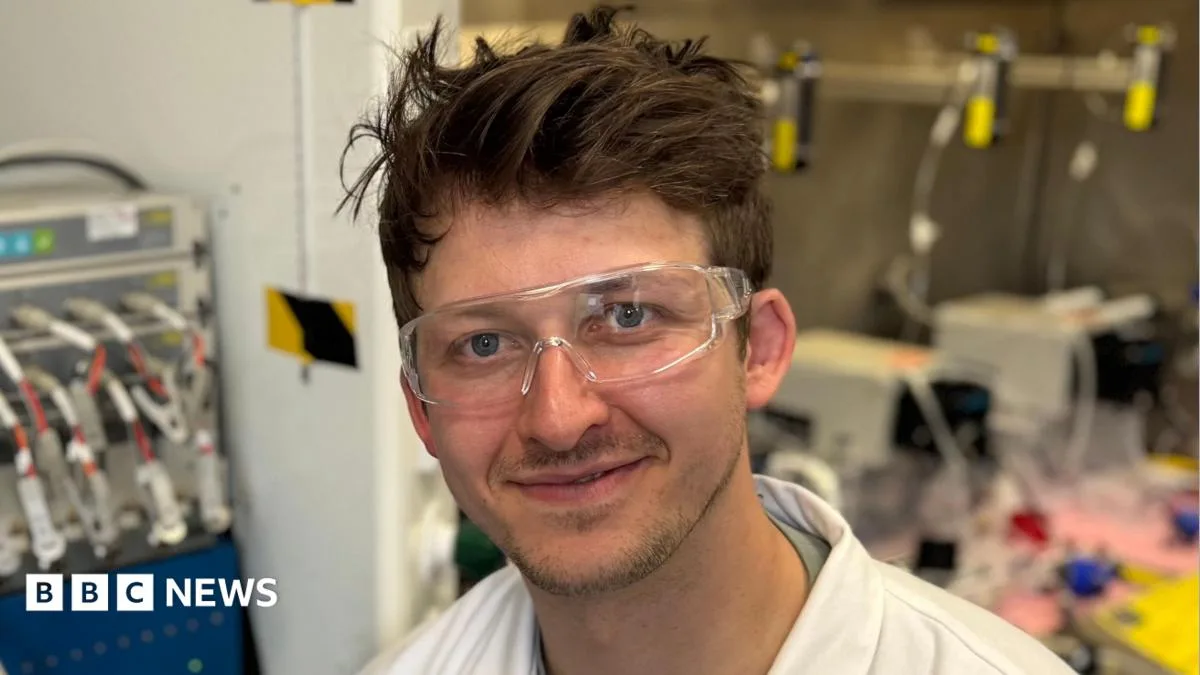
The discovery was born out of necessity. Post-doctoral researcher Dr. Hugh O'Connor needed a flow battery for his PhD but realized a commercial unit would cost between £2,000 and £3,000. To bypass the prohibitive pricing, he turned to 3D printing. "I started 3D-printing them and I made lots of little tweaks," O'Connor explained, noting that extensive trial and error eventually yielded a highly efficient cell.
Unlike standard lithium-ion batteries that use solid electrodes, flow batteries store energy in liquid electrolytes. Traditionally, these liquids rely on vanadium - a metallic element that is economically volatile and geographically constrained. The QUB design pivots to iron, a vastly more abundant and cost-effective alternative.
We kind of saw it as an opportunity to grow our network rather than make a small amount of money, and we feel like it can really benefit this technology.
- Dr. Hugh O'Connor, Queen's University Belfast
While research institutions typically monetize such discoveries, O'Connor and his supervisor chose a different path. They released the design to the international research community for free, recognizing that a standardized, cheap testing cell could solve a major hurdle in battery research: the lack of uniform testing standards across different laboratories.
The £74 Open-Source Assembly Kit
To ensure global researchers could easily replicate the technology, the QUB team created a comprehensive, free guide to accompany the design files. The battery consists of roughly ten components, which require careful assembly using what O'Connor described as an "Ikea-style instruction manual." The core components include:
- The 3D-printed pieces that direct the liquid flow.
- A specialized membrane.
- Sealing gaskets to prevent leaks.
- Electrodes for energy transfer.
- Current collectors to route the electrical output.
Dr. Josh Bailey, an Illuminate Fellow at QUB's School of Chemistry and Chemical Engineering, is already leading studies involving multiple global institutions using the affordable cell. He emphasized that "the technology can be deployed more quickly if we're all using the same standards," pointing out that reaching net zero by 2050 requires massive advancements in flow battery deployment.
The Open-Source Catalyst for Grid Storage
The strategic decision to open-source this £74 battery rather than patent it is the true breakthrough of this project. Historically, battery technology is fiercely guarded by intellectual property laws, which forces independent labs to build custom, proprietary testing rigs. This fragmentation has created a "reproducibility crisis" in battery chemistry, where results from one lab cannot be accurately verified by another due to hardware discrepancies.
By distributing an identical, ultra-cheap baseline cell, QUB is effectively standardizing the global testing environment. If hundreds of laboratories begin testing iron-flow chemistries on the exact same hardware architecture, the timeline to commercialize grid-scale iron flow batteries could shrink from decades to mere years.
This acceleration is critical for the renewable energy sector. As global grids integrate more wind and solar power, the inability to store excess energy during peak generation times remains a critical vulnerability. Standardizing the research hardware directly paves the way for faster industrial scaling, ensuring that turbines and solar farms can operate at maximum efficiency without overwhelming the grid.
