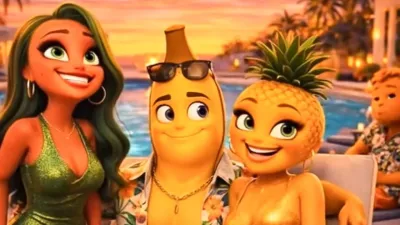
A new study reveals that 59% of videos served to brand-new TikTok accounts are AI-generated, flooding users with artificial content at nearly three times the rate of YouTube Shorts. The findings highlight a growing algorithmic reliance on low-effort "AI slop" to retain viewer attention.
Video editing platform Kapwing created fresh accounts on both platforms and manually analyzed the first 500 videos recommended to each. On TikTok, 294 of those videos were entirely AI-generated. In contrast, YouTube Shorts served only 104 artificial videos, keeping its rate at a much lower 21%.
This staggering volume aligns with TikTok's own internal metrics. The platform had already labeled 1.3 billion videos as AI-generated by November.
To understand where this artificial content clusters, Kapwing reviewed over 10,000 TikTok videos across 20 different categories. Kids' content emerged as the most heavily impacted, with 57% of 2,000 analyzed videos turning out to be AI-generated. The single worst offender was the #cartoonkids tag, where 97 out of 100 featured videos were artificial.
Educational and informational niches are also heavily saturated. Science and Education, Health, and History categories each contained between 33% and 35% AI slop. In these spaces, creators frequently use automated voiceovers and AI animation instead of real-world demonstrations.
Conversely, categories requiring genuine human presence - such as Fashion, Music, and Fitness - remained largely untouched, with AI content sitting below 2%. While TikTok has introduced settings allowing users to manually filter out AI-generated content, the default algorithm still heavily prioritizes artificial videos for new users.
The Algorithmic Cost of Infinite Scrolling
The sheer volume of AI-generated content on TikTok exposes a fundamental shift in how short-form video platforms operate. By serving 59% artificial content to new users, TikTok's algorithm is signaling that engagement metrics - watch time and scroll depth - now completely override content authenticity. This creates a feedback loop where low-effort, high-volume AI farms are financially incentivized to flood the platform, pushing out genuine human creators who cannot compete with automated production speeds.
The saturation in kids' content is particularly concerning. With 97% of videos under tags like #cartoonkids being artificial, young audiences are being trained on synthetic media that often lacks educational value or quality control. If TikTok does not adjust its default recommendation engine to penalize low-quality AI slop, it risks degrading its core user experience, potentially driving audiences back to YouTube Shorts where the barrier to entry for algorithmic success still favors human presence.