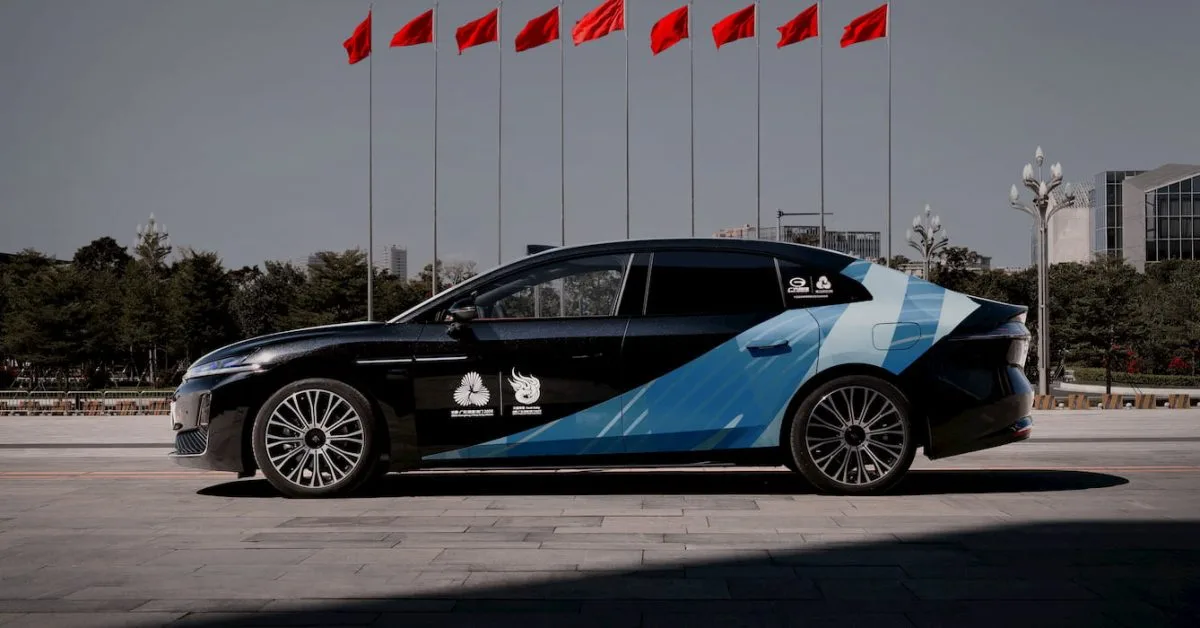
For drivers frustrated by range anxiety and long charging times, the arrival of mass-producible solid-state EV batteries is about to fundamentally change the automotive landscape. Greater Bay Technology (GBT), a battery manufacturer backed by China's GAC Group, has officially announced that its first A-sample all-solid-state battery cells have rolled off the production line. According to reports from the Chinese news outlet NE-Time, the company is aggressively targeting 2026 to launch the world's first mass-producible all-solid-state battery with GWh-level capacity.
This milestone marks a critical transition from laboratory testing to real-world industrialization. The newly minted A-sample cells contain absolutely no liquid electrolyte, a design choice that drastically improves safety. During rigorous testing, these cells successfully passed needle penetration, extrusion, and thermal shock tests without catching fire or exploding, solving one of the most persistent safety hazards associated with traditional lithium-ion packs.
The Technology Powering Solid-State EV Batteries
The secret behind this rapid advancement is a new organic-inorganic composite ESC all-solid-state electrolyte system. This proprietary technology overcomes the historical hurdles that have kept solid-state EV batteries from reaching the mass market. The innovation has already been reviewed and is receiving official support from China's National Development and Reform Commission (NDRC).
Performance metrics for the new cells are highly competitive, boasting a single-cell energy density ranging from 260 to 500 Wh/kg. This is considerably higher than traditional liquid lithium-ion batteries, allowing for a longer driving range and more interior cabin space. Furthermore, the technology enables stable 2-3C fast charging with minimal cycle-life degradation during long-term, repeated charge-and-discharge cycles.
To secure its position in the market, GBT has applied for over 50 patents related to solid-state technology. These patents cover the entire technological chain, including core processes, manufacturing equipment, electrolyte materials, and cell construction. This comprehensive intellectual property portfolio ensures that GBT can scale its operations efficiently for electric vehicles, robotics, and low-altitude aircraft like eVTOLs.
GAC Group and the Race to Mass Production
The momentum behind GBT is heavily supported by its parent company, GAC Group, which announced in November that it had completed its first all-solid-state battery production line featuring an over 60 Ah capacity. GAC has set a clear roadmap to ramp up mass production between 2027 and 2030. Their specific solid-state EV batteries promise an energy density of over 400 Wh/kg, which translates to a CLTC driving range of over 1,000 km (621 miles).
While GBT previously set a world record in 2024 with its Extreme Fast Charging (XFC) batteries - recharging from 0% to 80% in just 7.5 minutes - the shift to solid-state represents a much larger industry trend. Several leading automakers and battery manufacturers are racing to achieve similar timelines. Competitors including CATL, BYD, Volkswagen (via QuantumScape), Toyota, Mercedes-Benz, and Factorial Energy are all targeting solid-state production over the next few years.
My Take: The Tipping Point for Electric Vehicles
The announcement from Greater Bay Technology is not just another incremental update; it is a definitive signal that the commercialization of solid-state EV batteries is accelerating faster than Western markets anticipated. By achieving stable 2-3C fast charging without severe cycle-life degradation, GBT has effectively solved the 'Achilles heel' of solid-state chemistry. This specific metric proves that the technology is finally viable for daily consumer driving habits, not just controlled laboratory environments.
Furthermore, the 2026 target for GWh-level mass production places immense pressure on legacy automakers. While companies like Toyota and Volkswagen have promised solid-state integration toward the end of the decade, GAC Group's aggressive timeline could force a massive reshuffling of global EV market shares. If GBT can deliver a 621-mile range vehicle that charges safely in under 15 minutes by 2027, traditional lithium-ion EVs will face immediate obsolescence in the premium segment.
Ultimately, this breakthrough extends far beyond passenger cars. The high energy density and fire-resistant nature of these A-sample cells make them the missing link for the burgeoning eVTOL (electric vertical takeoff and landing) industry. As production scales, we are looking at a foundational shift in how the world stores and deploys mobile energy.
This article was written by AI from reporting by electrek.co.