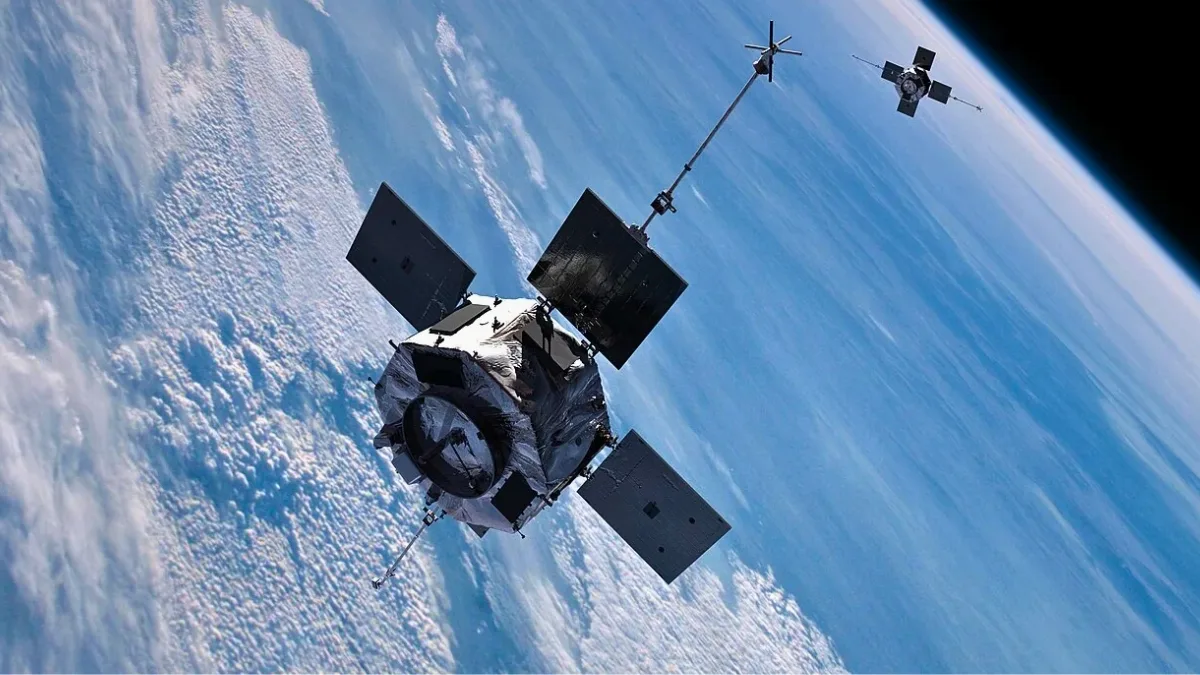
On Wednesday, the decommissioned NASA Van Allen Probe A made an uncontrolled reentry into Earth's atmosphere over the Pacific Ocean. The 1,323-pound (600-kilogram) science satellite plunged back to Earth significantly ahead of schedule, driven by intense solar activity that accelerated its orbital decay. For aerospace professionals and space enthusiasts tracking orbital debris, this event underscores the unpredictable nature of space weather and its direct impact on satellite lifecycle management.
According to an update which The US Space Force said confirmed the trajectory, the spacecraft came in just west of the Galapagos Islands. While NASA expected the majority of the satellite to burn up harmlessly in the atmosphere, some components were anticipated to survive the extreme heat of reentry. The space agency calculated the risk of bodily harm to anyone on the ground at a highly improbable 1-in-4,200.
Launched in 2012, the twin NASA spacecraft spent seven years flying through and studying the hazardous Van Allen radiation belts that surround our planet. The probes officially ceased operations and ran out of fuel in 2019. At that time, mission planners anticipated the satellites would remain safely in orbit until at least 2034.
The Impact of Solar Activity on Orbital Decay
The premature demise of Probe A highlights a critical variable in orbital mechanics: solar maximums. Over the past several years, heightened solar activity has caused Earth's upper atmosphere to expand, increasing atmospheric drag on satellites in low and highly elliptical orbits. This increased drag is what shaved eight years off the expected orbital lifespan of the A probe.
Tracking this specific reentry proved particularly complex. Dutch scientist Marco Langbroek noted that while all uncontrolled reentries are inherently difficult to predict, this event was exceptionally challenging due to the spacecraft's eccentric, lopsided orbit. Meanwhile, its twin, the Van Allen Probe B, remains in orbit as a non-functioning derelict and is not expected to reenter the atmosphere before 2030.
My Take
The early reentry of the Van Allen Probe A serves as a stark reminder of how vulnerable our orbital models are to the whims of the solar cycle. When NASA initially projected a 2034 reentry back in 2019, those models could not fully account for the sheer intensity of the current solar maximum. As the commercial space sector continues to launch thousands of satellites into low Earth orbit, operators must factor in these aggressive atmospheric expansions. The fact that a 600-kilogram satellite's timeline shifted by nearly a decade proves that space traffic management requires dynamic, real-time space weather integration, not just static mathematical projections.
Frequently Asked Questions
Where did the Van Allen Probe A reenter?
The US Space Force confirmed that the spacecraft reentered the atmosphere over the Pacific Ocean, specifically west of the Galapagos Islands.
Was there any danger to people on Earth?
NASA stated that the risk of bodily harm was extremely low, estimated at 1-in-4,200, as most of the 1,323-pound spacecraft was expected to burn up during reentry.
Why did the satellite fall back to Earth earlier than expected?
Intense solar activity over recent years expanded Earth's upper atmosphere, increasing drag on the spacecraft and causing its orbit to decay much faster than the original 2034 projection.