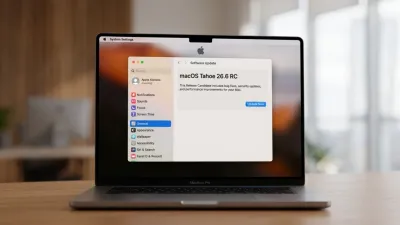
The upcoming macOS 27 compatibility shift will officially exclude all Intel-based Macs, marking the definitive end of Apple's x86 era. For users still relying on 2019 and 2020 Intel machines, this transition signals a hard cutoff for major feature updates, making an upgrade to Apple Silicon essential for future-proofing. Apple confirmed during its WWDC 2025 Platforms State of the Union that macOS 26 Tahoe serves as the final major release supporting Intel architecture.
Moving forward, installing macOS 27 will strictly require a Mac equipped with an M-series chip or the newly introduced MacBook Neo powered by the A18 Pro processor. By shedding legacy Intel support, Apple can fully optimize its desktop operating system for its proprietary ARM architecture. This shift is expected to streamline development and deeply integrate advanced on-device AI capabilities that rely on the Neural Engine present in modern Apple chips.
The macOS 27 beta is slated to launch in June, followed by a widespread public release in September. While exact compatibility for older M1 machines remains unconfirmed, the cutoff for Intel hardware is absolute. Specifically, the 16-inch MacBook Pro (2019), the 27-inch iMac (2020), the 13-inch MacBook Pro (2020, Four Thunderbolt 3 ports), and the Mac Pro (2019) will be permanently capped at macOS 26 Tahoe.
macOS 26 Tahoe Supported Devices
Before the Intel cutoff takes full effect, macOS Tahoe remains compatible with the following Macs:
- MacBook Neo (2026)
- MacBook Air with Apple silicon (2020 and later)
- MacBook Pro with Apple silicon (2020 and later)
- MacBook Pro (16-inch, 2019)
- MacBook Pro (13-inch, 2020, Four Thunderbolt 3 ports)
- iMac (2020 and later)
- Mac mini (2020 and later)
- Mac Studio (2022 and later)
- Mac Pro (2019 and later)
The Strategic Advantage of an ARM-Only Ecosystem
Dropping Intel support is not just about forcing hardware upgrades; it is a necessary technical evolution for Apple's software ecosystem. Maintaining a dual-architecture operating system requires significant engineering overhead and bloats the core OS with legacy x86 code. By committing entirely to Apple Silicon and the A18 Pro, developers can now target a unified architecture across iOS, iPadOS, and macOS.
This unified front will likely accelerate the deployment of complex, system-level features like Apple Intelligence. Intel Macs simply lack the dedicated Neural Engine required to process these heavy machine-learning workloads efficiently. For consumers, this means macOS 27 will likely introduce features that are fundamentally impossible to run on older hardware, justifying the final break from the Intel era.
This article was written by AI from reporting by macrumors.com.