The new Google Pixel removable battery patent could finally end the era of using heat guns and solvents to replace a dying phone battery. As modern flagship devices have evolved into fragile glass sandwiches sealed with stubborn adhesive, replacing a degraded battery has become an expensive and risky repair job. Opening a device like the Pixel 8 currently requires heating the edges, cutting through softened glue, and hoping the display survives the process.
The driving force behind this shift isn't just goodwill, but strict new European Union regulations. By February 2027, the EU mandates that smartphone manufacturers must design devices so users can replace batteries using commercially available tools. While this doesn't mean a return to the tool-free, snap-off plastic backs of 2014, it effectively outlaws the heavy use of industrial adhesives that make current repairs so difficult.
According to patent US20260006115A1 published earlier this year, Google is actively developing a mechanically interlocked battery system to meet these new standards. The engineering focuses on securing the internal components without relying on permanent chemical bonds.
How the Mechanical Battery Design Works
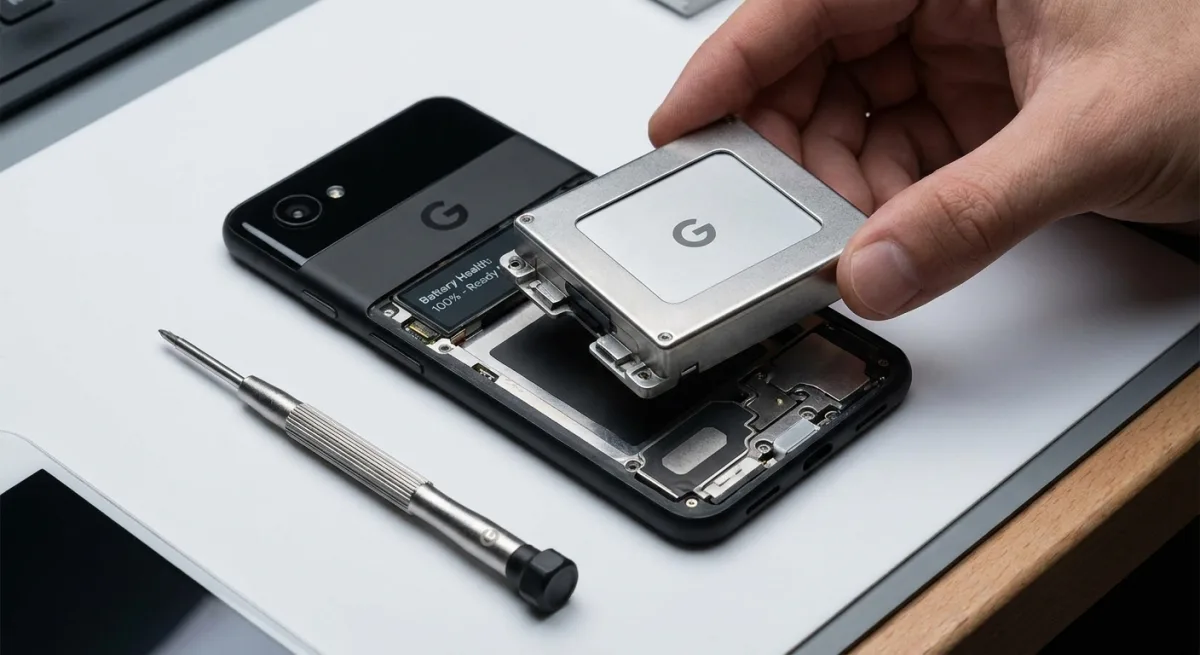
- The battery is housed inside its own dedicated metal chassis rather than being glued directly to the phone's frame.
- This entire assembly slides into the device and locks securely using mechanical interlocks, protecting the battery during drops or chassis flex.
- The metal housing acts as part of the phone's grounding system, utilizing spring-loaded contacts to maintain antenna functionality as soon as the module is inserted.
Currently, lithium-ion batteries degrade to about 80% health after 800 to 1,000 charge cycles, which typically occurs around the three-year mark. While a replacement battery for a device like the Pixel 9 Pro XL costs around $60, professional labor can easily triple that price due to the complex teardown process. A mechanical design drastically reduces labor time, making repairs cheaper and more accessible for consumers.
The Hardware Reality of a Seven-Year Promise
Google's unprecedented seven-year software update policy has always faced a glaring physical limitation: lithium-ion chemistry. A phone receiving OS updates until 2030 is practically useless if the battery dies in 2027 and costs a fortune to replace. This mechanical battery patent, heavily championed by the Right to Repair movement, bridges the critical gap between software longevity and hardware reality.
By aligning with upcoming EU mandates, Google is positioning the Pixel line to actually survive its promised lifespan. If a battery drops to 70% capacity, users or technicians could simply remove a few screws, pull a tab, and restore the device's endurance for the cost of the part alone. This transforms smartphones from disposable technology into genuine long-term investments.
This article was written by AI from reporting by androidpolice.com.