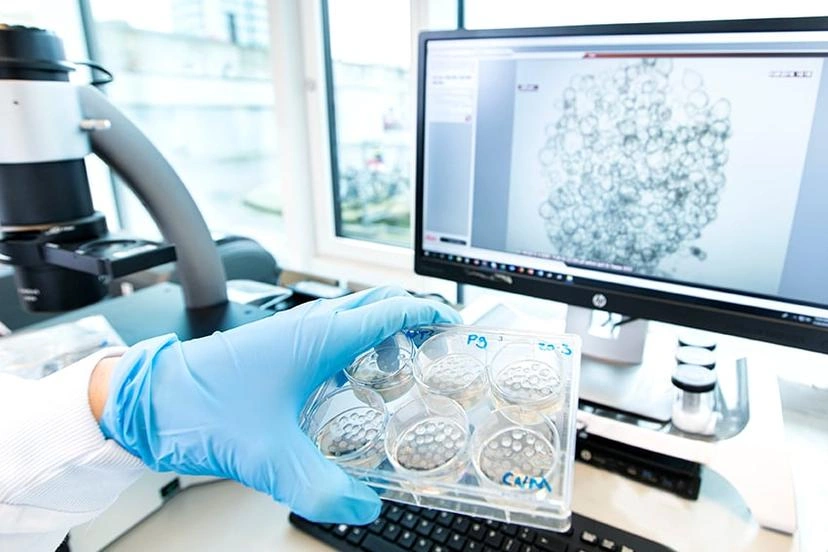
A transformative modular platform for automated organoid culture and longitudinal imaging has emerged as a critical advancement in biomedical research infrastructure. Published in Nature, this innovation addresses a fundamental bottleneck in 3D tissue culturethe labor-intensive manual feeding protocols and reliance on orbital shakers that have constrained research throughput and reproducibility for decades.
Organoids represent one of the most powerful tools in modern biology: three-dimensional tissue cultures that faithfully recapitulate the architecture, cellular heterogeneity, and functional properties of real organs. Unlike traditional two-dimensional cell cultures, organoids enable researchers to study tissue development, disease pathogenesis, and drug responses in a physiologically relevant context. However, their complexity has come at a cost. Conventional organoid culture demands frequent manual medium changes, inconsistent mechanical stimulation via orbital shakers, and labor-intensive microscopic monitoringall of which introduce variability, limit scalability, and consume researcher time that could be directed toward analysis and discovery.
The Technical Architecture of Automated Culture
The newly developed platform integrates microfluidic perfusion systems with automated imaging hardware and intelligent control software to create a closed-loop culture environment. Rather than relying on passive diffusion and manual feeding, the system delivers precisely controlled nutrient gradients and oxygen levels directly to organoid cultures in real time. This perfusion-based approach mimics the physiological microenvironment far more accurately than traditional static culture, promoting more authentic tissue development and cellular differentiation patterns.
The modular design philosophy proves critical to the platform's versatility. Individual componentsperfusion modules, imaging chambers, temperature control units, and software interfacescan be combined in various configurations to suit specific research applications. A researcher studying pancreatic organoids might configure the system differently than one investigating intestinal tissue, yet both leverage the same underlying automation infrastructure. This modularity reduces development costs for new applications and accelerates adoption across diverse research groups.
Longitudinal Imaging and Real-Time Monitoring
Beyond automated feeding, the platform incorporates integrated optical imaging systems capable of capturing high-resolution time-lapse microscopy data over extended culture periodsweeks or monthswithout human intervention. This longitudinal imaging capability fundamentally changes how researchers can study organoid development. Rather than sacrificing samples at discrete timepoints for analysis, researchers now observe the same organoid continuously, tracking morphogenesis, cellular migration, and functional maturation with unprecedented temporal resolution.
The imaging subsystem employs automated focus tracking and multi-position scanning to maintain consistent image quality across entire culture arrays. Machine learning algorithms process raw imaging data in real time, enabling automated detection of developmental milestones, anomalies, or responses to experimental perturbations. This computational layer transforms raw microscopy data into actionable biological insights without requiring manual frame-by-frame analysis.
Implications for Drug Discovery and Disease Modeling
The automation and standardization enabled by this platform carry profound implications for pharmaceutical development and personalized medicine. Drug screening campaigns can now test hundreds of compounds against organoid models with minimal manual labor, dramatically increasing throughput while reducing cost per assay. More importantly, the consistency of automated culture reduces biological noise, enabling detection of subtle drug effects that might be obscured in traditional manual protocols.
For disease modeling, the platform enables creation of patient-derived organoids from individuals with genetic disorders or cancers, cultured under standardized conditions and monitored continuously to understand disease progression and test therapeutic interventions. The reproducibility of automated culture makes such personalized models clinically actionable rather than research curiosities.
My Take
This modular organoid platform represents a watershed moment in biomedical research infrastructurecomparable to the impact that automated DNA sequencers had on genomics two decades ago. By removing the manual labor bottleneck and introducing real-time monitoring, the technology democratizes access to sophisticated 3D tissue models and accelerates the translation of organoid research into clinical applications. Expect rapid adoption across academic institutions and pharmaceutical companies, with downstream impacts on drug development timelines and the feasibility of precision medicine approaches. The next frontier will be integrating artificial intelligence more deeply into these systems to enable autonomous experimental design and hypothesis generation directly from organoid behavior.
This article was written by AI from reporting by nature.com.