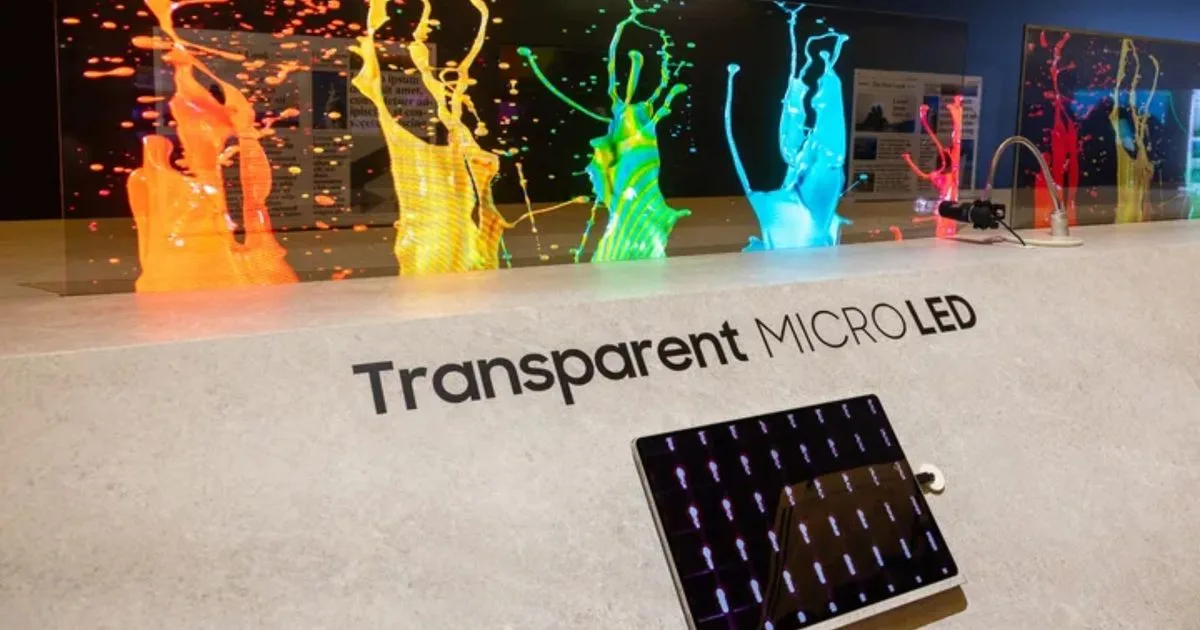
For years, transparent OLED displays have dazzled on trade show floors for exactly ten seconds before their dim brightness and smudgy appearance become impossible to ignore. The core culprit has always been the see-through electrode, a component that either conducts electricity poorly or requires manufacturing processes that destroy the delicate organic light-emitting layers beneath it. Now, a research team at Seoul National University, led by professor Yongtaek Hong, has developed a clever manufacturing breakthrough that bypasses these destructive methods entirely.
Instead of relying on harsh chemicals or traditional etching to apply a metal layer onto a finished OLED panel, the researchers utilize a specialized stamping technique. The team first stamps a pattern using an elastomer coating. When metal vapor is subsequently introduced, it adheres everywhere except on the coated areas, which naturally repel it. This self-aligning process eliminates the need for rinsing or lift-off procedures, protecting the fragile organic materials while forming a precise metal mesh electrode.
The resulting technical specifications represent a massive leap forward for display technology. The new self-aligned metal mesh electrode achieves between 93.6% and 99% transparency. Crucially, it maintains a sheet resistance as low as 1.1 Ohm per square - an exceptionally low metric for transparent materials that guarantees vastly superior electrical conductivity. According to the study published in Materials Horizons, the team’s electrode scored a figure of merit above 10,000, marking one of the highest results ever recorded for a component of this thinness.
Professor Hong noted that this non-destructive technique is positioned to become a foundational method for manufacturing next-generation hardware. Beyond standard transparent and flexible displays, the technology paves the way for advanced AR devices, interactive car screens, smart windows, and highly accurate under-display facial recognition panels.
Moving Beyond the Trade Show Gimmick
While this breakthrough does not mean a fully transparent iPhone or Samsung Galaxy device will hit shelves next year, it fundamentally shifts the trajectory of see-through hardware. By solving the specific manufacturing bottleneck of electrode degradation, manufacturers can finally push these screens past the concept phase.
The remarkably low 1.1 Ohm per square resistance is the critical factor here; it means future transparent displays can finally achieve the high peak brightness required for real-world daylight visibility without draining battery life. Fixing this unglamorous manufacturing hurdle is exactly what the industry needed to transform transparent screens from a sci-fi novelty into a practical consumer standard.