SpaceX positioned itself to complete its historic 600th Falcon booster landing during the Starlink 17-22 mission, marking a monumental milestone in reusable aerospace engineering. Following a brief postponement from its original Saturday slot, the aerospace giant rescheduled the launch to deploy another critical batch of broadband satellites from the West Coast. This mission serves as a testament to the rapid cadence of modern spaceflight operations.
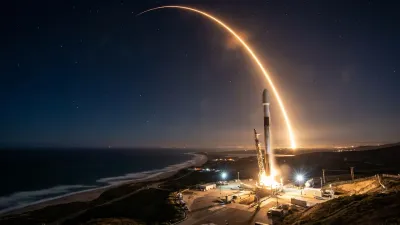
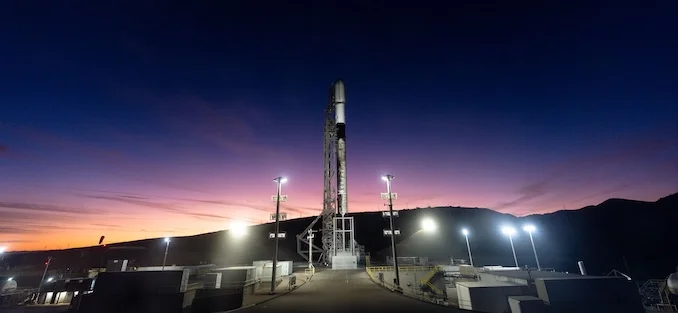
The mission was designed to add 25 broadband internet satellites to the company’s rapidly expanding low Earth orbit constellation, which currently consists of more than 10,200 spacecraft. Operating from Space Launch Complex 4 East at Vandenberg Space Force Base, the Falcon 9 rocket was programmed to follow a south-southwesterly trajectory. This specific flight path ensures optimal orbital insertion for the payload while maintaining strict safety protocols.
Powering this flight was the Falcon 9 first-stage booster designated B1097, embarking on its seventh operational flight. This specific hardware has a proven track record of reliability, having previously launched the Sentinel-6B and Twilight missions. Additionally, the B1097 booster successfully delivered five earlier batches of Starlink satellites into orbit before being assigned to this historic milestone.
Approximately eight minutes after liftoff, the B1097 booster was scheduled to touch down on the autonomous spaceport drone ship, 'Of Course I Still Love You.' This recovery effort aimed to secure the 600th overall Falcon booster landing and mark the 191st successful retrieval on this specific vessel. The launch window was slated for Sunday, April 19, at 7 a.m. PDT (10:00 a.m. EDT / 1400 UTC).
The Economics of Routine Reusability
Achieving a 600th Falcon booster landing underscores how thoroughly SpaceX has normalized rocket reusability, transforming what was once experimental into a routine operational standard. By flying the B1097 booster for a seventh time, the company continues to drastically reduce the capital expenditure required to maintain its massive 10,200-satellite Starlink network. This milestone proves that hardware longevity is no longer a theoretical goal but a practical reality.
This relentless cadence of recovery and relaunch is the primary economic engine allowing SpaceX to dominate the global launch market. While competitors still struggle with the high costs of expendable launch vehicles, the ability to land a booster 600 times provides an insurmountable pricing advantage. As the Starlink constellation grows, this reusable infrastructure will remain the critical foundation for the company's future deep-space ambitions.
This article was written by AI from reporting by spaceflightnow.com.