Global smartphone shipments have plummeted to a 13-year low in Q2 2026, driven by an AI-induced memory chip shortage that is forcing widespread price hikes across the industry. Despite the 11% year-over-year market contraction, Samsung has successfully reclaimed the global top spot, outmaneuvering Apple as budget-focused brands suffer severe double-digit declines.
According to Counterpoint Research, the primary catalyst for this downturn is a persistent shortage of DRAM and NAND memory chips. Suppliers are aggressively prioritizing AI data center demands over consumer electronics, driving up manufacturing costs. Combined with inflation, higher shipping rates, and weaker consumer spending, many manufacturers have been forced to raise prices on budget and mid-range devices where profit margins are already razor-thin.
Samsung and Apple Defy the Downturn
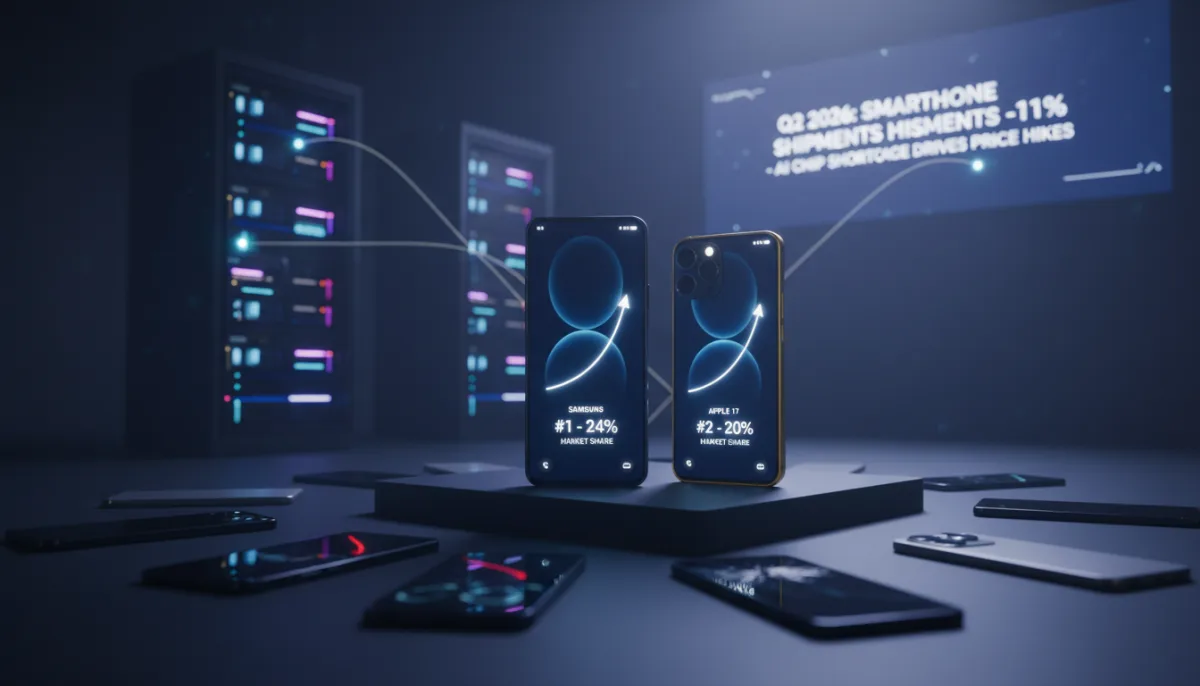
Samsung regained the number one position with a 24% global market share, posting the strongest year-over-year growth among the top five brands. The company avoided steep price hikes in key regions like India and the Middle East while leveraging aggressive seasonal promotions. The flagship Galaxy S26 Ultra drove significant momentum, utilizing its privacy display and AI-powered features to offset softer demand in lower-priced tiers.
Apple followed closely, increasing shipments by 3% year-over-year to secure a record 20% market share for the quarter. Notably, Apple was the only major smartphone maker to avoid raising prices during this industry-wide cost crunch. While the company continues to face headwinds in China, the iPhone 17 series remains the world’s best-selling smartphone lineup, even as Apple reallocates parts away from older models to support its newest devices.
The Mid-Range Squeeze and Outliers
The rising cost of memory chips has devastated the entry-level and mid-range segments, forcing major portfolio adjustments across the broader market.
- Xiaomi, OPPO, and vivo: All three brands recorded double-digit shipment declines. Xiaomi maintained a 12% market share through retailer financing adjustments, while OPPO and vivo closed the quarter with 11% and 8% shares, respectively.
- Google: Despite falling out of the top five, Google shipments increased by 16%, fueled by the release of the Pixel 10 and Pixel 10a.
- Huawei: The company saw a 6% increase in shipments, driven entirely by demand for the Mate 80, Nova 15, and Enjoy 90 series.
The AI Hardware Paradox
The current market dynamics reveal a fascinating paradox: the AI boom is actively cannibalizing the consumer hardware required to access it. By redirecting critical DRAM and NAND supplies to enterprise data centers, the tech industry is artificially inflating the cost of entry-level smartphones, effectively pricing out millions of potential upgraders. Counterpoint Research expects this pain to persist, projecting a 14% decline for the full year with memory shortages stretching into 2027.
This 13-year low proves that the traditional volume-driven business model is currently broken. Brands like Samsung and Apple are surviving because their premium devices - like the Galaxy S26 Ultra and iPhone 17 - offer enough perceived value to absorb supply chain shocks without destroying consumer demand. Until memory production scales to meet both server and consumer needs, mid-range manufacturers will continue to bleed market share, forcing a broader industry pivot toward high-margin, premium-only strategies.
This article was written by AI from reporting by androidauthority.com.