Waiting hours for a smartphone to recharge is rapidly becoming a relic of the past. In a comprehensive new lab test evaluating 33 modern smartphones, Apple's iPhone 17 Pro has officially claimed the title of the fastest-charging device overall. Meanwhile, Samsung's Galaxy S26 Ultra dominated the wired charging category, showcasing a clear divide in how the industry's top players approach battery replenishment.
The rankings stem from a rigorous testing protocol conducted by CNET. The lab team subjected each device to a strict 30-minute wired charging test, starting at 10% battery capacity or lower, utilizing the manufacturer's included cable and a wall adapter rated for the device's maximum supported speed. For devices equipped with wireless capabilities, a matching 30-minute test was performed using Qi (7.5W), Qi2 (15W), or Qi2.2 (25W) chargers tailored to each phone's peak specifications. The final overall score was calculated by averaging the wired and wireless results.
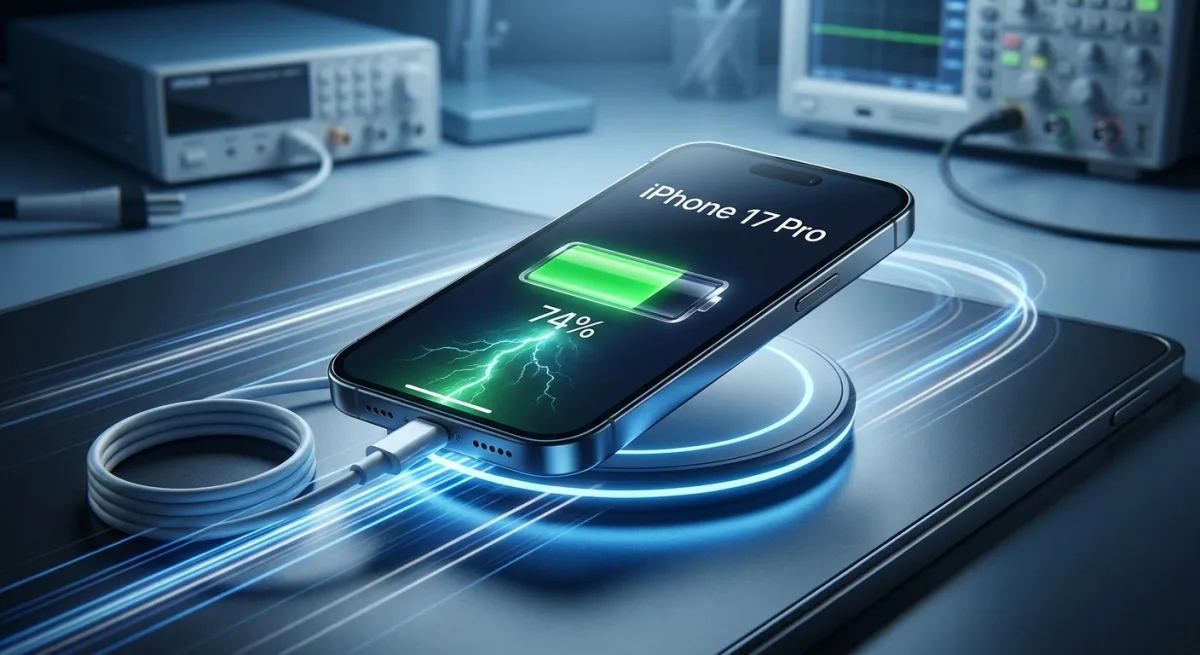
Apple's overall victory with the iPhone 17 Pro is heavily influenced by its relatively compact 4,252mAh battery capacity. Because it has a smaller physical cell to fill compared to the 5,000mAh standard found in competing Android flagships, the device reaches higher percentages faster. The iPhone 17 Pro supports 40-watt wired charging and 25-watt Qi2.2 wireless charging. However, battery size does not dictate endurance; the larger iPhone 17 Pro Max ultimately secured the top spot for overall battery life in separate endurance testing.
Top Performers: Wired Charging (30 Minutes)
- Samsung Galaxy S26 Ultra: 76% (via 60-watt charger, the fastest for any Samsung flagship to date)
- Apple iPhone 17 Pro: 74% (tied)
- Motorola Moto G Stylus (2025): 74% (tied)
- OnePlus 15: 72%
- Apple iPhone 17, iPhone 17 Pro Max, & Samsung Galaxy S25 FE: 69%
Top Performers: Wireless Charging (30 Minutes)
- Apple iPhone 17 Pro: 55%
- Apple iPhone 17 Pro Max: 53%
- Apple iPhone 17: 49%
- Apple iPhone Air: 47%
- Samsung Galaxy S26 Ultra: 39%
When evaluating brand consistency across multiple devices, Apple maintained a significant lead. The company averaged a 54.6% charge rate across its four iPhone 17 models and the new iPhone Air. In contrast, Samsung's nine-phone lineup averaged 38.5%, anchored by the strong performance of the Galaxy S26 Ultra but dragged down by the Galaxy Z Fold 7, which managed only 29%.
Beyond traditional graphite batteries, the test highlighted the emerging dominance of silicon-carbon technology. These advanced batteries utilize a silicon-based anode to achieve significantly higher capacities and faster charge rates without increasing the physical footprint of the device. Currently, silicon-carbon phones in the U.S. market remain limited to niche brands like OnePlus, RedMagic, and Poco, with Apple, Samsung, and Google yet to adopt the standard.
The Percentage Illusion and the Silicon-Carbon Threat
While the iPhone 17 Pro technically wins the percentage race, a closer look at the raw data reveals a different champion in actual energy transfer. The iPhone 17 Pro filling 74% of its 4,252mAh battery means it successfully stored roughly 3,146mAh of power in 30 minutes. In stark contrast, the OnePlus 15 utilized a proprietary 80-watt charger to fill 72% of a massive 7,300mAh silicon-carbon battery. That equates to a staggering 5,256mAh of power transferred in the exact same timeframe.
This discrepancy exposes a critical blind spot for the industry's giants. Apple and Samsung are currently optimizing their charging speeds around traditional battery chemistry and smaller capacities to keep devices thin and thermals manageable. However, as silicon-carbon technology matures, brands like OnePlus are proving that consumers do not have to choose between a massive multi-day battery and rapid charging times. If Apple and Google continue to delay their adoption of silicon-based anodes, their current dominance in percentage-based charging tests will soon be eclipsed by devices that offer nearly double the raw endurance in the same 30-minute window.