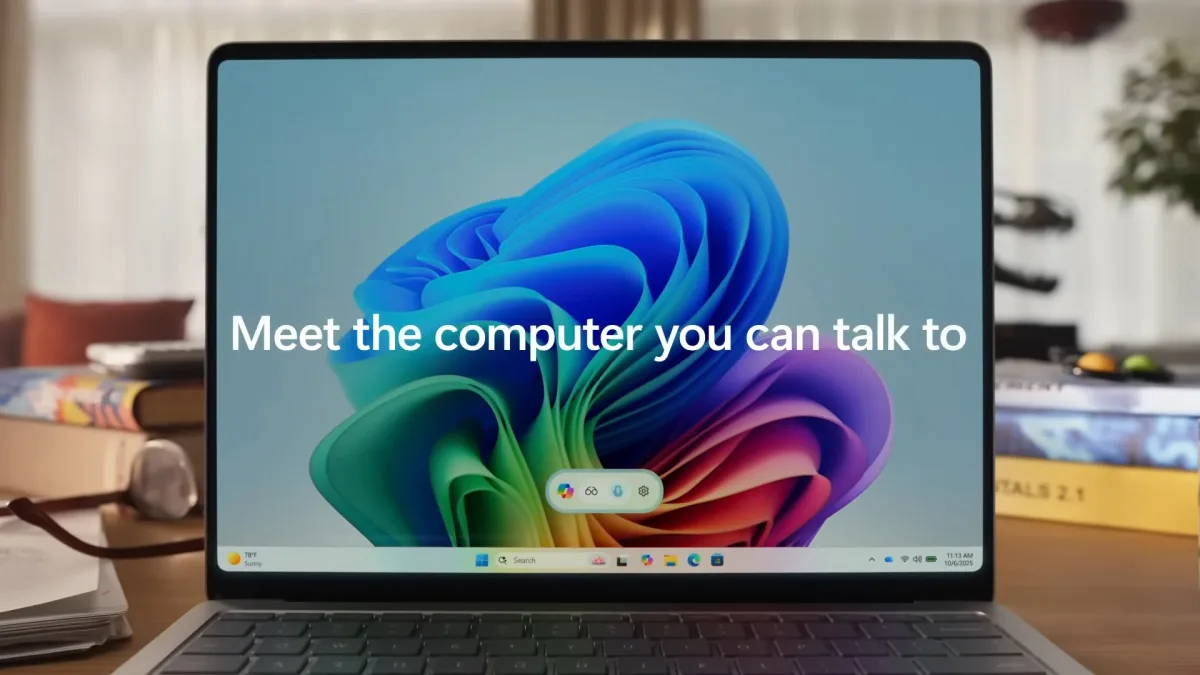
Microsoft is quietly dismantling the exclusivity of its Copilot+ PCs by opening up Windows 11 local AI on RTX GPUs. Developers and power users with an NVIDIA RTX 30-series graphics card or newer can now run native Language Model APIs directly on their hardware, bypassing the strict Neural Processing Unit (NPU) requirements that previously locked these features behind new laptop purchases.
This shift is crucial for developers building AI applications and PC gamers who already own powerful desktop hardware. It proves that raw GPU power can handle local AI tasks just as well - if not better - than the efficiency-focused NPUs found in Copilot+ devices. By broadening hardware support, Microsoft is ensuring its local AI ecosystem actually reaches a mass audience.
The Hardware Shift: GPUs Replace NPUs
When Copilot+ PCs officially debuted on June 18, 2024, Microsoft marketed them as the exclusive home for native Windows 11 AI features. To meet the official Copilot+ standard, a PC required 16GB of RAM, an SSD, and an NPU capable of at least 40 TOPS (Tera Operations Per Second). While NPUs are highly efficient for background AI tasks, traditional GPUs are heavy-duty processors designed for massive parallel workloads, making them more than capable of running local models.
In a post on GitHub, Microsoft confirmed that perfectly capable GPU-based PCs will no longer be left behind. To run the local Language Model APIs, non-Copilot+ PCs must meet two specific requirements:
- Own an NVIDIA GeForce RTX 30 series GPU or newer.
- Have a supported GPU with at least 6GB of VRAM.
Microsoft noted in the update that the Language Model APIs on GPU are currently experimental, but they successfully bring local language capabilities to a much broader range of Windows 11 devices.
Unlocking Phi Silica for Developers
According to Microsoft’s official documentation, these APIs are powered by a small language model called Phi Silica. Because standard Windows PCs do not come with AI models pre-installed by default, the new API integration allows supported applications to call on Windows Update to download the Phi Silica model directly to the user's PC, where it runs locally on the GPU.
Right now, an application can tap into the following native Windows AI features without relying on cloud processing:
- AI-powered text formatting using Windows.AI.Text APIs.
- Summarize (TextSummarizer).
- Rewrite (TextRewriter).
- Text-to-Table (TextToTableConverter).
- General prompt generation.
This allows users to experience ChatGPT-like text generation natively within Windows apps while keeping their data entirely on-device, ensuring strict privacy compared to cloud-based models.
The Inevitable Collapse of the NPU Paywall
Microsoft’s initial decision to restrict local AI to Copilot+ PCs was clearly a strategic move to drive new laptop sales, not a technical necessity. While NPUs offer excellent battery life for thin-and-light laptops, ignoring the massive install base of NVIDIA RTX graphics cards was unsustainable for long-term developer adoption. If developers cannot target the millions of existing gaming and workstation PCs, they simply will not invest time in building native Windows AI apps.
However, Microsoft is still holding some cards close to its chest. Flagship Copilot+ features like Windows Recall, Click to Do, and the advanced AI generation in MS Paint remain locked to NPU-equipped devices for now. This API expansion is a calculated compromise: it gives developers the massive user base they need to test text-based AI features, while Microsoft continues to use visual AI tools as the primary selling point for its next-generation hardware.
This article was written by AI from reporting by windowslatest.com.