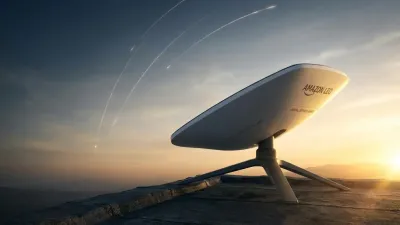
A cache of leaked documents reviewed by The Insider, Der Spiegel, and Le Monde reveals a structured, multi-disciplinary program between China and Russia to neutralize SpaceX's Starlink satellite network. The investigation exposes a deepening partnership in space weaponry that extends far beyond shared rhetoric, focusing heavily on integrated air defense, autonomous loitering munitions, and strategies to blind the satellite infrastructure that modern militaries increasingly rely upon. The bilateral discussions, which gained momentum at a previously undisclosed China-Russia Military-Technical Cooperation Forum in 2023, are set to continue with a sixth gathering scheduled for the end of this year in St. Petersburg.
The urgency behind this alliance stems from Starlink's undeniable impact on the battlefield. Since the 2022 invasion of Ukraine, the commercial broadband network has enabled Ukrainian forces to extend weapon reach and strike deep into Russian territory. This dynamic has fundamentally altered how adversaries view commercial space assets. In 2022, Konstantin Vorontsov, a deputy director in Russia's foreign ministry, warned that the use of Western commercial satellites for wartime purposes established an "extremely dangerous trend," effectively designating them as legitimate military targets.
The Escalation Ladder to Defeat a Mega-Constellation
Taking down a decentralized network of more than 10,000 satellites interconnected by laser communications links is a monumental technical challenge. Destroying a handful of nodes or a single ground station would barely dent the operational capacity of the Starlink satellite network. To address this, researchers from the China Aerospace Science and Technology Corporation (CASC) - the state-owned enterprise directing China's aerospace industry - presented a dedicated three-step "escalation ladder" at the 2023 forum.
The strategy begins with legal and diplomatic warfare, aiming to generate international pressure against Starlink's expansion by citing collision risks in low Earth orbit (LEO). The second phase involves coordinated technical interference, utilizing regulatory filings for frequency bands and orbital slots to throttle SpaceX's growth, coupled with localized electromagnetic jamming to block receiver signals. The final rung of the ladder is the physical destruction of the network through cyber warfare and anti-satellite weapons, potentially deploying a cloud of high-density projectiles to trigger catastrophic collisions.
The collaboration between China and Russia on ways to counter it, that is more troubling than either one of them looking at it independently.
- Charles Galbreath, Senior Resident Fellow, Mitchell Institute for Aerospace Studies
This partnership is built on a stark exchange of capabilities. While China possesses vastly superior resources, advanced chip manufacturing, and a rapidly developing space sector - highlighted by the recent recovery of a reusable orbital-class rocket booster - it lacks modern combat experience. Russia, conversely, offers a battle-tested environment to rapidly evaluate new technologies, albeit at the staggering cost of 1.4 million casualties since 2022. In return, China is reportedly supplying training and hardware for electronics used in Russian weapon systems.
The Nuclear Boomerang and Global Fallout
The pursuit of the ultimate "Starlink killer" has led to increasingly extreme concepts, including Russia's reported plan to place a nuclear weapon in orbit. Such a move would directly violate the Outer Space Treaty of 1967 and carry devastating, indiscriminate consequences. A nuclear detonation in low Earth orbit would not just neutralize US military assets like the National Reconnaissance Office's (NRO) proliferated constellation or the Pentagon's proposed Golden Dome missile shield; it would act as a boomerang.
The resulting radiation clouds would render near-Earth space unusable for months or years, crippling China's own emerging Guowang constellation and Russia's satellite networks. As Charles Galbreath noted, any mission executed from low Earth orbit - including communications and commercial imaging networks like Planet's Dove constellation - would be at severe risk if these counter-space mechanisms are fully realized.
The Commercialization of the Kill Chain
The most alarming takeaway from the CASC presentation is the deliberate framing of Starlink's resilience as a "blockade" that justifies an assault as an act of self-defense. This rhetorical shift highlights a permanent change in modern warfare: commercial technology is no longer just a logistical support tool; it is the backbone of the tactical kill chain. Tara Brown, a space law specialist at the US Naval War College, accurately predicted this in 2022 when she urged nations to recognize the risk of commercial systems becoming valid military objectives.
As China accelerates its own launch cadence to deploy a Starlink-like constellation, the US and its allies will soon face the exact same defensive dilemmas. The US Space Force's recent unveiling of a ground-based satellite jammer proves that the militarization of low Earth orbit is no longer a theoretical debate. The race is no longer just about who can launch the most satellites, but who can protect their orbital infrastructure from an adversary willing to blind the entire globe just to win a localized conflict.
This article was written by AI from reporting by arstechnica.com.