Starlink cattle tracking is officially a reality, solving one of the biggest headaches for ranchers operating in massive, off-grid territories. By integrating directly with SpaceX's Starlink satellites, Boulder-based tech company Halter has eliminated the need for cell towers and expensive on-ranch radio infrastructure. As long as there is an open sky overhead, livestock managers can now monitor their herds from virtually anywhere using a smartphone app.
The agricultural industry across North America is currently battling rising fuel costs, a shrinking labor pool, and an aging workforce. Many of the most productive grazing lands are located in rugged, remote areas where traditional cellular networks simply do not reach. According to a recent report by Tesla North, this satellite upgrade expands Halter’s potential market in the United States by roughly two and a half times, with a Canadian rollout officially on the horizon.
Real-World Impact at High Lonesome Ranch
Lloyd Calvert, who manages livestock at the massive 225,000-acre High Lonesome Ranch in western Colorado, is already utilizing the upgraded hardware. The rugged terrain previously made it nearly impossible to keep tabs on animals without deploying physical riders. Calvert noted that the satellite integration unlocks the ability to run cattle in very remote country while maintaining full visibility over their movements.
The ranching team no longer needs to have someone physically present with the herd at all times. Calvert explained that his team now refers to themselves as "Halter junkies" because they can check the exact location of their cows at any time of day, regardless of their own physical location.
How the Halter Starlink System Works
Transitioning to this new technology removes significant physical labor from daily ranching operations. The hardware relies entirely on off-grid power and space-based connectivity to function.
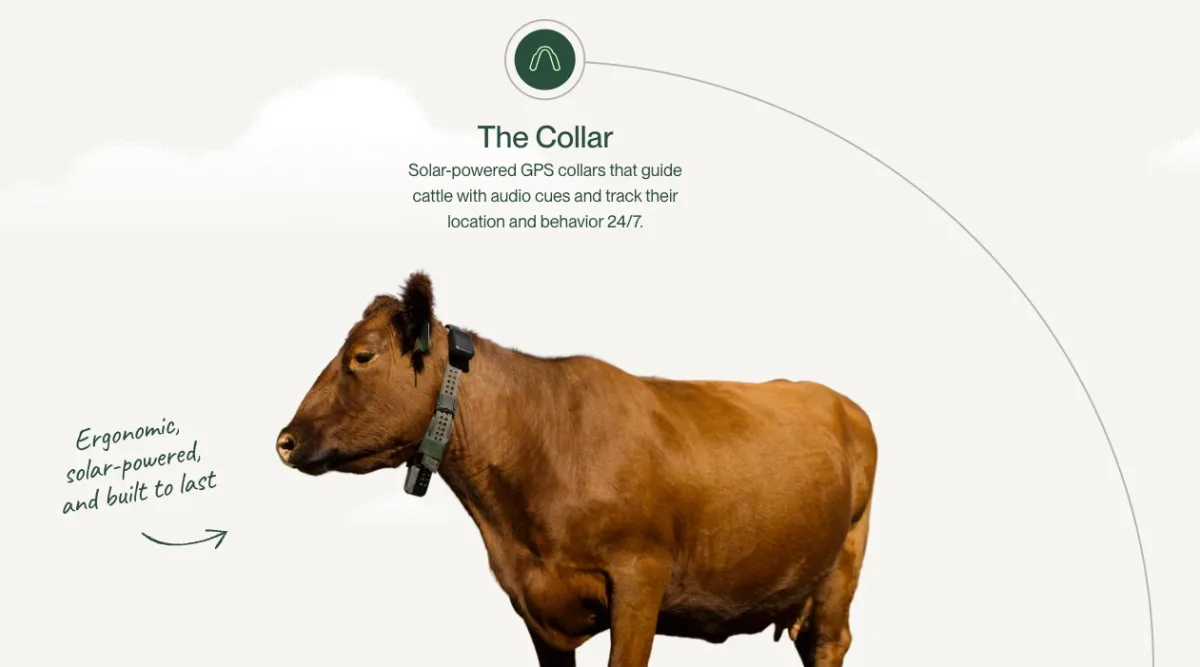
- Solar-Powered GPS: The collars run on built-in solar panels and use GPS to track individual animal movements continuously.
- Virtual Fencing: Ranchers can draw boundaries directly within the mobile app, eliminating the need for physical wire and wooden posts.
- Remote Pasture Moves: Herds can be guided between different grazing pastures remotely through the app's interface.
- Zero Local Infrastructure: Unlike the previous generation of collars, the new system connects directly to satellites, meaning ranchers no longer need to install proprietary radio towers on their property.
New Behavioral and Health Tracking Features
Alongside the major satellite connectivity announcement, Halter rolled out its most comprehensive software update to date. The platform now includes advanced heat detection specifically designed for the breeding season. This allows operators to optimize their breeding schedules without requiring constant physical inspections.
The system also introduces real-time behavioral monitoring that tracks specific activities like grazing and rumination. Combined with new satellite-based tools for managing pasture and forage, ranchers can make data-driven decisions about land health. The technology is currently live for ranchers in the U.S. and New Zealand, with launches in Australia and Canada coming soon. For Canadian operators in the remote B.C. interior, Alberta foothills, or northern prairies, this could fundamentally change daily operations.
The End of Traditional Fencing
The shift toward direct-to-device satellite connectivity is proving to be a massive disruptor for traditional agriculture. By bypassing the need for local radio towers, Halter has drastically lowered the barrier to entry for massive, multi-thousand-acre operations. The fact that a 225,000-acre property like High Lonesome Ranch can now be managed via a smartphone app highlights a critical pivot in how we approach land management and labor shortages.
Looking ahead, the integration of behavioral monitoring with virtual fencing creates a powerful ecosystem that goes beyond simple location tracking. As Starlink continues to expand its low-Earth orbit network, we can expect these smart collars to become standard equipment for remote grazing operations. If the upcoming Canadian and Australian rollouts mirror the success seen in Colorado, the days of manually riding out to mend physical wire fences may soon be a thing of the past.