Businesses losing thousands of dollars per hour to internet outages now have a hybrid safety net. T-Mobile has officially launched SuperBroadband, a new enterprise internet service that merges its nationwide 5G network with Starlink satellite connectivity to guarantee uninterrupted online operations. The service is designed to eliminate the costly downtime associated with infrastructure failures, severe weather, or peak network congestion.
Designed specifically for industries like healthcare, retail, hospitality, and oil and gas, this service ensures that critical systems remain online. From electronic health records to point-of-sale terminals, SuperBroadband provides a continuous connection for remote or expansive multi-site enterprises that traditional fixed-line providers struggle to reach.
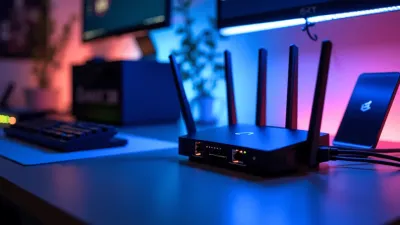
The system operates by integrating two independent connectivity pathways: terrestrial 5G and satellite-based broadband. This dual-path approach enables seamless failover, automatically shifting traffic between the two networks without requiring any manual intervention from IT staff. SuperBroadband is the first nationwide broadband solution capable of reaching every ZIP code in the United States.
Key Features of the SuperBroadband Architecture
- Seamless Failover: Automatic traffic routing between T-Mobile's 5G network and Starlink satellites to prevent service disruptions.
- Unified Management: A fully managed installation process that eliminates the need for multiple vendors, providing a single contract and a consolidated monthly bill.
- T-Platform Dashboard: A centralized monitoring hub where IT teams can track hardware status, data usage patterns, system health, and detailed failover event records.
- 99.99% Uptime Guarantee: A financially backed reliability commitment applicable in locations where both 5G and Starlink coverage overlap.
The launch of SuperBroadband reflects a growing demand for hybrid connectivity as companies increasingly rely on cloud-based applications, video conferencing, and IoT devices. Traditional fiber often lacks geographic reach, while standalone satellite options can introduce latency unsuitable for real-time tasks. By fusing both technologies under one managed umbrella, T-Mobile bridges this critical infrastructure gap.
The End of the Rural Connectivity Compromise
For years, multi-site enterprises operating in remote areas had to choose between the high latency of standalone satellite or the geographic limitations of fixed-line fiber. By fusing terrestrial 5G with Starlink under a single managed contract, T-Mobile is effectively eliminating the administrative nightmare of juggling multiple ISPs for failover. The centralized visibility offered by the T-Platform means IT teams no longer have to guess which network is failing during a storm.
The financially backed 99.99 percent uptime guarantee is the real game-changer here; it forces competitors like AT&T and Verizon to rethink their enterprise redundancy strategies. If this hybrid architecture proves reliable during peak congestion and natural disasters, it could become the baseline standard for corporate infrastructure, making standalone single-path internet obsolete for mission-critical operations.