Celeste Technologies has officially announced the successful completion of a critical 5G NR-NTN (Non-Terrestrial Network) interoperability test campaign, marking a significant step forward in the integration of satellite and terrestrial communications. Conducted in collaboration with Sateliot and utilizing platforms from Qualcomm Technologies, this achievement validates the capability of standard 5G IoT devices to communicate directly with satellite constellations without specialized hardware modifications.
Bridging Earth and Space: The 5G NTN Breakthrough
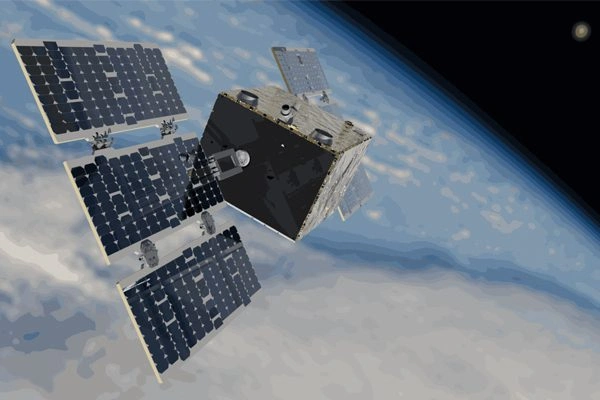
The core of this achievement lies in the successful validation of the 5G New Radio (NR) signal over a Non-Terrestrial Network. Historically, connecting devices to satellites required proprietary hardware and expensive, bulky antennas. However, this test campaign focused on the 3GPP Release 17 standard, which allows standard cellular devices to switch seamlessly between ground towers and satellites. Celeste Technologies utilized its advanced testing frameworks to verify that Sateliot’s Direct-to-Device (D2D) constellation payload could effectively communicate with user equipment powered by Qualcomm's 5G IoT chipsets.
This interoperability is a game-changer for the Internet of Things (IoT). It implies that logistics trackers, agricultural sensors, and maritime devices can maintain connectivity in the most remote regions of the planetoceans, deserts, and mountainswhere terrestrial cellular networks do not reach. By proving that the signal integrity and protocol exchange function correctly between the satellite payload and the ground device, Celeste and Sateliot have cleared a major technical hurdle for commercial deployment.
The Role of Qualcomm and 3GPP Standards
The tests were conducted at Qualcomm Technologies' facilities, underscoring the semiconductor giant's pivotal role in the 5G NTN ecosystem. The testing environment simulated the complex dynamics of Low Earth Orbit (LEO) satellite communications, including Doppler shifts and variable latencies, which are typical challenges in space-to-ground data transmission. The success of these tests confirms that the hardware and software stack complies with the rigorous specifications of the 3GPP Release 17 standard for NB-IoT (Narrowband IoT) over NTN.
For the industry, this signals that the ecosystem is maturing rapidly. Sateliot’s unique approach involves deploying a constellation that acts as cell towers in space, extending the coverage of Mobile Network Operators (MNOs) through standard roaming agreements. This successful interoperability test ensures that when these satellites are fully operational, existing 5G IoT devices will be able to roam onto the satellite network automatically, just as they would roam onto a partner network in a different country.
Technical Summary: The Interoperability Milestone
| Component | Role & Specification |
|---|---|
| Testing Entity | Celeste Technologies (Validation & Interoperability) |
| Satellite Operator | Sateliot (D2D Constellation Payload) |
| Technology Platform | Qualcomm Technologies (5G IoT Chipsets/Platforms) |
| Network Standard | 3GPP Release 17 (5G NR-NTN) |
| Key Benefit | Seamless switching between Terrestrial and Satellite networks |
| Target Application | Global IoT coverage (Logistics, Agriculture, Maritime) |
Frequently Asked Questions
What is 5G NR-NTN?
5G NR-NTN stands for 5G New Radio Non-Terrestrial Networks. It is a standard that enables 5G smartphones and IoT devices to connect directly to satellites (non-terrestrial nodes) using the same protocols used for ground-based cell towers.
Do I need a special phone for this?
For the specific IoT applications tested here, standard 5G IoT devices compliant with 3GPP Release 17 can work without modification. For consumer smartphones, newer chipsets that support NTN are required, but they do not need external satellite antennas.
How does Sateliot's technology differ from Starlink?
While Starlink primarily focuses on high-speed broadband requiring a dedicated dish, Sateliot focuses on "Direct-to-Device" (D2D) connectivity for IoT, allowing standard cellular devices to connect directly to the satellite without extra hardware.
My Take
The successful interoperability test by Celeste Technologies is more than just a technical pass; it is a green light for the mass commercialization of satellite IoT. By validating that standard Qualcomm-based devices can talk to Sateliot's payload, the industry is moving away from proprietary, siloed satellite solutions toward a unified, standardized 5G ecosystem. I expect 2026 to be the year where "dead zones" for critical IoT infrastructure begin to disappear, driven by this exact type of cross-industry collaboration.