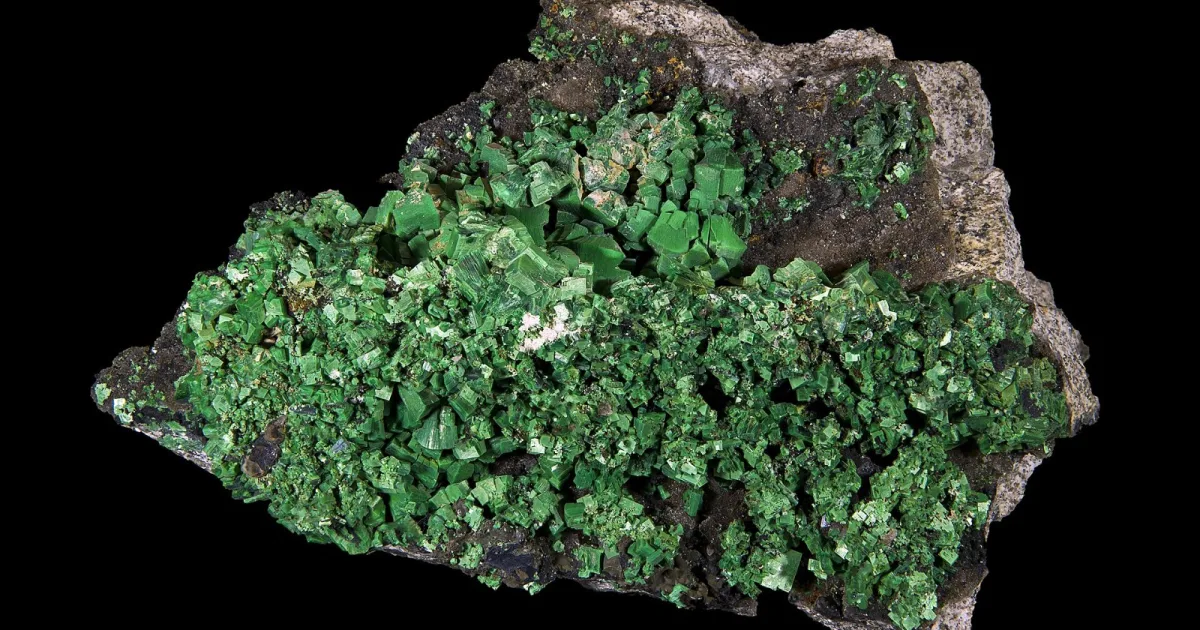
In May 1972, a routine check at a French nuclear fuel-processing plant revealed a statistical impossibility that would rewrite geological history. A uranium ore sample from the Oklo deposit in Gabon contained only 0.717 percent of the fissile isotope uranium-235, falling short of the universal 0.720 percent found everywhere else in the solar system. This tiny discrepancy led scientists to a staggering conclusion: roughly two billion years ago, the Oklo natural nuclear reactor spontaneously ignited and sustained a fission chain reaction for hundreds of thousands of years.
For modern energy researchers and geologists, this ancient anomaly provides unprecedented insights into self-regulating nuclear systems. The reason this phenomenon occurred two billion years ago - and cannot happen today - is tied to the radioactive decay rate of uranium-235. Back then, the concentration of this fissile isotope was roughly 3 percent, which perfectly matches the enrichment levels required for many modern commercial power plants. The ore was naturally reactor-grade, waiting only for the right environmental trigger.
How the Oklo Reactor Operated (Step-by-Step)
According to research led by Alex Meshik at Washington University, the reactor functioned much like a geological geyser. By studying xenon isotopes trapped in aluminum phosphate grains, scientists reconstructed the exact operational cycle that prevented the system from destroying itself.
- Absorb ordinary groundwater into the uranium-rich rock vein. This ensures the fast-moving neutrons are slowed down to gentle speeds, acting as a natural moderator to trigger the fission process.
- Ignite the spontaneous fission chain reaction. This enables the uranium-235 nuclei to split, generating immense heat within the ore body for approximately 30 minutes.
- Boil the groundwater into steam and drive it out of the reaction zone. This ensures the reactor does not melt down, as the lack of water stops the neutrons from slowing down, effectively stalling the reaction.
- Cool the surrounding rock formation over a period of 2.5 hours. This enables fresh groundwater to seep back into the deposit, restarting the cycle safely and consistently.
Power Output and Waste Management
Across the Oklo and adjacent Okelobondo mines, researchers have identified 16 separate zones where these natural reactors operated. The total energy released over the entire episode reached approximately 15,000 megawatt-years. However, the average power output was remarkably gentle, estimated at under 100 kilowatts - roughly enough energy to run a few dozen household toasters.
Despite this low output, the chemical fingerprints left behind are massive. The reactors bred more than two tons of plutonium-239 from the surrounding uranium-238, almost all of which has safely decayed over the eons. Most impressively, the self-regulating water cycle meant that over hundreds of thousands of years of operation, there was not a single meltdown or explosion recorded in the geological data.
The Ultimate Blueprint for Geological Storage
The true value of the Oklo natural nuclear reactor extends far beyond its status as a geological curiosity. Because the deposit successfully handled its own radioactive waste in place for two billion years, it serves as the ultimate natural model for modern repository scientists. If a naturally occurring rock formation can safely contain highly toxic fission products and tons of plutonium without catastrophic failure, modern engineering can leverage these exact geological principles for long-term nuclear waste containment.
Furthermore, Oklo remains a critical battleground for theoretical physics. Because the reactor's behavior depends on nuclear properties governed by the fundamental constants of physics, researchers continue to debate whether these constants have shifted over cosmic time. While some physicists read the Oklo data as evidence of a slight shift, others argue it proves absolute stability. Regardless of where that debate lands, Oklo stands as a masterclass in passive nuclear safety, engineered entirely by the Earth itself.