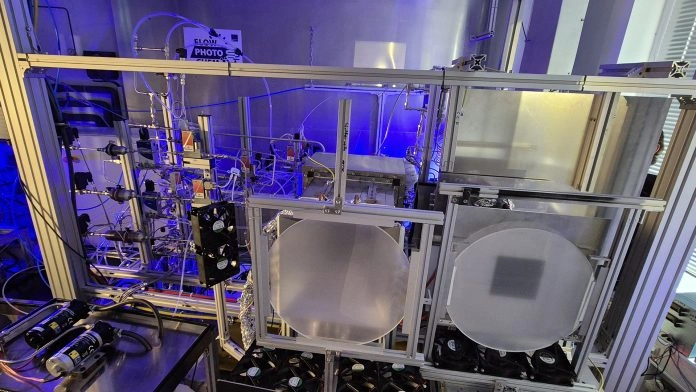
A groundbreaking study published in Nature Communications has unveiled a novel solar-driven chemical production method that simultaneously converts carbon dioxide (CO2) and water (H2O) into ethylene (C2H4) and hydrogen peroxide (H2O2). This dual-production capability addresses one of the most persistent challenges in artificial photosynthesis: economic feasibility. By generating two high-value industrial chemicals in a single integrated system, this technology offers a promising pathway to mitigate atmospheric carbon levels while decarbonizing the manufacturing of essential raw materials.
The Mechanics of Dual-Reaction Photocatalysis
Traditional artificial photosynthesis systems often focus on a single reaction, such as reducing CO2 to fuel or oxidizing water to oxygen, which limits their overall energy efficiency and economic return. The newly developed system utilizes a sophisticated photocatalytic process that couples the reduction of CO2 with the oxidation of water. Instead of producing low-value oxygen as a byproduct, the system generates hydrogen peroxide, a valuable oxidizer used extensively in industrial bleaching and electronics manufacturing.
On the reduction side, the system targets the production of ethylene, the world's most produced organic compound and a fundamental building block for plastics, fibers, and other chemicals. Achieving high selectivity for ethylenea multi-carbon productdirectly from CO2 using only sunlight is a significant technical achievement. The process relies on advanced catalyst materials designed to facilitate efficient charge transfer, ensuring that the solar energy absorbed is effectively utilized to drive these complex chemical transformations without significant energy loss.
Economic and Environmental Implications
The ability to produce C2H4 and H2O2 using solar energy fundamentally shifts the economics of carbon capture and utilization (CCU). Currently, ethylene production relies heavily on steam cracking of fossil fuels, a process that is both energy-intensive and a major source of industrial carbon emissions. By replacing this fossil-based pathway with a solar-driven approach, industries could significantly reduce their carbon footprint.
Furthermore, the co-production of hydrogen peroxide adds a secondary revenue stream that enhances the commercial viability of the technology. This decentralized production model could allow chemical plants to generate reagents on-site using solar panels and captured emissions, reducing the need for transporting hazardous chemicals and lowering logistical costs.
| Feature | Traditional Method | New Solar-Driven Method |
|---|---|---|
| Energy Source | Fossil Fuels (Thermal Cracking) | Solar Energy (Photocatalysis) |
| Primary Input | Naphtha / Natural Gas | CO2 and Water |
| Key Outputs | Ethylene + CO2 Emissions | Ethylene (C2H4) + Hydrogen Peroxide (H2O2) |
| Environmental Impact | High Carbon Footprint | Carbon Negative / Neutral |
Frequently Asked Questions
What is the significance of producing Ethylene and H2O2 together?
Co-producing these chemicals increases the economic value of the process. Ethylene is a key plastic feedstock, while Hydrogen Peroxide is a valuable industrial chemical, making the overall system more profitable than producing either alone.
How does this technology help with climate change?
It actively utilizes CO2, a greenhouse gas, as a raw material. Instead of releasing CO2 into the atmosphere, the system captures and converts it into useful products, effectively recycling carbon.
Is this technology ready for commercial use?
While the study demonstrates a successful proof-of-concept in a laboratory setting, scaling up the reactor size and improving long-term catalyst stability are necessary steps before industrial adoption.
My Take: A Step Toward Circular Chemistry
This research represents a pivotal moment where artificial photosynthesis moves from a scientific curiosity to a potential industrial reality. The strategic choice to target ethylene and hydrogen peroxidetwo chemicals with massive global demandshows a clear understanding of market dynamics. If the efficiency rates seen in the lab can be maintained at scale, we are looking at the blueprint for the chemical plants of the future: silent, solar-powered, and pollution-free.
This article was written by AI from reporting by nature.com.