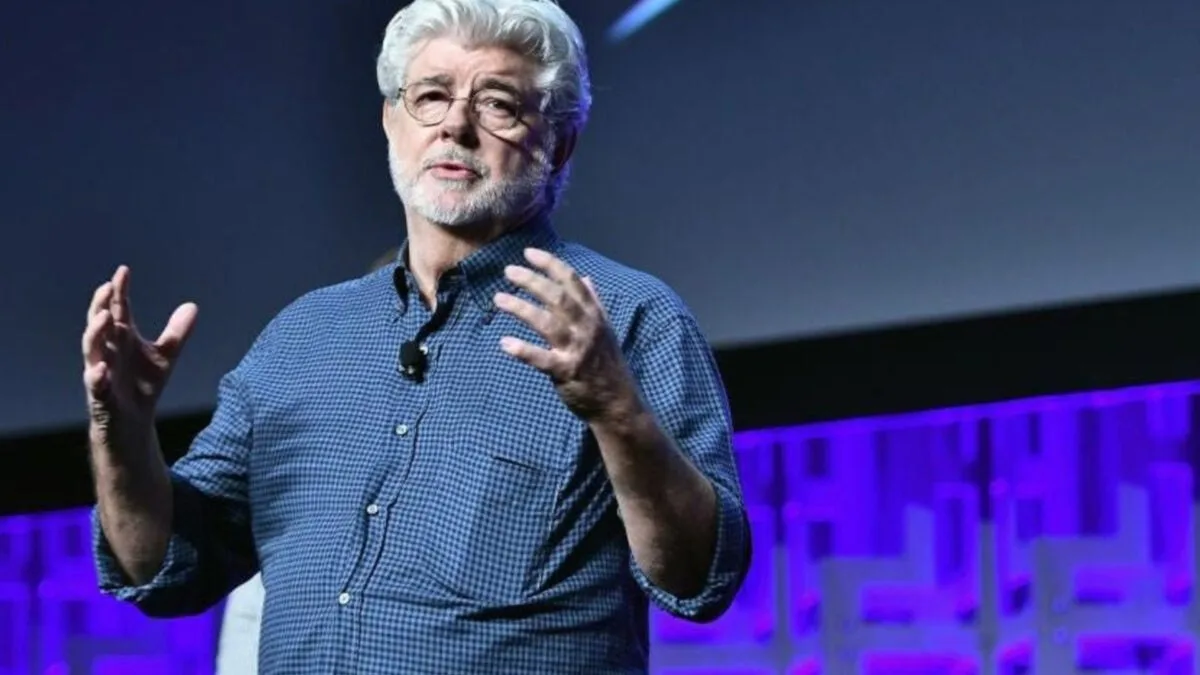
George Lucas sees artificial intelligence not as a threat to Hollywood, but as the inevitable next step in cinematic evolution. Speaking ahead of the upcoming opening of the Lucas Museum of Narrative Art, the Star Wars creator explicitly endorsed the integration of AI in filmmaking, dismissing industry fears as short-sighted resistance to progress.
Lucas has historically treated technological limitations as mere hurdles to be cleared. He famously invented new motion-control camera systems for the original Star Wars and waited decades for computer animation to mature before launching his prequels. His current pro-AI stance aligns perfectly with a career built on pushing the boundaries of digital effects through his company, Industrial Light and Magic (ILM).
The Inevitability of AI in Cinema
In an interview with A Rabbit’s Foot, Lucas framed the transition to generative AI as a natural technological leap. He compared modern AI skeptics to early critics of the automobile who clung to outdated modes of transportation.
Artificial intelligence means it’s much easier for us to make movies. It’s very much like sitting here saying, ‘Well, I believe the horse and the buggy is really where it’s at. These cars, they break down... and pretty soon they’ll be making them into tanks.’ There’s nothing you can do about it. That’s progress. It’s the future.
- George Lucas, Creator of Star Wars
Addressing concerns about deepfakes and digital theft, Lucas argued that AI itself is the best defense against its own misuse. "If you want AI that tells you when something is fake and where it came from, AI can do that," Lucas explained, noting that humans simply lack the capacity to police digital authenticity at scale. He emphasized that the ultimate responsibility lies with the human operator, stating that illegal actions using AI should be punished just like any real-world crime.
Rejecting the Algorithm: Why Focus Groups Fail
While Lucas embraces algorithmic tools for production, he fiercely rejects them for storytelling. He criticized the modern studio reliance on focus groups and fan feedback, arguing that audiences do not actually know what they want to see.
"They let the audience actually make the movie," Lucas warned, pointing out that true filmmaking requires a passionate creator with a specific story to tell. He believes that studios take the wrong message from audience feedback, resulting in a corporate environment where movies are designed by committee rather than by someone who actually knows how to make them.
The Generative Divide in Modern Hollywood
Lucas’s optimism stems from his era of pioneering ILM, where computers were strictly tools wielded by human artists to achieve a specific vision. However, the leap from traditional CGI to generative AI represents a fundamental shift from human-directed rendering to machine-generated creation. While Lucas views AI as a mechanism to make production "much easier," the modern Hollywood landscape is currently battling over whether these tools will empower independent creators or simply allow studios to bypass human labor entirely.
His dismissal of focus groups actually highlights the core tension of the AI era. If studios are already prone to letting "the audience actually make the movie" through data-driven fan service, the introduction of AI could accelerate the creation of algorithmically safe, homogenized content. Lucas envisions AI as a tool for the visionary auteur, but the industry's current trajectory suggests it may be used precisely for the corporate, focus-tested filmmaking he despises.
This article was written by AI from reporting by gizmodo.com.