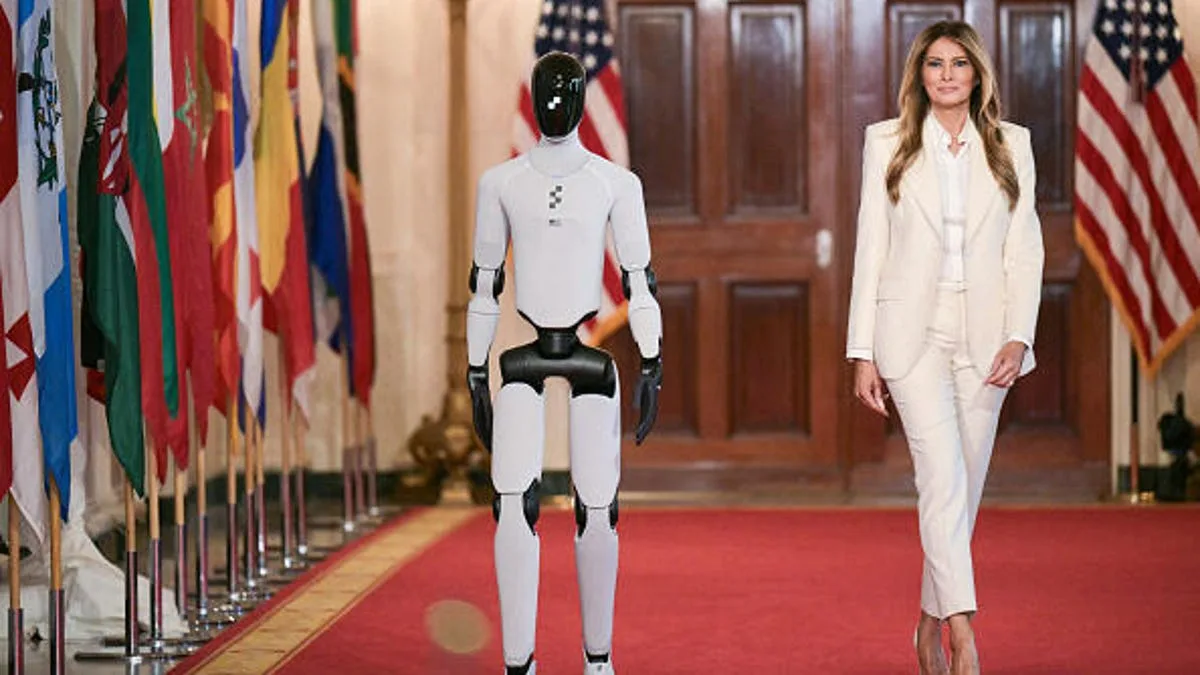
The Figure 03 humanoid robot made an unprecedented high-profile appearance on Wednesday, escorting First Lady Melania Trump down the red carpet at the Fostering the Future Together Global Coalition Summit. The event, aimed at promoting artificial intelligence in education, showcased the advanced machine as a glimpse into the future of personalized learning. During the summit, the first lady pitched a vision where AI-powered humanoid robots act as idealized educators, conceptually named "Plato," to provide students with instant access to human knowledge, art, and philosophy.
This development signals a major shift for educators, tech developers, and policymakers. It highlights how advanced robotics and proprietary AI engines are aggressively moving from industrial and domestic applications directly into the highly sensitive sector of childhood education. For school administrators and tech companies, this summit outlines a clear, albeit controversial, roadmap for integrating autonomous hardware into future classroom environments.
The Figure 03 Hardware and Helix AI Engine
Developed by Silicon Valley-based robotics company Figure AI, the third-generation Figure 03 robot was officially introduced in October of last year. The humanoid, which costs approximately $25,000 according to Forbes, was initially designed for domestic and corporate use. Demonstration videos have previously shown the machine autonomously folding laundry, lifting eggs, operating a washing machine, and delivering drinks, as well as functioning as a corporate receptionist.
The robot's capabilities are powered by a proprietary AI engine called Helix. This system allows the Figure 03 to autonomously perform complex physical tasks and respond dynamically to voice commands. At the summit, the humanoid demonstrated these conversational abilities by delivering opening remarks, stating, "I'm grateful to be part of this historic movement to empower children with technology and education," before welcoming attendees in multiple languages.
The "Plato" Vision and Tech Industry Backing
The two-day summit hosted leaders from 45 nations and 28 technology organizations, including representatives from industry giants such as Google, OpenAI, Microsoft, and the AI data analytics company Palantir. The event is part of the first lady's Be Best: Fostering the Future initiative, which originally launched in 2018 to combat cyberbullying and assist children affected by the opioid crisis.
Under the new "Plato" concept, these AI-powered humanoid robots are envisioned as in-home educational aids. The administration claims these machines could boost analytic and problem-solving skills while adapting in real time to a student's pace, prior knowledge, and emotional state. US Education Secretary Linda McMahon reinforced this technological push, speaking about AI being one of the Department of Education's main priorities during a roundtable meeting.
"If we're able to scale these resources effectively by investing in AI infrastructure and training, we can offer expert instructions across countless fields, to hire volumes of people at a fraction of the cost," McMahon stated on Tuesday. She also noted that the Department of Education has already dedicated millions of dollars in grants to support the use of AI in schools.
Policy Shifts and Public Backlash
The push for robotic educators arrives amid significant structural changes to the US education system. The summit follows widespread criticism of the Trump administration's 2025 executive order aimed at dismantling the Department of Education. While the department has not been officially abolished, it has faced severe policy changes, funding cuts, and workforce reductions.
Unsurprisingly, the introduction of a humanoid robot as a potential teacher sparked immediate backlash from critics wary of technology stripping essential human connection from classrooms. Concerns over increased layoffs and cost-cutting measures dominated social media discussions. On one Huffington Post Instagram post featuring the robot, users expressed deep skepticism. One commenter sarcastically noted, "Nice, getting rid of educators in favor of a robot," while another stated, "No, I don't want to imagine a world with emotionless robots educating our children."
My Take
The prominent display of the Figure 03 robot at a White House summit represents a fascinating, yet highly polarizing, collision of cutting-edge hardware and public policy. From a purely technical standpoint, Figure AI's integration of the Helix engine into a $25,000 chassis capable of both physical chores and multilingual public speaking is a remarkable milestone for commercial robotics. However, positioning this technology as an educational solution named "Plato" feels fundamentally disconnected from the realities of childhood development.
The strategic timing of this push cannot be ignored. Promoting a machine that can "hire volumes of people at a fraction of the cost" directly alongside the 2025 executive order's workforce reductions at the Department of Education sends a clear message about the administration's cost-cutting priorities. While AI tools like large language models are already proving valuable for personalized tutoring on screens, introducing a physical, emotionless humanoid into that dynamic introduces unnecessary friction.
Ultimately, the success of AI in education will not be driven by $25,000 robotic avatars walking red carpets. It will be determined by invisible, software-based AI agents that assist - rather than replace - human teachers. Tech companies looking to capitalize on government grants should focus on building supportive software infrastructure, as the public's visceral rejection of "emotionless robots" in the classroom will likely remain a massive barrier to adoption for years to come.
This article was written by AI from reporting by cnet.com.