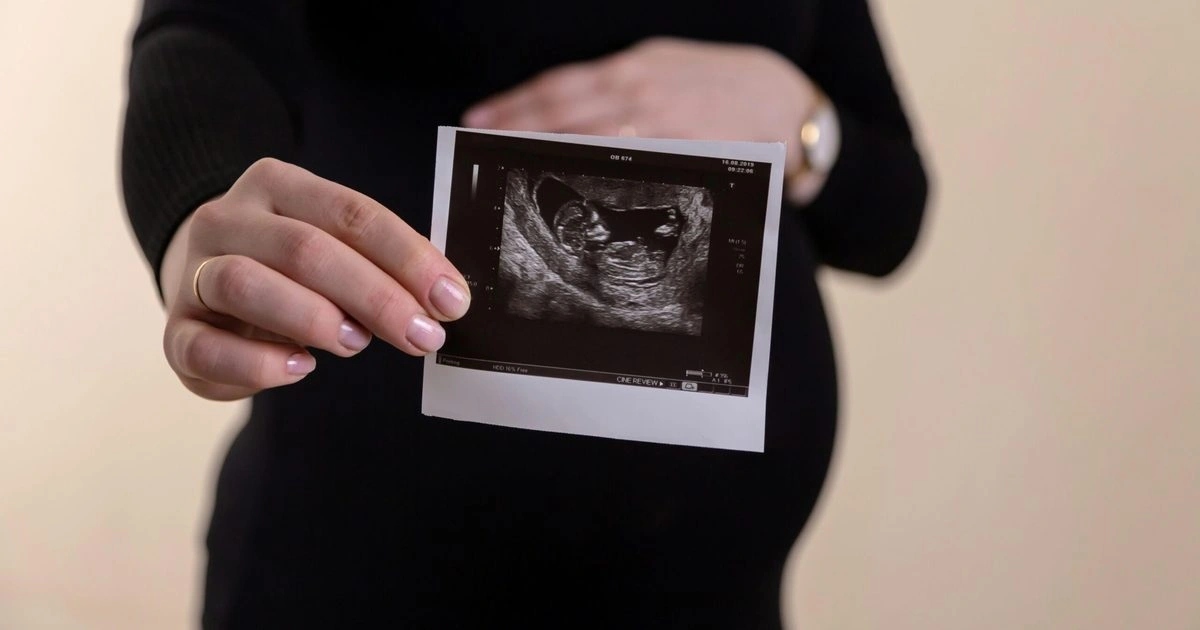
University of Washington researchers have successfully developed a groundbreaking smartphone application capable of tracking fetal heart rates with accuracy comparable to clinical tools. Known as DopFone, this software-based solution eliminates the need for external hardware, gels, or expensive medical equipment, relying solely on the smartphone’s existing speaker and microphone to function as a portable monitoring device.
How DopFone Uses Sonar Technology
The core technology behind DopFone operates on principles similar to sonar. The application commands the smartphone’s speaker to emit an inaudible 18kHz tone. This sound wave travels through the abdomen and reflects off the fetus. The phone’s microphone then captures the returning echo, and a specialized machine learning model analyzes the signal. By detecting subtle frequency shifts caused by the movement of the fetal heart, the system calculates the heart rate in real-time.
To use the system, a patient simply holds the phone’s microphone against their abdomen for one minute. In a controlled study involving 23 pregnant patients between 19 and 39 weeks of gestation, the app demonstrated remarkable precision. The results showed that DopFone’s readings landed within approximately 2 beats per minute (BPM) of a standard medical-grade Doppler device. This performance falls comfortably within the 8 BPM margin of error generally accepted by doctors for clinical monitoring.
Current Limitations and Testing Constraints
While the initial results are promising, the technology is not yet ready for public release. The study highlighted several critical limitations that researchers must address before DopFone can be deployed safely:
Physical and Biological Factors: The app’s accuracy decreased slightly for patients with higher Body Mass Indices (BMI), although readings remained within normal limits. Furthermore, the current version of DopFone is designed exclusively for singleton pregnancies; it has not been tested on twins or triplets, where overlapping heartbeats would complicate the signal processing.
Hardware and Environment: All testing was conducted using iPhones in a controlled medical setting. It remains unclear how the app performs on the diverse ecosystem of Android devices or in noisy, real-world environments like a living room. Additionally, the study excluded high-risk pregnancies with irregular fetal heartbeats, meaning the app’s ability to detect distress signals like tachycardia is currently unproven.
| Study Metric | Result / Specification |
|---|---|
| Audio Frequency | 18kHz tone (Sonar-based) |
| Participant Pool | 23 patients (19-39 weeks pregnant) |
| Accuracy Margin | Within ~2 BPM of medical Doppler |
| Hardware Used | Apple iPhones (Controlled setting) |
Frequently Asked Questions
When will DopFone be available in the App Store?
The app is not currently available for download. Researchers need to gather more data from diverse environments and hardware configurations before a public release is possible.
Can this app replace doctor visits?
No. The researchers explicitly state that DopFone is intended as a measurement tool, not a diagnostic one. It is designed to supplement care, particularly in low-resource regions, but medical interpretation by a doctor is still required.
My Take
The development of DopFone represents a significant leap in the democratization of health technology (HealthTech). By leveraging the ubiquity of smartphones to perform tasks previously reserved for specialized medical hardware, we are moving toward a future where prenatal monitoring is accessible to rural and low-income populations without the barrier of expensive equipment. However, the transition from a controlled lab study to the chaotic acoustic environment of a user's home is a massive technical hurdle. Until the machine learning model proves it can filter out background noise and handle diverse hardware microphones, this remains a fascinating prototype rather than a consumer product.
This article was written by AI from reporting by digitaltrends.com.