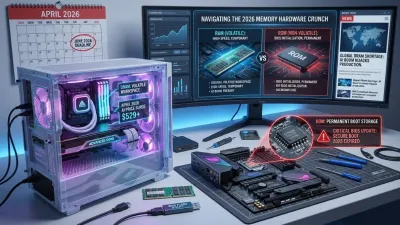
PC builders waiting for DDR5 RAM prices in 2026 to stabilize are finally seeing a glimmer of hope, though the market remains highly volatile. After one of the most brutal pricing cycles in PC hardware history, DDR5 memory has dropped more than 20% from its recent peak prices across the United States, China, and Europe. However, before rushing to checkout, buyers must understand that this dip is a minor correction in a market still heavily distorted by artificial intelligence infrastructure demands.
The sudden price relief has sparked intense discussions across tech forums and media outlets, with many questioning if the worst is finally over. While the immediate discounts are real and observable, the broader context reveals a supply chain that is fundamentally shifting away from consumer needs. Understanding the mechanics behind this drop is crucial for anyone planning a PC build or upgrade in the near future.
The Scale of the RAM Price Crisis
To understand why a 20% drop feels like a victory, it is essential to look at the extreme market seizure that occurred over the past year. A standard 32GB DDR5-6000 MHz CL30 kit, widely considered the sweet spot for gaming and professional builds, was selling for a reasonable $80 to $110 in mid-2025. By January 2026, that exact same kit skyrocketed to between $350 and $600 in the US, and €430 to €490 in Europe.
This unprecedented surge represented triple and sometimes quadruple price increases in less than a single trimester. Older standards offered no refuge for budget builders, either. Despite nearing its phase-out, 32GB DDR4 kits that previously sold for around €60 jumped to €150 - €180 within months. Manufacturers strategically reduced DDR4 production to force the market toward the newer standard, effectively making both generations prohibitively expensive simultaneously.
The TurboQuant Catalyst and Current Market Data
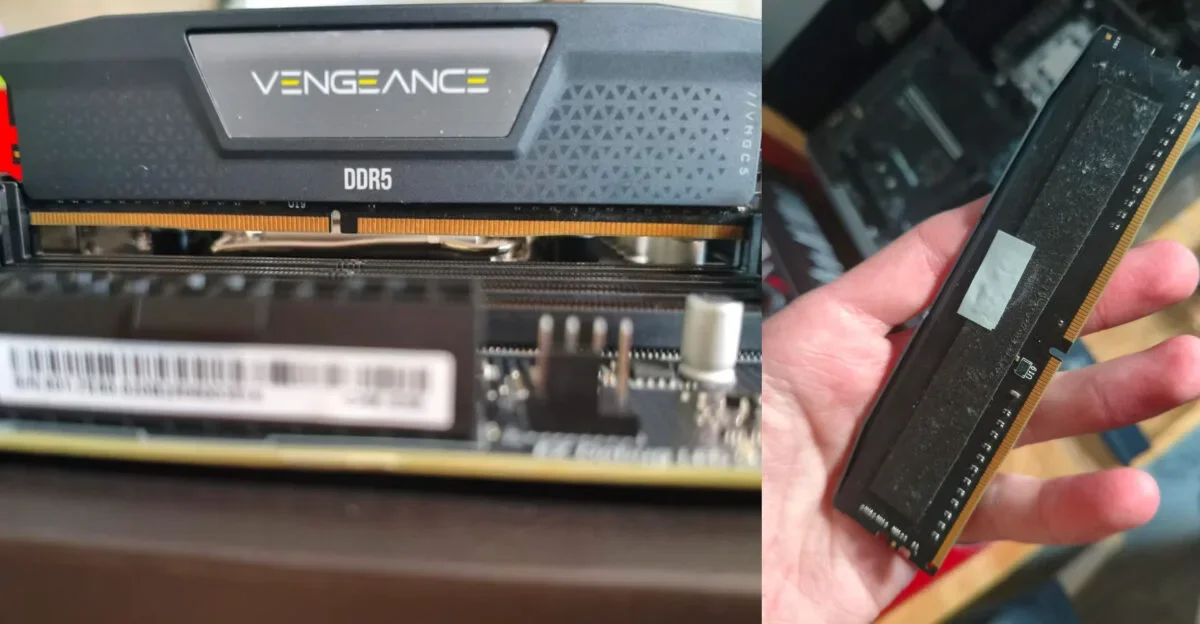
The catalyst for this week's price dip is the TurboQuant announcement, a major financial and AI infrastructure development that rattled memory market confidence. Speculation suggests that a massive AI player overcommitted to purchasing global RAM supply and subsequently pulled back, opening a short-term supply window for consumers. As a result, popular kits like the Corsair Vengeance RGB DDR5-6000 32GB fell from an all-time high of $500 down to $369.
Despite these drops, prices remain inflated at roughly 3.5x to 4x their pre-shortage levels. The US remains the hardest-hit market, experiencing only a 1.7% drop over a 7-day period, which analysts consider statistical noise rather than a genuine recovery. Below is a real-time pricing snapshot for DDR5 6000 kits across major markets as of late March 2026:
How AI Data Centers Monopolized DRAM Supply
The fundamental driver of this hardware crisis is not cyclical consumer demand, but rather the explosive growth of artificial intelligence. Tech giants like OpenAI, Google, Meta, and Microsoft have been purchasing DRAM at a scale never anticipated for consumer markets. Because AI data centers pay a significant premium, manufacturers have aggressively prioritized enterprise orders over consumer PC components.
According to a February 2026 industry survey by TrendForce, conventional DRAM contract prices for Q1 2026 were drastically revised from an expected +55 - 60% quarter-over-quarter (QoQ) increase up to a staggering +90 - 95% QoQ. Server DRAM alone was projected to rise 90% QoQ, marking the largest quarterly increase on record. Mobile and laptop memory standards, such as LPDDR4X and LPDDR5X, faced similarly steep 90% QoQ hikes.
Data from Counterpoint Research further illustrates this institutional pressure. The cost of 64GB RDIMM server modules jumped from $255 in Q3 2025 to $450 in Q4 2025, with targets hitting $700 by March 2026 and forecasts predicting a $1,000 milestone shortly after. This enterprise-level inflation directly starves the consumer market of affordable silicon.
Actionable Buying Advice for PC Builders
Navigating this volatile market requires a strategic approach. Based on current supply chain realities and pricing trends, here is how consumers should handle PC memory upgrades in April 2026:
- Buy now if urgent: The current 20% drop from peak pricing is likely a temporary window. With Samsung announcing a doubling of DRAM prices to manufacturers starting in December 2025, costs may resume climbing through Q2 2026.
- Watch for motherboard bundles: Reddit communities have spotted rare bundle deals offering free DDR5 RAM with select motherboards on platforms like Amazon and Newegg, though these typically sell out within hours.
- Avoid DDR4 investments: With 32GB DDR4 kits now costing €150 - €180, paying a premium for a phased-out platform is a poor long-term investment.
- Target DDR5-6000 CL36 kits: These specific SKUs currently offer the lowest entry price in most markets (e.g., $350 in the US, £307 in the UK) while maintaining excellent performance for gaming and workstation tasks.
- Wait for 2027 if possible: If your current system is functional, delaying your build by 12 to 18 months may allow you to benefit from the projected 2027 supply expansion, potentially bringing 32GB kits back down to the $150 - $200 range.
My Take: The Long Road to 2027 Normalization
The current 20% price drop is a classic market head-fake. While it is tempting to view this as the bursting of a pricing bubble, the underlying data suggests otherwise. The tech community is currently divided into two camps: those who believe suppliers are simply clearing old stock before new contractual price hikes take effect, and those holding out hope for a broader market correction. The reality leans heavily toward the former, as analysts forecast an additional +30% to +50% price increase per quarter throughout the first half of 2026.
True relief will not materialize until the physical infrastructure catches up to the AI boom. New fabrication plants currently under construction by Samsung, Micron, and SK Hynix are not scheduled to come online until late 2026 at the earliest. This means meaningful supply impacts will not reach consumer shelves until 2027 or 2028. Until these new fabs begin outputting silicon at scale, or until the AI data center appetite unexpectedly collapses, structural scarcity will remain the defining feature of the PC hardware market.
For consumers, the takeaway is stark: the era of $80 high-performance DDR5 kits is over for the foreseeable future. The TurboQuant-linked dip is a rare opportunity to buy at a slight discount, but it is not a return to normalcy. PC builders must adjust their budgets accordingly, prioritizing memory capacity over marginal speed upgrades, and accepting that the "AI tax" is now a permanent fixture in consumer hardware pricing.