The U.S. EV sales landscape is finally showing signs of stabilization after months of pricing volatility. In July 2026, new electric vehicle sales saw a modest month-over-month increase, but the real momentum is building in the second-hand market, where used EV sales jumped 10.1% compared to last year. As automakers dial back aggressive incentives and new vehicle prices creep upward, budget-conscious buyers are increasingly turning to off-lease models and trade-ins to find better value.
New EV Sales and Tesla's Continued Dominance
An estimated 77,266 new EVs were sold in July, representing a 3.2% increase from June. However, electric vehicles accounted for just 5.6% of total new-vehicle sales, and overall volume remained 41.5% below the unusually high levels of July 2025 - a period heavily distorted by buyers rushing to secure expiring federal tax credits. Tesla continues to dominate the sector, capturing roughly 55% of all new EV sales with 42,435 units moved (a 4.9% monthly increase).
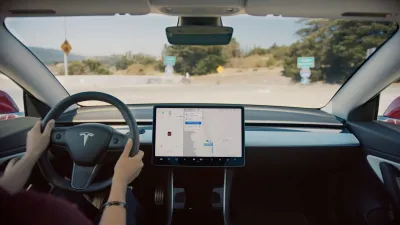
The Tesla Model Y remains the undisputed heavyweight, accounting for approximately 37% of the entire U.S. new EV market. Its individual sales volume continues to eclipse the combined EV lineups of many competing legacy brands. Meanwhile, traditional automakers are making strategic gains; Hyundai recorded a massive 36% sales increase from June, and Kia continues to benefit from strong consumer demand for its three-row EV9 SUV.
The Used EV Market Rapidly Expands
The used EV market is experiencing a significant growth phase, reaching 36,810 units in July. This marks a 7.9% increase from June and a 10.1% jump year-over-year, allowing used EVs to maintain a 2.4% share of the overall used-vehicle market. This expansion is largely fueled by a wave of off-lease returns hitting dealership lots, providing shoppers with a wider selection of newer-generation vehicles.
While Tesla provides the bulk of the secondary market volume, traditional brands are rapidly catching up. Ford led the high-volume pack with an impressive 18.9% month-over-month increase, supported by strong showings from Chevrolet, Nissan, and Cadillac. Shoppers are gravitating toward specific models that offer modern battery ranges without the steep depreciation hit of a brand-new purchase, including the Tesla Model 3, Tesla Model Y, Ford Mustang Mach-E, Hyundai IONIQ 5, Chevrolet Blazer EV, and Cadillac LYRIQ.
Inventory Shifts and the Decline of Incentives
Automakers are finally aligning production with demand, though brand disparities remain stark. New EV inventory fell to an 80-day supply (down 6.2% from June and 1.7% year-over-year), narrowing the premium over the broader ICE+ market from nine days to just four. Volkswagen holds a bloated 147 days of supply, followed by Porsche (138 days) and Nissan (133 days). Conversely, Subaru operates on a lean 46 days, with Hyundai (52 days) and Lexus (58 days) close behind.
In the used sector, inventory rose to 46 days (up 14.2% monthly and 13.6% annually), surpassing ICE+ levels by three days. Rivian saw a 55% jump to 54 days, while Ford holds the highest used supply at 63 days, and Tesla the lowest at 38 days. Pricing dynamics are equally complex. The average new EV transaction price hit $56,126 (up 1.2% monthly and 1.6% annually), carrying a $6,477 premium over ICE+ vehicles. This was driven by incentives dropping from 13.1% ($7,290) in June to 11.8% ($6,626) in July. While the Tesla Model 3 and Model Y remained affordable at approximately $50,500 and $52,500 respectively, premium models pushed the average up.
Meanwhile, the average used EV listing price fell 1.2% monthly to $37,832, though it remains 8.3% higher year-over-year. The used EV premium over ICE+ vehicles narrowed from $3,344 to $2,967, as ICE+ used vehicles saw a 0.2% monthly decline and a 3.6% annual increase.
The Used Market Will Cannibalize New EV Growth
The July data reveals a critical pivot point for the automotive industry: the era of heavily subsidized new EV purchases is ending. Automakers are actively pulling back on incentives to protect their profit margins, which directly pushed the average new EV transaction price up to $56,126. This strategic retreat is creating a massive opportunity in the used market, but it poses a severe threat to new vehicle sales targets for the remainder of 2026.
As a flood of three-year-old leased vehicles - equipped with highly capable battery tech and modern software - enters the secondary market, budget-conscious buyers will increasingly bypass new showrooms. A $37,832 used EV with a 250-mile range is a far more compelling proposition for the average consumer than a $56,000 new model with shrinking dealer discounts. If legacy automakers like Volkswagen and Nissan, both sitting on over 130 days of unsold inventory, refuse to reinstate aggressive discounts, they risk losing their target demographic entirely to the booming second-hand sector.