

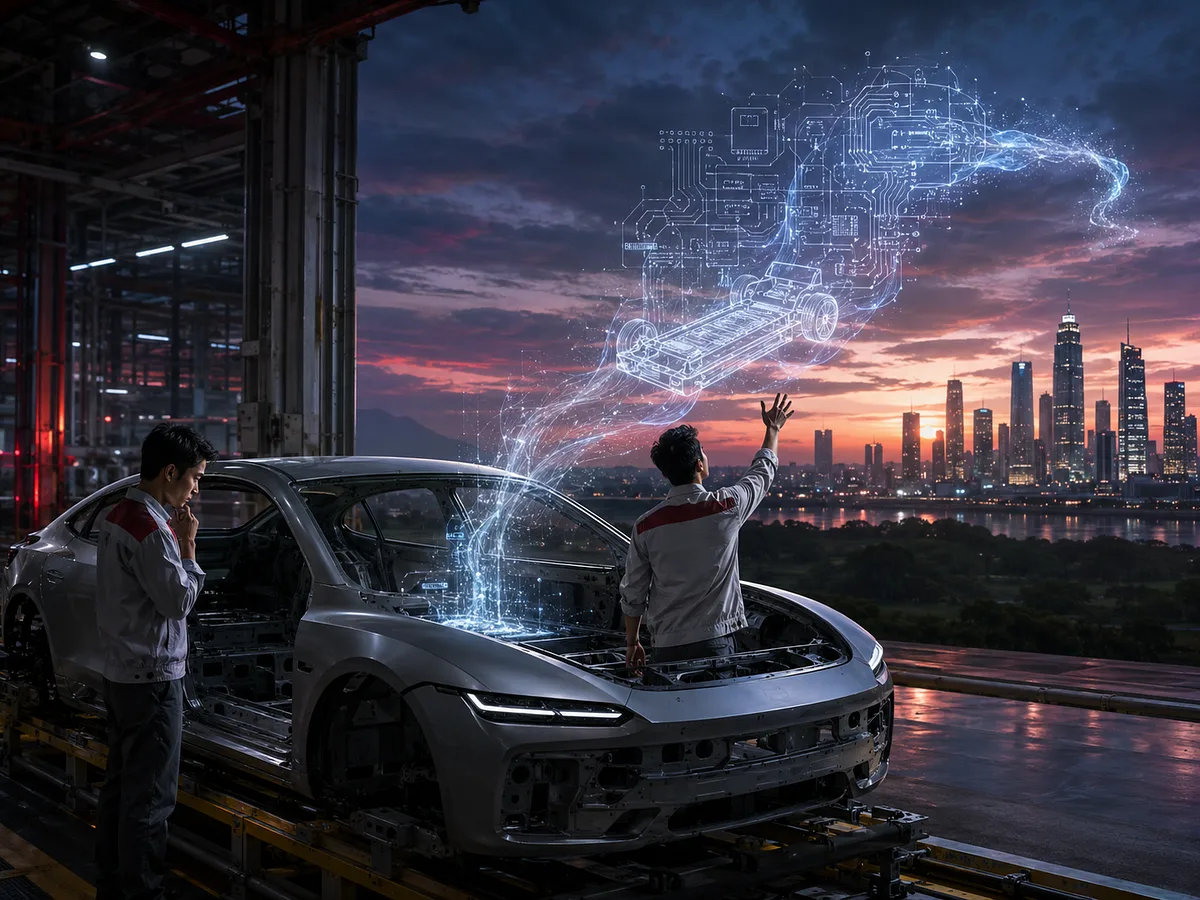
Indonesia has secured more than one-fifth of Chinese carmakers’ overseas manufacturing capacity for electric vehicles, but physical factories do not automatically translate to technological control. According to the International Energy Agency (IEA), the utilization rate of Chinese-owned battery-electric capacity in the country is projected to sit below 15 percent in 2025. This stark metric highlights a growing concern: assembling imported knockdown kits is not the same as building a self-sufficient EV industry.
The IEA's measurements include mixed production lines and plants that merely assemble imported parts. While Indonesia is actively expanding into battery-related manufacturing and active-material projects, the core intellectual property remains overseas. A physical plant shows where a vehicle is bolted together, but it does not reveal where the software was written, where the vehicle was designed, or who controls the most valuable technical decisions.
The Illusion of Knockdown Assembly
The export of semi- and completely knocked-down kits allows foreign manufacturers to start local production before domestic supply chains mature. However, low factory utilization makes it difficult for local suppliers to justify investments in new tooling, certification, and quality-control systems. Engineers learn through repeated production cycles and troubleshooting, which lightly used factories fail to provide.
To transition from a mere assembly hub to a true automotive player, progress must be measured by deeper technological integration rather than just physical output. The true test of localization depends on several critical milestones:
- Local suppliers moving into the production of motors, inverters, power electronics, and thermal systems.
- Domestic engineers taking full responsibility for calibration, diagnostics, and software integration.
- Indonesian companies successfully entering regional or global manufacturing networks.
The Capability Scorecard
The current reliance on raw investment values and domestic-content percentages paints an incomplete picture of Indonesia EV manufacturing. Jakarta needs to implement an industrial-capability scorecard that tracks actual EV output, technical employment, and locally conducted testing. If Indonesia merely acts as an assembly line for foreign technology, it risks becoming highly efficient at building products whose data and profit margins remain elsewhere.
Continued government incentives should be tied directly to progress against these deeper integration outcomes. While early assembly justifies temporary support, long-term benefits must reflect higher-value local procurement and export performance. The true measure of success isn't when a car leaves an Indonesian factory, but when the engineering knowledge required to build the next generation stays within the country.
