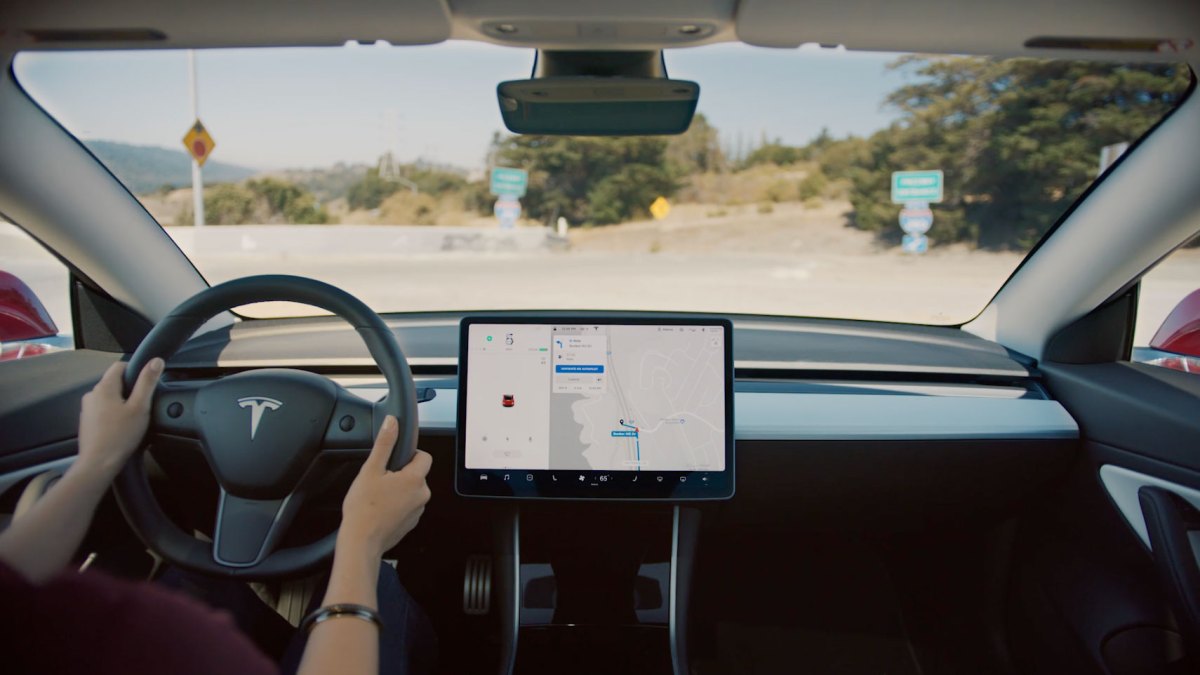
Tesla Ditches Autopilot Branding in Strategic Pivot to Full Self-Driving
Tesla has quietly discontinued its long-standing Autopilot name from new vehicle configurations, effective immediately on its online configurator. This move bundles core driver-assistance features into standard equipment while steering buyers toward the more advancedand expensiveFull Self-Driving (FSD) package. The change, reported on January 23, 2026, comes amid regulatory pressure in California, where a judge ruled Tesla overstated Autopilot and FSD capabilities, risking a 30-day suspension of its manufacturing and dealer licenses.
From Autopilot to Basic Autonomy: What Changed in the Specs
Autopilot, introduced in 2014, combined Traffic Aware Cruise Controlmaintaining set speeds and following distancesand Autosteer, a lane-centering system handling curves. New Tesla orders now list only Traffic Aware Cruise Control as standard, with no Autopilot option. FSD, priced at $99 per month or $8,000-$12,000 upfront depending on hardware, builds on this with Navigate on Autopilot (highway lane changes), Smart Summon (parking lot retrieval), and city street autonomy.
- Standard Now: Traffic Aware Cruise Control (adaptive speed, distance management).
- Autosteer Removed from Menu: Lane centering now exclusive to FSD Supervised (v13.2+).
- FSD Hardware 4/5: 360-degree cameras, end-to-end neural nets processing 1,000+ fps video for decisions.
- Compute Power: HW4 Dojo-trained models predict trajectories 11 seconds ahead.
This rebrand simplifies Tesla's stack: basic aids are free, premium autonomy costs extra. Current owners retain their Autopilot/FSD labels via software, but new buyers see a cleaner push to subscribe.
California Ruling Sparks the Shift
In December 2025, a California judge sided with the DMV, finding Tesla's marketinglike calling Autopilot 'autonomous'misled consumers on safety and capabilities. The DMV stayed the 60-day suspension for compliance; dropping 'Autopilot' neutralizes the claim. Tesla faces no recall but must clarify FSD requires supervision. User forums buzz with mixed reactions: some praise the upgrade path, others decry 'bait-and-switch' after years of promises.
User Experience: Robotaxi Rides and Everyday Drives
Tesla timed this with real-world tests. On January 22, 2026, unsupervised Robotaxi rides launched in Austin using FSD v13no safety driver, just passengers and a chase vehicle for emergencies. Riders report smooth 40-60 mph freeway merges, but occasional hesitations at complex intersections. 'Feels 90% human-like, minus road rage,' one X user posted after a 15-mile loop.
Daily drivers note FSD Supervised excels on highways: auto lane changes signal 3-5 seconds early, yielding to merges intuitively. City streets challenge itpedestrian detection triggers hard brakes 20-30 feet out, jarring passengers. Battery drain? FSD adds 5-10% over basic Autopilot due to constant AI inference. Range impacts: Model 3 drops from 341 miles to ~320 on heavy use.
- Strengths: Handles rain-slicked roads better than v12; voice commands for navigation tweaks.
- Pain Points: Construction zones confuse it (15% failure rate per Tesla data); requires constant wheel torque.
- Subscription Perks: Over-the-air updates every 1-2 weeks, free transfers to new cars.
Insurance and Ecosystem Ripples
Lemonade launched FSD-specific insurance January 26 in Arizona, using Tesla telemetry for dynamic pricing. 'AI drivers react in milliseconds,' claims co-founder Shai Wininger. Premiums could drop as FSD logs prove saferearly data shows 40% fewer hard brakes vs. humans.
Tesla's Austin Robotaxi fleet uses unmodified Model Ys with HW4, scaling to dozens amid $600M Waymo funding news. Elon Musk touted it on X: 'No safety monitorreal-world AI progress.'
Broader Implications for EV Drivers
This pivot pressures rivals: GM ends Bolt EV production next year for U.S.-made Buicks, Waymo opens Miami robotaxis. Tesla owners get seamless upgrades via 48V architecture, but skeptics await unsupervised nationwide rollout. FSD take-rate? Up 15% post-rebrand per analyst estimates. For buyers, it's a bet on software eating hardware costsexpect v14 city autonomy by Q2 2026.