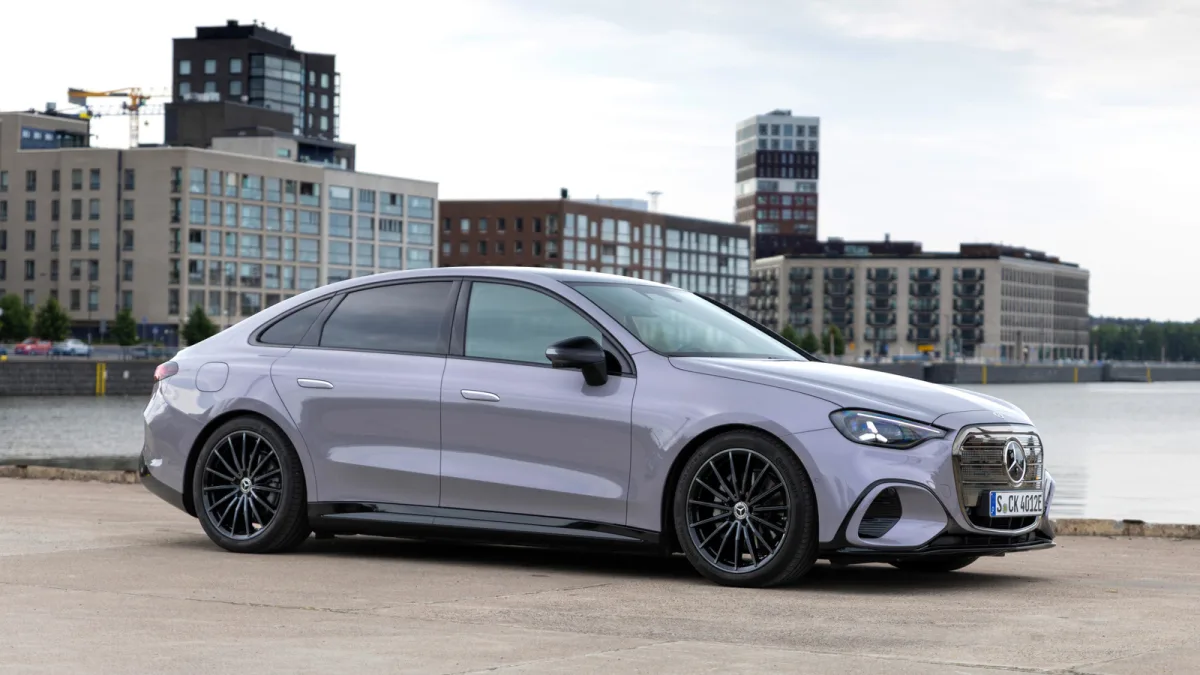
The 2027 Mercedes-Benz C-Class EV delivers the blistering 483-horsepower performance and buttery air suspension you expect from a flagship luxury sedan, but it comes with a glaring flaw: an overly intrusive AI assistant that will not stop eavesdropping. As automakers rush to integrate generative AI into their dashboards, Mercedes has built a stunning 800-volt electric powerhouse that occasionally feels like it is playing the role of an uninvited therapist. While the mechanical engineering is nearly flawless, the software experience highlights the growing friction between helpful technology and digital smothering.
Since its debut in 1993, the C-Class has served as the definitive entry point into German luxury. Now, Mercedes is transitioning its most crucial demographic to electric power. However, the company is not abandoning internal combustion entirely. The current W206 gas-powered generation will stick around and receive styling updates to mirror its electric sibling.
"For the foreseeable future, the 150 or so markets we serve around the world not every single market is on the path for 0 emissions at the same time," Ola Källenius, Global CEO of Mercedes-Benz Group, explained to journalists. "We are going to have to serve both streams minimum for the next 10 years, if not longer."
MB.EA Architecture: 2027 Mercedes-Benz C-Class EV Performance
Instead of retrofitting the existing gas platform, the 2027 Mercedes-Benz C-Class EV rides on the dedicated 800-volt MB.EA architecture, sharing its underpinnings with the electric GLC crossover. The results on the track outside Helsinki were undeniably impressive. The low center of gravity provides a grippy, easy-to-control dynamic that makes cornering at speed feel effortless.
The initial launch model, the C400 4Matic, features two permanently excited synchronous motors. This dual-motor setup generates a robust 483 horsepower and 590 pound-feet of torque. Accelerating from 0 to 60 mph takes just 3.9 seconds, providing a massive surge of torque that easily pins you to the seat.
Charging infrastructure remains a hurdle for many buyers, but the C-Class EV mitigates this with top-tier charging speeds. The lithium-ion battery supports DC fast charging at up to 330 kW. This allows the vehicle to charge from 10% to 80% in a mere 22 minutes. If you are in a rush, the system can add 200 miles of range in just 10 minutes.
Exterior Styling and the Illuminated Grille
The exterior design of the electric C-Class leans heavily into aerodynamics, resulting in a slightly bulbous, rakish profile that Mercedes compares to a coupe or GT. Despite the sloping rear window, it retains a traditional sedan trunk. The electric variant is 3.8 inches longer than the gas model, which translates to nearly an inch of extra headroom up front and almost half an inch for rear passengers. A generous frunk adds to its practicality.
The front fascia features what Mercedes calls a "new iconic grille" made of smoked glass. Buyers can opt to illuminate this glass panel with 1,050 individual lights that play animations when charging or opening the trunk. The signature three-pointed stars are also embedded directly into the headlight and taillight clusters.
Mercedes is offering the C400 4Matic in three distinct launch colors:
- Sodalite Blue Metallic
- Opalite White Bright
- Lavender Silver Metallic (a subtle lilac shade that shifts beautifully under sunset lighting)
Interior Luxury: The Triumphant Return of Physical Buttons
Inside the cabin, Mercedes aimed for a "welcome home" aesthetic, and they largely succeeded. The centerpiece is the optional 39.1-inch seamless Hyperscreen, which is vivid, ergonomically comfortable, and highly responsive. However, the most exciting feature of the new interior is not the screen - it is the return of physical buttons.
Mercedes has reintroduced a physical roller for volume control and thoughtfully laid out tactile buttons on the steering wheel, abandoning the frustrating capacitive touch pads of recent years. This reversal is a direct response to customer feedback.
I think the industry as a whole might have gone a little too far. We were super proud that we were the first ones in the world to introduce a digital steering wheel. You'd think the engineers would want a Nobel Prize for that one. But sometimes you get ahead of yourself and you start using technology for the sake of technology and forget a little bit about the customer.
- Ola Källenius, Global CEO, Mercedes-Benz Group
The cabin materials also reflect a shift toward sustainability. Instead of blinding piano black plastics, the interior utilizes matte-finish compressed paper and recycled plastics, reducing the CO2 manufacturing burden by 23%. Buyers can even opt for a fully vegan interior, independently certified by The Vegan Society.
Comfort remains paramount. The climate control system is intensely efficient, heating the cabin twice as fast as a gas-powered car. The ventilated, quilted seats come with massage functions and are certified by a German healthy-back organization. Above, an optional Sky Control panoramic roof embeds 162 illuminated stars into the glass, taking a page directly from Rolls-Royce.
Airmatic Suspension, Safety, and Cabin Noise
The optional Airmatic air suspension, borrowed from the flagship S-Class, delivers a buttery soft ride. It features intelligent predictive damping that pulls cloud data from other Mercedes-Benz vehicles to anticipate road conditions. The system also automatically adjusts the ride height to maximize aerodynamic efficiency and battery range.
However, the luxury experience is slightly marred by cabin noise. Despite noise-deadening laminated safety glass, tire roar becomes noticeably harsh at speeds above 70 mph. Without a combustion engine to mask the sound, the road noise feels amplified.
On the safety front, the C-Class EV is impeccable. During track testing, the emergency braking system flawlessly detected a pop-up mannequin, engaging the pretensioned seatbelts and stopping the car instantly. The Level 2 adaptive cruise control is highly vigilant - perhaps too vigilant, frequently demanding hands on the wheel even during minor tasks like opening a water bottle.
The MBUX Virtual Assistant: An AI That Won't Stop Listening
The most frustrating aspect of the 2027 Mercedes-Benz C-Class EV is the updated MBUX Virtual Assistant. Powered by generative AI, the system features a customizable avatar on the Hyperscreen (ranging from a star to an anime robot) and is designed to be conversational. In practice, it is deeply annoying.
The AI suffers from a "Voice barge-in" feature that allows it to interrupt conversations without the driver ever saying the "Hey Mercedes" wake word. During a solo drive, I was singing along to The Mountain Goats. When the dramatic lyrics of "No Children" and "Heel Turn 2" played - featuring lines about dying - the AI repeatedly muted the music to ask if I was in emotional distress and offered to play calming music.
I counted five interruptions during a single song. The AI acted less like a helpful navigation tool and more like an overbearing guidance counselor. Even when conversing with a passenger the next day, the AI chimed in unprompted to offer incorrect commentary on our conversation.
Turning this feature off is unnecessarily difficult. You cannot simply ask the AI to disable itself; you must dig through touchscreen menus to disable the Voice barge-in (Voice barge-in) setting. Even then, the car is always listening. When asked to turn off, the AI ominously replied, "I'll always be here for you."
The Fine Line Between Smart and Smothering
The 2027 Mercedes-Benz C-Class EV is a mechanical triumph that proves electric vehicles can seamlessly replace legacy luxury sedans without sacrificing comfort or power. The 800-volt architecture and 330 kW charging speeds make it a highly practical daily driver, while the return of physical buttons shows that Mercedes is finally listening to its core demographic regarding ergonomics.
However, the aggressive implementation of the MBUX Virtual Assistant reveals a blind spot in the automotive industry's current obsession with generative AI. By forcing an always-listening, emotionally reactive AI into the cabin, Mercedes has crossed the line from convenience into surveillance. A luxury car should be a private sanctuary, not a space where you have to argue with a dashboard avatar just to sing along to your favorite band.
If Mercedes wants this EV to dominate the market for the next decade alongside its gas-powered counterpart, it needs to remember Källenius's own advice: stop using technology for the sake of technology. The C-Class EV is 99% perfect; it just needs an off switch for the 1% that isn't.