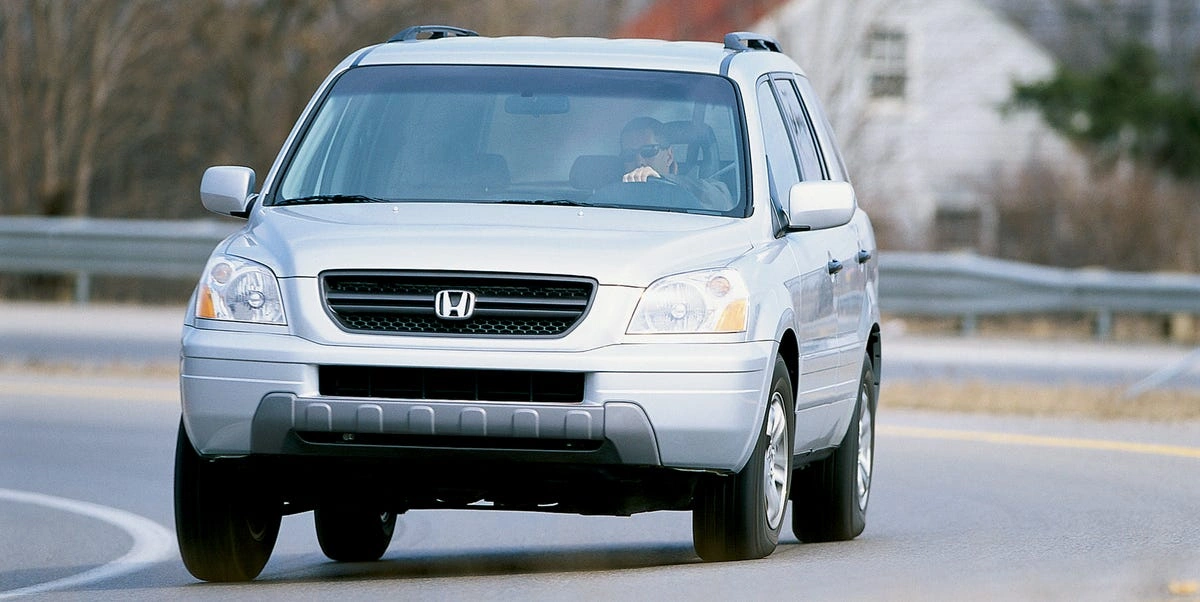
The 2003 Honda Pilot EX represents a defining turning point in automotive history, marking the moment Honda abandoned its reliance on Isuzu to build its first true in-house mid-size SUV. This retrospective analysis highlights how the Japanese automaker redefined family utility vehicles by prioritizing unibody comfort over traditional body-on-frame ruggedness. By shifting its engineering philosophy, Honda set a new benchmark that competitors would spend years trying to match.
For automotive historians and modern crossover enthusiasts, understanding the engineering of the first-generation Pilot provides crucial context for today's SUV market. This deep dive reveals the foundational architecture that allowed Honda to dominate the family vehicle segment for the next two decades, proving that consumers valued practical space and ride quality over extreme off-road capability.
Prior to the Pilot, Honda's presence in the SUV market relied heavily on the Passport, which was essentially a rebadged Isuzu Rodeo featuring a live-axle, body-on-frame truck design. The 2003 Pilot discarded this borrowed heritage entirely. Instead, Honda utilized a modified version of the Acura MDX and Odyssey minivan platform, creating a front-drive-biased unit body enhanced by integrated perimeter frame rails to withstand rough dirt roads.
The Mechanics of the VTM-4 AWD System
Unlike hardcore off-roaders equipped with low-range transfer cases and locking differentials, the Pilot introduced the Variable Torque Management 4-Wheel Drive (VTM-4) system. Operating primarily in front-wheel drive to maximize fuel efficiency, the system relies on ABS sensors to detect wheelspin and automatically route torque to the rear wheels when traction is lost.
For low-speed extraction in challenging environments, the VTM-4 system features a dedicated dashboard switch that manually locks both rear halfshafts. This locking function is strictly limited to the first two gears and automatically disengages once the vehicle reaches 18 mph. This precise calibration ensures drivetrain protection on dry pavement while providing enough mechanical grip for slushy or muddy conditions.
The Pilot utilizes front struts paired with a rear coil-spring, multilink arrangement. This specific rear suspension geometry was engineered with a singular practical goal: creating a completely flat load floor. Combined with a class-leading track width of 66.3 inches in the front and 66.5 inches in the rear, the 2003 Pilot achieved a rare feat by swallowing four-by-eight-foot sheets of building material lying perfectly flat.
Tuned for a smoother ride than its Acura MDX cousin, the Pilot rides on 70-series Goodyear Integrity all-season tires, specifically the P235/70R-16 size. Despite the softer suspension tuning and less aggressive rubber compared to the 17-inch Michelins found on the MDX, the SUV still manages a respectable skidpad grip of 0.73 g, proving that family comfort did not entirely compromise handling dynamics.
Frequently Asked Questions
What AWD system does the 2003 Honda Pilot use?
It uses the VTM-4 (Variable Torque Management 4-Wheel Drive) system, which operates primarily in front-wheel drive and automatically sends power to the rear wheels when slipping is detected.
How does the VTM-4 lock function work?
A dashboard switch allows drivers to manually lock the rear halfshafts in the first two gears for extra traction. The system automatically unlocks once the vehicle exceeds 18 mph to prevent drivetrain damage.
What vehicle did the Honda Pilot replace?
The Pilot effectively replaced the Honda Passport, which was a rebadged Isuzu Rodeo built on a traditional truck chassis.
My Take
Looking back at the 2003 Honda Pilot EX reveals a brilliant strategic pivot that reshaped the automotive landscape. By ditching the live-axle truck dynamics of the Isuzu-built Passport in favor of a unibody platform shared with the Odyssey and MDX, Honda essentially predicted the modern crossover boom. The decision to implement the VTM-4 system - sacrificing extreme rock-crawling capability for on-road comfort and a flat cargo floor capable of holding 4x8 sheets - perfectly aligned with actual consumer behavior. This wasn't just a new vehicle release; it was the engineering blueprint that forced the entire mid-size SUV industry to pivot from rugged, uncomfortable trucks to refined, highly practical family haulers.