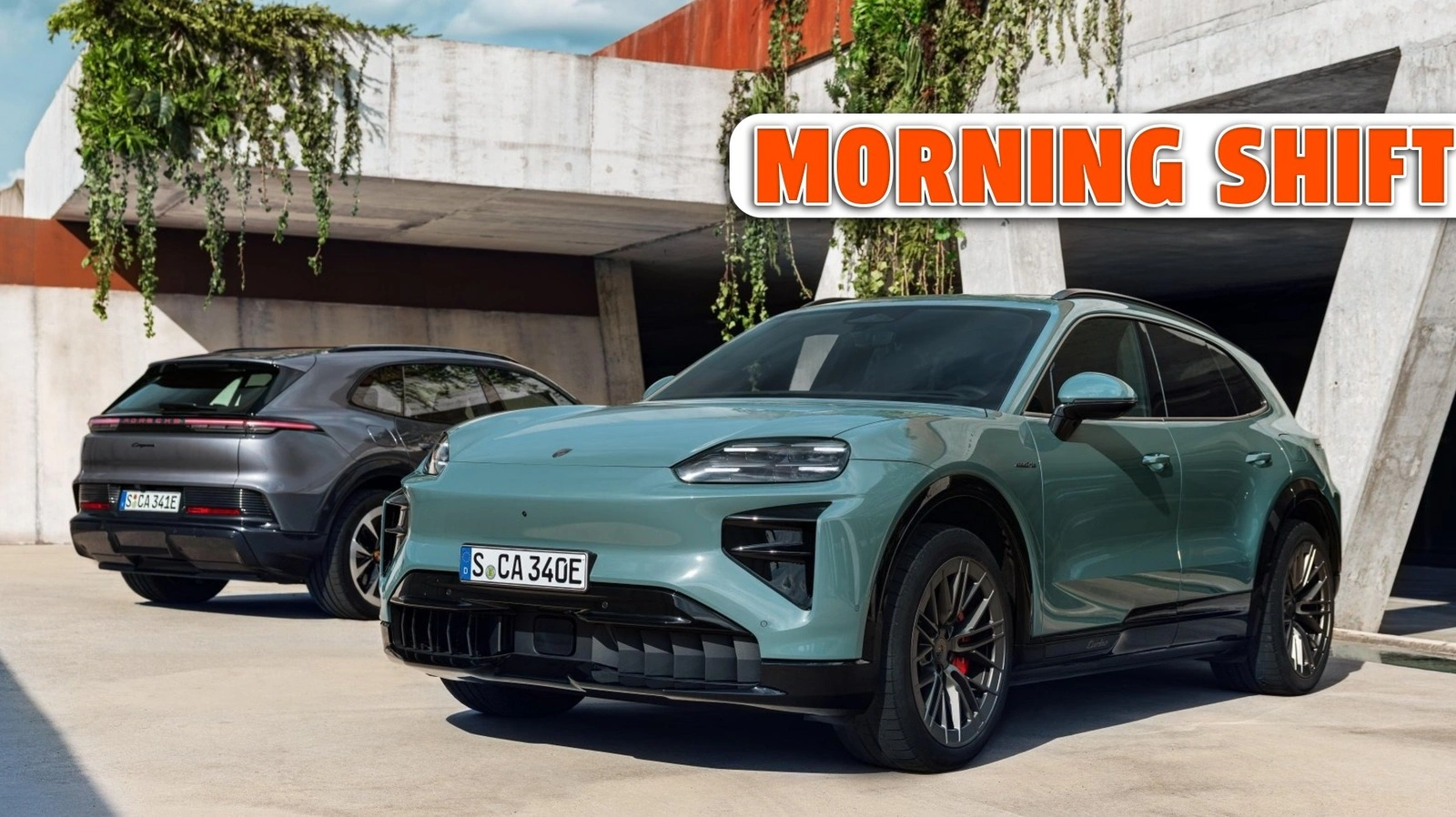
Porsche has fundamentally altered the trajectory of its upcoming Porsche K1 SUV, abandoning its exclusive electric vehicle strategy to incorporate powerful internal combustion engines. The German automaker’s decision to pivot away from an EV-only launch for its seven-seat flagship highlights a significant industry correction, driven by engineering hurdles and cooling demand for electric vehicles like the Taycan.
Under the Hood: V8 Power Returns
The new flagship, often referred to as the K1 and considered a twin to the upcoming Audi Q9, will now utilize the Volkswagen Group's Premium Platform Combustion (PPC) architecture. This engineering shift allows Porsche to offer a robust lineup of powertrains rather than relying solely on battery technology. The vehicle is expected to launch with a choice of setups centered on twin-turbo 4.0-liter V8 engines and 3.0-liter V6 engines. These configurations aim to deliver a power output range similar to the current Cayenne, which spans from 348bhp to 730bhp.
Originally, the K1 was earmarked to debut on the Scalable Systems Platform (SSP) as a pure electric model. However, delays in the SSP’s engineeringspecifically regarding its software stackcombined with a noticeable slowdown in EV interest, have forced Porsche to adapt. While an electric version is still planned for the future, the initial models will feature petrol and plug-in hybrid systems. Production is expected to take place at the VW Bratislava plant in Slovakia, alongside the Q9 and the Cayenne EV, with a launch targeted approximately 12 months after the Q9 arrives next year.
Industry Updates: Stellantis and Ford
Beyond Porsche, the automotive sector faces financial and safety turbulence. Stellantis revealed that its new CEO, Antonio Filosa, received a total compensation package of €5.4 million ($6.37 million) for 2025. This figure stands in stark contrast to the company's financial performance; Stellantis posted a massive $26.3 billion loss for the year. Consequently, members of the United Auto Workers (UAW) union received exactly $0 in profit sharing for the first time since 2011, a significant blow given the company's negative 3.1 percent margin in North America.
In safety news, Ford has issued a critical recall affecting 15,000 Ford Transit vans. The automaker has explicitly advised owners not to drive these vehicles until the issue is resolved, marking another significant quality control challenge for the brand following recent recalls.
My Take
Porsche's reversal on the K1 is a pragmatic response to a dual crisis: the technical immaturity of next-gen EV platforms like the SSP and the undeniable market reality that high-end buyers still demand combustion performance. By reverting to the PPC architecture, Porsche ensures its flagship can compete immediately with the BMW X7 and Mercedes-Benz GLS without being bottlenecked by software delays. For Stellantis, the disparity between executive compensation and worker profit sharing amidst a $26.3 billion loss is likely to fuel further labor tensions in an already volatile year.
This article was written by AI from reporting by foxtrotalpha.jalopnik.com.