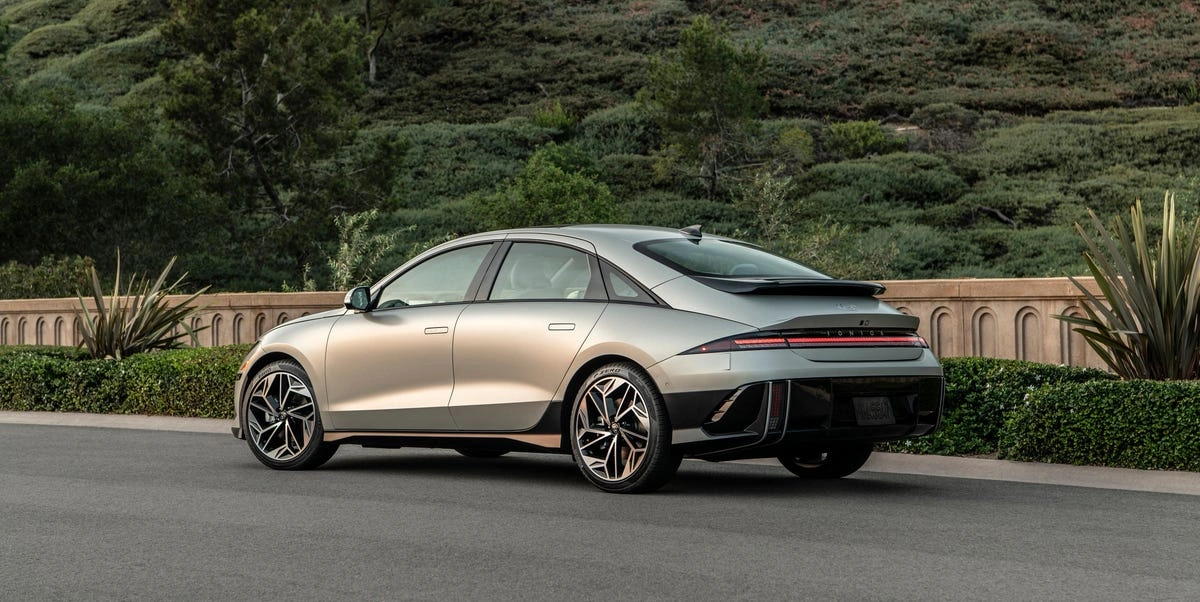
Hyundai has officially discontinued the standard Ioniq 6 electric sedan for the U.S. market ahead of the 2026 model year, leaving only the high-performance Ioniq 6 N in its North American lineup. This strategic shift targets EV enthusiasts and performance drivers, signaling a major pivot in the automaker's electric vehicle strategy amid shifting economic pressures. For buyers looking for an efficient daily commuter, the departure of the base model means shifting focus to remaining 2025 inventory or looking toward the brand's SUV offerings.
Last spring, the automaker unveiled a refreshed version of the swoopy sedan, featuring thinner headlights for a more streamlined look and a redesigned steering wheel. While these updates were expected to reach the U.S. market for the 2026 model year, a company spokesperson confirmed to Car and Driver that the non-N versions will not return. Consequently, the refreshed bodywork will exclusively house the N variant's massive powertrain in the United States, while the standard updated model will live on in other global markets.
Economic Pressures and Sales Declines
The demise of the standard model in the U.S. stems from a combination of manufacturing logistics and shifting federal policies. Unlike its highly successful sibling, the Ioniq 5, which is built at a plant in Ellabell, Georgia, the Ioniq 6 is manufactured in South Korea. This overseas production made the sedan vulnerable to a newly implemented 25 percent tariff on imported vehicles. Furthermore, the vehicle was severely impacted by the elimination of the $7,500 federal EV tax credit, which decimated its value proposition for mainstream buyers.
Sales data paints a stark picture of the sedan's struggles. Last year, the company sold 10,478 units of the Ioniq 6, representing a 15 percent decline, which pales in comparison to the 47,039 Ioniq 5 SUVs sold during the same period. The situation worsened dramatically in early 2026, with only 573 units sold through the first two monthsa staggering 70 percent drop from the previous year. Dealerships will continue to sell the remaining 2025 inventory, which originally started at $39,095, likely applying significant discounts to move the slow-selling units.
The Surviving Ioniq 6 N
While the mainstream trims are dead, the radical Ioniq 6 N will arrive on U.S. shores in limited quantities later this year. The standard car previously offered a single-motor rear-wheel-drive setup making either 149 or 225 horsepower, or a 320-horsepower dual-motor all-wheel-drive configuration. In stark contrast, the new N model features a devastating 641-horsepower powertrain, identical to the system that propelled the Ioniq 5 N to 60 mph in just 3.0 seconds during independent testing.
Beyond raw power, the N variant is a completely different machine engineered for the track. It boasts an extreme suspension setup, massive brakes, and sticky Pirelli tires to handle the immense electric torque. Visually, it stands apart with aggressive bodywork that includes a sharp front splitter and a sizable rear wing to manage aerodynamics at high speeds. This flagship performance EV is expected to carry a premium price tag of roughly $70,000.
Frequently Asked Questions
Why was the standard Hyundai Ioniq 6 discontinued in the US?
The model suffered from a 70 percent sales decline in early 2026, driven by a 25 percent tariff on imported vehicles and the loss of the $7,500 federal EV tax credit, making it uncompetitive against domestically produced alternatives.
Will any version of the Ioniq 6 be available for 2026?
Yes, the high-performance 641-horsepower Ioniq 6 N will be sold in limited quantities in the U.S., featuring updated styling and track-focused hardware.
Can I still buy a standard Ioniq 6?
Dealerships are currently selling through their remaining 2025 model year inventory, which started at $39,095, and buyers may find heavy discounts on these final units.
My Take
Hyundai's decision to kill the standard Ioniq 6 while keeping the N model is a textbook example of adapting to harsh market realities. The 70 percent sales plunge in early 2026 proved that without the $7,500 tax incentive and local manufacturing to dodge the 25 percent tariff, imported mainstream EVs simply cannot survive in the current U.S. market. By pivoting the Ioniq 6 from a mass-market aero-sedan to a $70,000 niche halo car, Hyundai is smartly cutting its losses on volume while maintaining brand prestige in the high-performance EV sector. This move signals a broader industry trend: automakers will increasingly reserve imported EV slots for high-margin, low-volume performance models, while localizing production strictly for their highest-volume sellers like the Ioniq 5.
This article was written by AI from reporting by caranddriver.com.