For over a century, scientists have struggled to explain electron spin homochirality - the profound biological mystery of why living systems overwhelmingly favor one molecular "hand" over its exact mirror image. Now, a groundbreaking study reveals that the answer may lie in the subtle quantum mechanics of moving electrons, fundamentally shifting our understanding of life's origins.
Many essential biological building blocks, such as amino acids and sugars, exist as enantiomers. These are mirror-image molecules that are chemically identical but structurally reversed. Yet, biology is highly selective: amino acids almost exclusively appear in a "left-handed" form, while sugars adopt a "right-handed" structure.
This universal preference has defied traditional chemical explanations because both forms possess the exact same energy levels when at rest. Earlier theories failed to fully account for why this specific molecular preference became so widespread and deeply ingrained across all living systems.
How Electron Spin Breaks the Mirror Rule
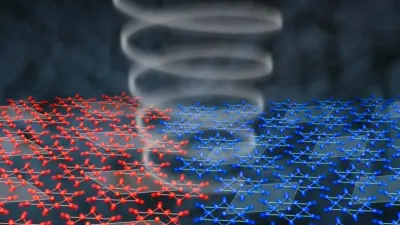
According to a new study published in Science Advances by researchers from Hebrew University and the Weizmann Institute, the symmetry between these mirror molecules breaks down during dynamic processes. When electrons travel through chiral molecules, their quantum property - known as electron spin - interacts differently depending on the molecule's structural handedness.
This spin-related imbalance means that while the molecules look identical when static, they behave differently during active chemical reactions and electron transport. The two forms generate different amounts of spin polarization, which directly affects how efficiently each form takes part in physical processes.
Over billions of years, this microscopic quantum bias could have provided one molecular form with a repeated advantage. Eventually, this continuous bias helped establish the dominant biological preference we see today, challenging the assumption that mirror-image molecules should show equal effects in size and behavior.
Implications for Chemistry and Biology
The discovery that physical processes, rather than just chemical ones, shaped the earliest stages of life opens new avenues for scientific research. The research team highlighted several key areas where this quantum effect will alter our understanding:
- How electron spin polarization directly alters the efficiency of chemical reactions.
- The design of advanced materials that leverage both chirality and electron spin for targeted interactions.
- The broader influence of quantum properties on complex biological systems and evolutionary development.
The Quantum Blueprint of Evolution
The revelation that electron spin drives biological asymmetry is a paradigm shift that bridges the gap between quantum physics and evolutionary biology. By proving that chemical symmetry is far more fragile during dynamic transport than previously assumed, this study forces us to rethink the primordial soup. It is not just about which chemicals were present, but how quantum mechanics dictated their interactions in motion.
Beyond solving a historical mystery, this mechanism has massive implications for modern pharmacology and synthetic biology. Since drug efficacy often depends heavily on molecular handedness - where one enantiomer cures and its mirror image causes toxicity - understanding these quantum spin dynamics could lead to highly efficient, spin-selective drug synthesis methods. We are moving from merely observing biological quirks to engineering them at the quantum level.
This article was written by AI from reporting by scitechdaily.com.