UCLA Chemists Overturn Century-Old Rule
On January 23, 2026, UCLA chemists Neil Garg and his team published a breakthrough in Nature Chemistry. They synthesized cubene and quadricyclenecage-shaped molecules with double bonds once deemed impossible. This follows their 2024 violation of Bredt's rule, a 100-year chemistry cornerstone.
What is Bredt's Rule?
Bredt's rule, established in 1924, states carbon-carbon double bonds cannot form at bridgehead positions in bridged bicyclic molecules. The geometry forces atoms out of the required planar arrangement. Garg's 2024 work first challenged this. Now, they push further with even more distorted structures.
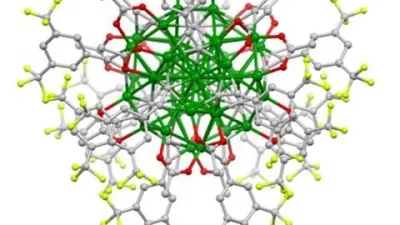
Cubene and quadricyclene feature highly strained double bonds. Atoms around these bonds do not lie flat, defying textbook chemistry. The team calls this a shift from flat to rigid 3D molecules.
How They Did It
The process starts with stable precursors. These contain silyl groupssilicon-centered atom clustersand adjacent leaving groups. Treatment with fluoride salts triggers the reaction.
- Precursors form in the lab under controlled conditions.
- Fluoride salts remove silyl groups, generating cubene or quadricyclene in situ.
- Reactive molecules are trapped by another reactant, yielding complex products.
This method produces structures chemists previously could not access. Yields are high, and reactions scale for further study.
Why It Matters for Medicine
Pharma needs 3D molecules. Past drugs relied on flat structures. Modern targets demand complexity for better binding and efficacy. Garg notes: 'We're exhausting flat possibilities. Rigid 3D shapes are the future.'
Neil Garg's lab excites organic chemists. Kendall Houk, a computational expert, praises the unique structures for drug discovery. These molecules enable scaffolds for sophisticated therapies.
Beyond Drugs: New Chemistry Frontiers
The technique opens doors to distorted hydrocarbons. Cubene, a triangular cage with a warped double bond, and quadricyclene, a tetracyclic strain machine, test molecular limits. Simulations confirm stability despite distortion.
Applications extend to materials science. Strained bonds could yield novel polymers or catalysts. Garg's team eyes industrial partnerships for scale-up.
Expert Reactions
'This stretches imagination for molecule types,' says Houk. The work builds on 20th-century niche efforts, now vital for 21st-century needs. Organic chemistry enters a 3D era.
UCLA's output positions them at the forefront. Published data includes spectra and yields, enabling replication worldwide.
Next Steps
Garg plans larger cages and functional groups. Pharma collaborations loom. By January 28, 2026, citations mount, signaling impact. This isn't theoryit's a toolkit for tomorrow's breakthroughs.