Google is expanding its cross-platform file-sharing capabilities by bringing AirDrop compatibility to the Pixel 9 series, marking a significant step toward bridging the Android-iOS divide. The rollout, announced via Google's Pixel Community forum, is now underway for Pixel 9, 9 Pro, 9 Pro XL, and 9 Pro Fold users, though the Pixel 9a is excluded from this update. The feature will roll out in phases over the coming weeks, meaning not all users will receive it simultaneously.
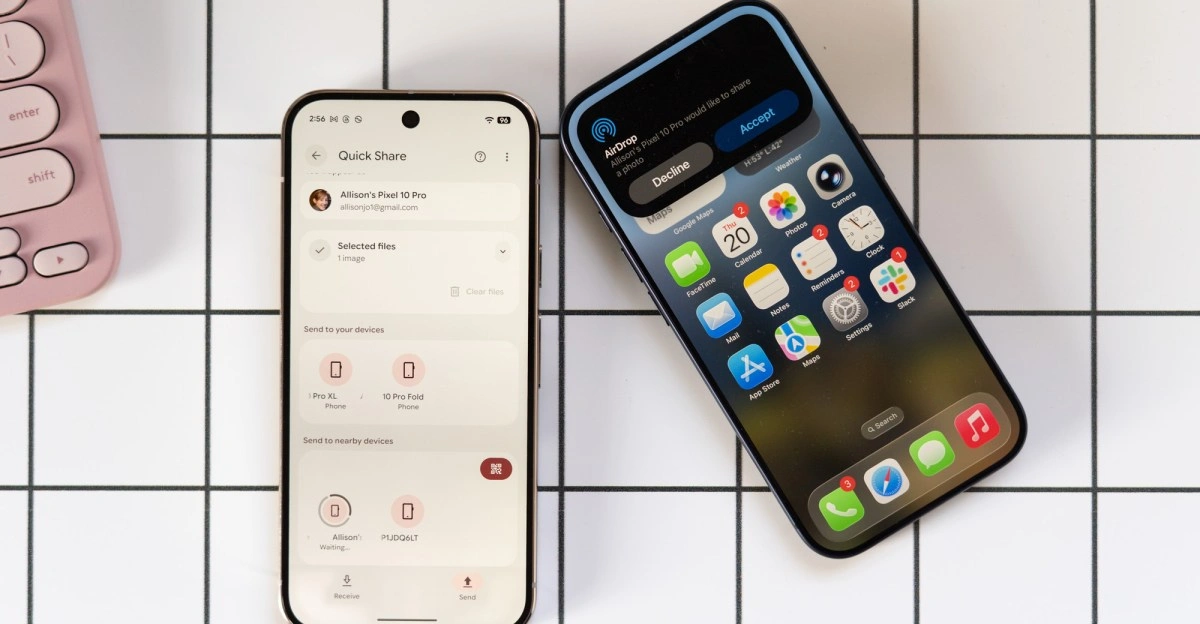
This capability allows Pixel 9 owners to directly share files, photos, and other content with iPhone, iPad, and macOS devices without relying on cloud services or third-party applications. The implementation uses a direct, peer-to-peer connection, ensuring that shared content is never routed through servers, logged, or accompanied by extraneous data collection. Google has emphasized that privacy and speed remain core priorities, with multi-layered security protections safeguarding all transfers.
How to Enable Quick Share AirDrop Support on Pixel 9
Enabling this feature requires a manual update to the Quick Share Extension. Users must navigate to their device's Settings app, search for "System services," scroll to the Available Updates section, and tap "Quick Share Extension" to install the latest version. Once updated, the feature should become available, though some users may need to restart their device to activate it.
The process for sharing between Android and Apple devices is straightforward. On the Apple device, the user must open AirDrop settings and select "Everyone for 10 minutes" to allow incoming transfers. The Pixel 9 user then initiates a Quick Share action as normal and selects the desired Apple device from the available recipients. The Apple user must accept the transfer to complete the process. This mirrors the traditional AirDrop workflow but extends it across the ecosystem divide.
Currently, the rollout appears to be limited to users enrolled in Google's Play system update beta channel. Even installation of Android 17 Beta 1 does not guarantee immediate access, indicating that Google is conducting a controlled, phased deployment. The company may officially expand availability during its Quarterly Platform Update scheduled for March, potentially reaching all Pixel 9 users at that time.
Why This Matters: Breaking Down the Ecosystem Barrier
For years, seamless file sharing between Android and iOS has been a friction point for users with devices from both ecosystems. Apple's AirDrop has been a defining feature of the iOS experience, creating a tangible advantage for users committed to the Apple ecosystem. By implementing Quick Share compatibility with AirDrop independentlywithout requiring Apple's cooperationGoogle has demonstrated that cross-platform interoperability is achievable and valuable.
This move directly addresses a major incentive for users to remain locked within Apple's ecosystem. Households with mixed Android and Apple devices can now share content effortlessly, reducing one of the key friction points that historically encouraged users to consolidate around a single platform. Google's willingness to invest engineering resources into this feature signals a broader commitment to reducing ecosystem lock-in and improving the user experience across device boundaries.
The technical achievement is noteworthy: Google accomplished this without Apple's direct involvement, using direct peer-to-peer connections that bypass cloud infrastructure entirely. This approach prioritizes user privacy while maintaining speed and reliability. Google has indicated openness to collaborating with Apple on future enhancements, such as enabling "Contacts Only" sharing modes, which would further streamline the experience.
Device Compatibility and Rollout Timeline
The initial rollout covers the Pixel 9 lineup released in 2024, specifically the Pixel 9, 9 Pro, 9 Pro XL, and 9 Pro Fold. The Pixel 9a is notably absent from this update, likely due to hardware or software limitations. Google first introduced this capability to the Pixel 10 series in November 2025, and the expansion to Pixel 9 represents the first step in a broader rollout strategy.
Google has publicly committed to expanding Quick ShareAirDrop compatibility to additional Android devices throughout 2026, though specific timelines and device models remain unannounced. The company's statement that it is "collaborating with partners" suggests potential involvement from other Android manufacturers, though details are sparse. Users of older Pixel devices, such as the Pixel 8 Pro, are not yet receiving access, even with the latest Play system beta builds, confirming that the rollout is device-specific and gradual.
Technical Implementation and Security Considerations
Google's implementation of Quick ShareAirDrop compatibility uses a direct, peer-to-peer protocol that does not route data through intermediary servers. This architectural choice has significant privacy implications: shared content is never logged, no metadata is collected beyond what is necessary for the transfer, and the connection is encrypted end-to-end. The multi-layered security protections mentioned by Google likely include encryption standards comparable to or exceeding those used by Apple's AirDrop.
The feature operates independently of internet connectivity, relying instead on Bluetooth and local wireless protocols to establish connections between devices. This approach mirrors Apple's AirDrop design philosophy and ensures that users can share files in environments without network access. The requirement for the receiving Apple device to explicitly enable "Everyone for 10 minutes" mode provides a deliberate security checkpoint, preventing unsolicited file transfers while maintaining ease of use.
My Take
Google's expansion of Quick ShareAirDrop compatibility to the Pixel 9 series represents a strategic inflection point in the Android-iOS rivalry. Rather than competing on ecosystem lock-in, Google is competing on openness and user choice. This move will likely accelerate adoption of Pixel devices among users with mixed device ecosystems, particularly in households where family members use both Android and Apple products. The phased rollout suggests Google is prioritizing stability and user experience over rapid deployment, a prudent approach for a feature that bridges two major platforms. Expect this capability to become table stakes across the Android ecosystem within 12 months, forcing other manufacturers to implement similar functionality or risk losing users to Pixel's interoperability advantage.
This article was written by AI from reporting by theverge.com.